Why Study in Italy?
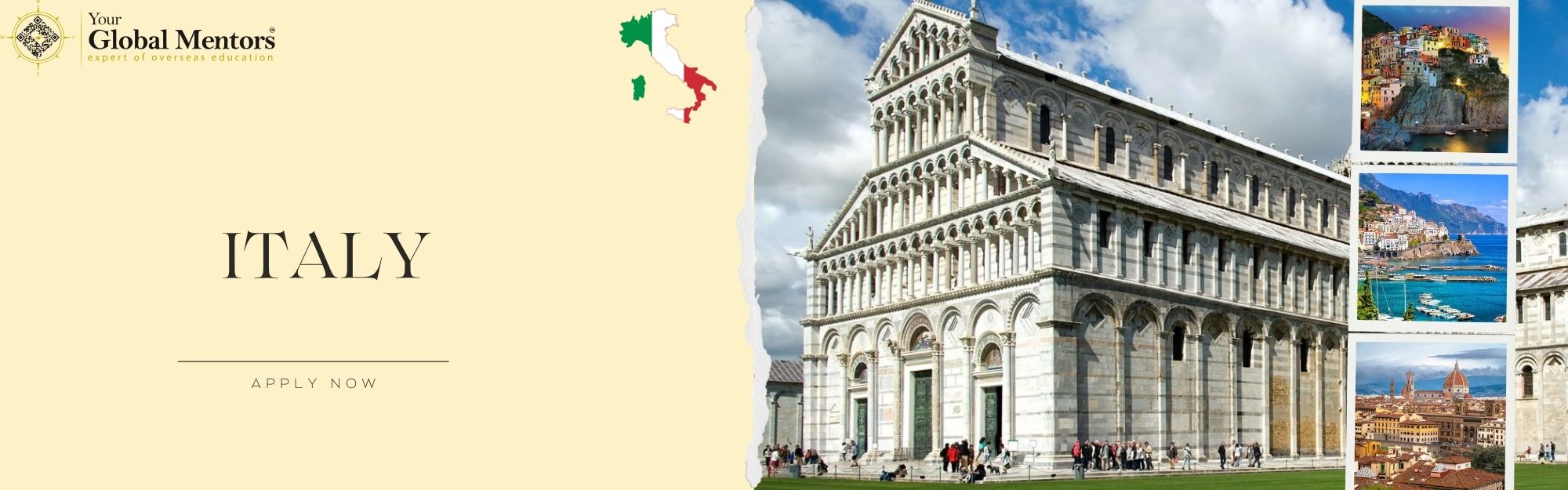
When it comes to finding a European study destination that combines world-class academic heritage, genuinely affordable tuition fees, EU-recognized degrees, and an unmatched quality of life, Italy stands in a category of its own. In 2026-2027, the opportunity to study in Italy is more compelling than ever for Indian students, with over 700 English-taught programs, tuition fees at public universities as low as €900-€4,000 per year, and a growing ecosystem of scholarships that can reduce total education costs to near zero for eligible students.
Italy is home to some of the world's oldest and most prestigious universities. The University of Bologna, founded in 1088, holds the distinction of being the oldest continuously operating university in the world. Politecnico di Milano ranks #98 globally in QS World University Rankings 2026, the highest-ranked technical university in Italy and one of Europe's finest for engineering, architecture, and design. Sapienza University of Rome and the University of Padua consistently rank among Europe's leading research universities, while Milan ranks #44 and Rome ranks #46 globally in QS Best Student Cities 2026.
Academic excellence in Italy is underpinned by a uniquely fair approach to tuition. Italy's public universities use the ISEE system (Indicatore della Situazione Economica Equivalente) to calculate fees based on family income. For Indian students, this means the ISEE Parificato system applies, and eligible students from lower-income backgrounds can pay as little as €150-€200 per year, making affordable education in Italy a genuine, not theoretical, proposition.
When combined with Italy's growing range of English-taught programs in science, engineering, business, and design, this fee structure makes higher education in Italy dramatically more accessible than the UK, USA, or Australia, often at total annual costs of just €8-€15 lakh for tuition and living combined.
The international student environment in Italy is vibrant and growing, with hundreds of thousands of international students enrolled across the country's 67 public and numerous private universities, and a steadily expanding Indian student community, particularly in cities like Milan, Bologna, Turin, Rome, and Pisa.
Degrees earned when you study in Italy are fully EU-recognized through the Bologna Process, respected by employers across 49 European countries, and valued globally in engineering, medicine, business, and design, making an Italian degree one of the most versatile qualifications you can earn in Europe.
Ready to explore Italy as your next academic home? Connect with Your Global Mentors today for expert, personalized guidance on your study in Italy journey in 2026-2027.
Facts About Italy
1. Italy is located in Southern Europe on the Mediterranean Sea.
2. Its capital and largest city is Rome.
3. Italy has a population of about 59 million people.
4. Italy's official currency is the Euro (€).
5. The official language is Italian.
6. Italy is a founding member of the European Union, NATO, and the United Nations.
7. Italy is home to Mount Etna, one of the world's most active volcanoes.
8. Italy has the highest number of UNESCO World Heritage Sites of any country (60, as of 2025).
9. Italy is the birthplace of foods such as pizza, pasta, and gelato.
10. Italy has the third-largest economy in the Eurozone, after Germany and France.
Estimated Monthly Living Cost for International Students in Italy
|
Expense Category |
Average Monthly Cost (€) |
Approx. Cost (₹)* |
|
Accommodation |
€300–€700 |
₹30,000–₹70,000 |
|
Food & Groceries |
€200–€350 |
₹20,000–₹35,000 |
|
Transportation |
€25–€50 |
₹2,500–₹5,000 |
|
Utilities & Internet |
€80–€150 |
₹8,000–₹15,000 |
|
Personal Expenses |
€100–€200 |
₹10,000–₹20,000 |
|
Total Estimated Monthly Cost |
€700–€1,450 |
₹70,000–₹1,45,000 |
*Note: All the costs mentioned are estimates and are subject to change.
Accommodation
Student accommodation in Italy typically costs €300-€700 (₹30,000-₹70,000) per month. Prices vary depending on the city, with larger cities like Milan and Rome generally being more expensive than smaller student cities.
Food & Groceries
Students usually spend €200-€350 (₹20,000-₹35,000) per month on groceries and occasional dining out. Cooking meals at home can help reduce monthly expenses.
Transportation
Public transportation costs around €25-€50 (₹2,500-₹5,000) per month. Many cities offer discounted travel passes for students, making daily commuting affordable.
Utilities & Internet
Utilities, including electricity, heating, water, and internet, typically cost €80-€150 (₹8,000-₹15,000) per month. These costs are often lower if utilities are included in the accommodation rent.
Personal Expenses
Students generally spend €100-€200 (₹10,000-₹20,000) per month on personal needs such as mobile bills, clothing, entertainment, and other miscellaneous expenses.
Total Monthly Living Cost
Overall, an international student in Italy can expect to spend approximately €700-€1,450 (₹70,000-₹1,45,000) per month on living expenses, depending on their lifestyle and the city where they study.
Want a personalized, city-specific budget plan? Reach out to Your Global Mentors today.
Benefits of Studying in Italy
Choosing to study in Italy in 2026-2027 offers a uniquely powerful combination of academic prestige, EU career access, cultural richness, and genuine affordability, a package that very few destinations in the world can match, particularly for ambitious Indian students.
Quality education is the defining strength of the Italian academic experience. Italy's higher education system combines centuries of academic tradition with modern, internationally aligned research and teaching. The Bologna Process framework ensures that programs are structured around internationally recognized standards, with Italian universities maintaining strong research output and industry partnerships across engineering, medicine, design, and business disciplines. Politecnico di Milano, for instance, guarantees internship placement for all Master's students through its career services office, a tangible commitment to graduate employability.
As a full EU member state, every degree earned when you study in Italy is fully EU-recognized and compatible with the Bologna Process framework across 49 European countries. This gives Italian graduates unmatched geographic career flexibility, whether you want to work in Germany, France, the Netherlands, Switzerland, or stay in Italy, your degree is equally valid everywhere.
Cultural diversity on Italian campuses is genuine and growing, with hundreds of thousands of international students from across Asia, Africa, and Europe contributing to a vibrant, multicultural academic community. Indian students find a welcoming, curious culture with a wide variety of food and increasingly active Indian student associations at major universities.
Safety and a student-friendly environment are hallmarks of life in Italy. Italian university cities consistently rank among Europe's safest, with low crime rates, excellent public services, and warm, community-oriented social environments that international students consistently highlight as key contributors to their well-being.
Italy's Schengen membership creates outstanding travel opportunities, budget flights, and affordable rail connections that put France, Spain, Germany, Switzerland, Greece, and dozens of other European destinations within easy reach during semester breaks.
Italy is a genuine global leader in research and innovation, particularly in engineering, biomedical sciences, AI, design, and sustainable architecture, with universities maintaining deep research partnerships with global companies and European research institutions that give students direct access to cutting-edge work.
Curious how these benefits align with your specific career and academic goals? Connect with Your Global Mentors for a free, personalized consultation on your study in Italy plans.
No scholarships available right now.
Program Duration in Italy
Understanding program lengths is a critical part of planning your study in Italy journey, as it directly shapes your financial strategy, visa timeline, scholarship applications, and post-graduation options.
Bachelor's programs in Italy follow the Bologna Process 3-year structure for most disciplines, with some programs like medicine, pharmacy, and architecture running longer. Annual undergraduate tuition at public universities ranges from € 900 to € 4,000 for most programs, and with the ISEE income-based system, eligible Indian students can pay significantly less. A Bachelor's degree in Italy from institutions like the University of Bologna, Sapienza University of Rome, or the University of Pisa carries strong global recognition at remarkably low cost; a full 3-year degree at maximum public tuition costs €9,000-€12,000 in total.
Master's programs are generally 2 years in duration and are the most popular entry point for Indian students who choose to study in Italy. Annual fees range from € 1,000 to € 5,000 at public universities, and up to € 18,000 to € 20,000 at premium private institutions like Bocconi. A Master's in Italy in engineering, computer science, data science, or business from Politecnico di Milano, University of Turin, or Bocconi delivers globally respected credentials, and at public universities, the total 2-year cost can fall to just ₹8-₹15 lakh when combined with DSU scholarship support.
MBA programs are available at Italy's leading business schools, including SDA Bocconi School of Management and MIP Politecnico di Milano, both globally ranked. MBA programs typically span 12 to 18 months, with fees at Bocconi reaching €18,000+/year, a significant investment, but substantially offset by Italy's strong fashion, luxury, and finance industries and the networking access these programs provide.
PhD programs in Italy are completely salaried; doctoral students receive approximately €1,050-€1,335 per month with full tuition coverage, making advanced research study in Italy one of Europe's most financially accessible doctoral pathways. PhD programs generally run for 3 years.
Academic intake periods in Italy follow a primary October/November intake aligned with the academic year starting in September/October, and a secondary February/March intake. For Indian students, the pre-enrollment process through the Universitaly portal is mandatory and typically opens several months before the intake. Students targeting the Fall 2027 intake should begin the Universitaly pre-enrollment process from February 2027.
Unsure which program level and intake fits your goals? Let Your Global Mentors map out your ideal study in Italy academic pathway for 2026-2027.
Work Opportunities in Italy
A. Most In-Demand Careers
Italy's diversified, innovation-driven economy creates meaningful work opportunities in Italy for skilled graduates, particularly in its globally recognized strengths of engineering, technology, fashion, luxury, finance, and biomedical sciences.
IT and Software Development is one of Italy's fastest-growing professional sectors, with Milan and Rome emerging as significant European tech hubs. The Italian government's digital transformation agenda has created sustained demand for software engineers, cybersecurity specialists, data engineers, and cloud architects, and graduates who study in Italy in IT-related disciplines step into a market that is actively seeking international tech talent.
Engineering professionals, particularly in automotive, biomedical, aerospace, civil, and sustainable engineering, are consistently in high demand. Italy is home to Ferrari, Lamborghini, Leonardo S.p.A., and Pirelli, all of which actively recruit engineering graduates from Politecnico di Milano, University of Turin, and other leading technical universities.
Business and Finance careers thrive in Milan, Italy's financial capital and home to a dense cluster of global banks, investment firms, insurance companies, and the growing Milan fintech ecosystem, creating strong graduate employment pathways for business and finance students.
Healthcare professionals are in growing demand as Italy's aging population drives consistent investment in healthcare infrastructure. Medical, pharmaceutical, and biomedical graduates from Italian universities find strong domestic and EU-wide employment pathways.
Logistics and Supply Chain careers benefit from Italy's position as a major European trade and manufacturing hub, particularly in the fashion, luxury goods, and automotive sectors, all of which maintain complex global supply chains centered on Italian manufacturing.
Data Science and AI are one of Italy's most rapidly expanding career fields, with universities and companies investing heavily in AI research, sustainable technology, and digital transformation, creating excellent post-study work opportunities in Italy for analytically skilled graduates.
Students can work 20 hours/week during term at Italy's minimum wage, generating meaningful income that directly offsets living costs throughout the academic year.
Want to know which courses best align with Italy's strongest career sectors? Talk to Your Global Mentors today for expert, career-mapped academic guidance.
B. Popular Courses to Study in Italy
Choosing the right course is the most important decision in your study in Italy journey, and certain disciplines consistently deliver the strongest combination of academic excellence, global recognition, and graduate career outcomes.
Computer Science programs at Politecnico di Milano, University of Turin, and University of Pisa are globally respected, with strong industry connectivity to Italy's growing tech sector and direct links to European and international employers. English-taught programs in Italy in computer science and data science are widely available at the master's level.
Engineering, spanning mechanical, civil, biomedical, aerospace, and sustainable energy engineering, is the flagship strength of Italian higher education. Politecnico di Milano and Politecnico di Torino both maintain world-class engineering programs with mandatory industry placements, research partnerships, and direct recruitment pipelines to major Italian and European companies.
Business Management programs at Bocconi University, SDA Bocconi, and MIP Politecnico di Milano attract significant numbers of international students in Italy, offering globally ranked qualifications with extraordinary corporate network access across fashion, luxury, finance, and consumer goods.
Finance and Accounting courses benefit from Milan's status as a major European financial center, giving students direct exposure to Italian and international banking, investment management, and the growing fintech sector.
Medicine (MBBS/MD) programs are a significant draw for Indian students who study in Italy, particularly at the University of Bologna, Sapienza University of Rome, University of Turin, and University of Pavia. Italian medical degrees are NMC-recognized and WHO-approved, and MBBS graduates can return to India to sit FMGE or NExT examinations to practice. Admission requires the IMAT entrance exam and a qualifying NEET score for Indian applicants.
Hospitality and Tourism programs in Italy are among the world's finest, given Italy's position as the world's fifth-most visited tourist destination. Schools like ALMA - The International School of Italian Cuisine - and hotel management programs across the country produce graduates who are immediately employable across the global hospitality industry.
Artificial Intelligence is a rapidly growing discipline, with dedicated AI and machine learning Master's tracks now available at Politecnico di Milano, University of Bologna, and Sapienza University of Rome, directly aligned with Italy's national AI strategy and growing investment in this sector.
Not sure which course best matches your career goals? Let Your Global Mentors help you shortlist the perfect program to study in Italy in 2026-2027.
Frequently Asked Questions (FAQs) - Study in Italy
1. Can
international students take up part-time jobs in Italy?
Yes. Students holding a Type D visa and a Residence Permit can work up to 20
hours per week during the academic term and up to 40 hours per week during
official holidays and semester breaks. Part-time jobs in hospitality, retail,
tutoring, and university research assistant positions are the most commonly
available for international students.
2. Are
there post-study work opportunities in Italy?
Yes. After completing their degree, graduates can apply for a Permesso di
Soggiorno per attesa occupazione, a job-seeking residence permit valid for up
to 12 months. This permits full-time work (40 hours/week) while searching for
employment. Once a job is secured, the permit converts to a standard work
permit. The 12-month job-seeking window is shorter than Ireland's 2 years or
Germany's 18 months, so beginning job applications before graduation is
strongly recommended.
3. Is
there a PR pathway after studying in Italy?
Yes. The pathway is: Student Permit → Job-Seeking Permit (12 months) → Work
Permit (renewable) → EU Long-Term Residence Permit (Carta di Soggiorno) after 5
years of total legal residence. Italian language proficiency at the B1 level is
required for PR applications. Processing takes 6-8 months, depending on the
region - Milan averages 5.5 months, Naples up to 10 months.
4. When
are the academic intake periods in Italy?
The primary intake is October/November (for the academic year beginning
September/October), with a secondary February/March intake available at many
institutions. Indian students targeting the Fall 2027 intake should begin the
Universitaly pre-enrollment process from February 2027 and should complete HRD
attestation and MEA Apostille at least 6–8 weeks before the visa appointment
window.
5. What
are the employment prospects after studying in Italy?
Strong, particularly in engineering, tech, biomedical sciences, fashion,
luxury, finance, and hospitality. Milan's dense corporate ecosystem and Italy's
globally recognized industrial strengths create genuine graduate employment
demand. MBBS graduates from NMC-recognized Italian universities can return to
India to sit FMGE or NExT examinations, while those who remain in Italy or the
EU benefit from the EU-recognized nature of their medical qualification across
all 27 member states.
Have more questions about eligibility, university selection, ISEE application, scholarships, or the Italian student visa process? Connect with Your Global Mentors for comprehensive, personalized, end-to-end guidance on your journey to study in Italy in 2026-2027.