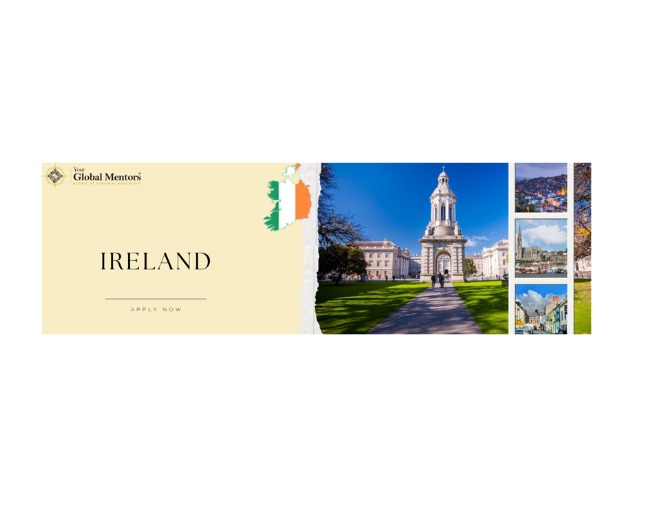
Why Study in Ireland?
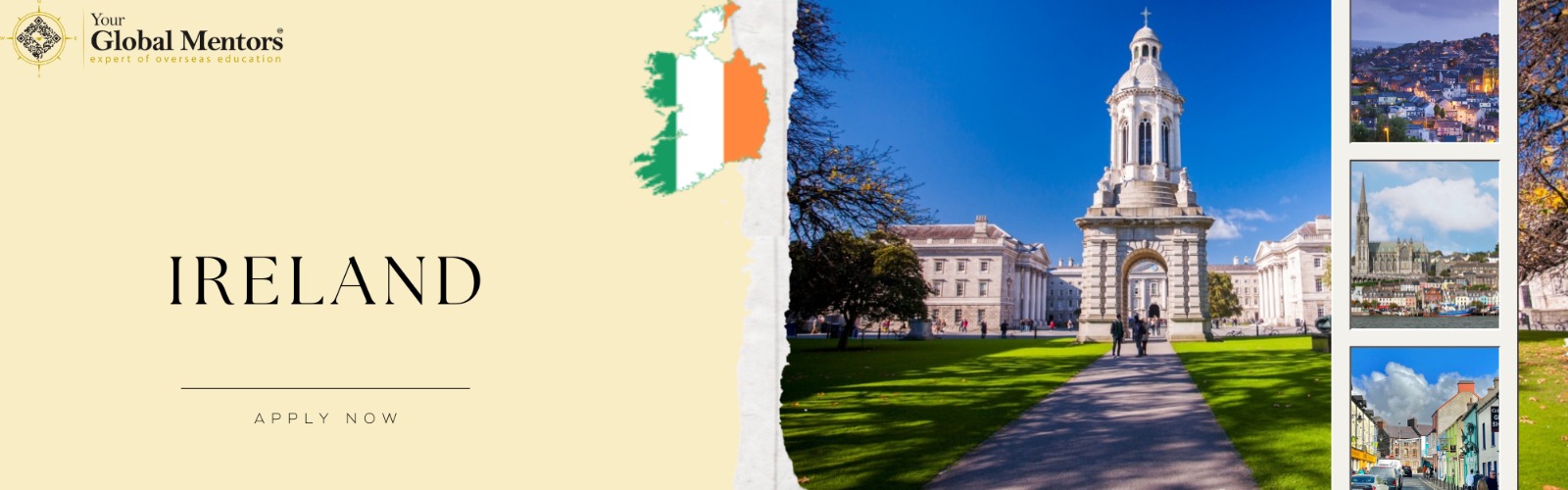
When it comes to identifying a study abroad destination that delivers the complete package, English-medium education, globally ranked universities, EU membership, and one of Europe's most generous post-study work pathways, Ireland stands alone. In 2026-2027, the case to study in Ireland has never been stronger for Indian students, and the numbers back this up decisively.
Ireland is the only major English-speaking technology hub within the European Union. Home to the European headquarters of Google, Meta, Apple, Microsoft, LinkedIn, Salesforce, Pfizer, and Stripe, all operating out of Dublin and Cork. Ireland offers Indian students direct access to the world's most powerful corporate ecosystem the moment they graduate. This is not a coincidence; it is the result of decades of deliberate government investment in education, research, and innovation infrastructure that has made Ireland Europe's premier destination for tech, pharma, and finance talent.
When it comes to affordable education in Ireland, tuition fees for international students at the undergraduate level range from €9,850-€28,000 per year, while taught Master's programs, the most popular choice for Indian students, range from €10,000-€35,000 per year. While higher than some European alternatives, these fees are meaningfully lower than equivalent programs in the US or UK, particularly when combined with Ireland's exceptional graduate salary prospects and generous post-study work entitlements.
The international student environment in Ireland is vibrant, welcoming, and growing. Ireland's universities actively support international students through dedicated offices, orientation programs, and multicultural communities, and with a large and established Indian diaspora already embedded in Irish professional life, Indian students arrive with genuine familiarity and community support.
Degrees earned when you study in Ireland carry exceptional global weight. Irish qualifications are fully EU-recognized, internationally accredited, and highly regarded by employers across Europe, the UK, India, the US, and the GCC, making an Irish degree one of the most versatile academic credentials you can hold.
Ready to explore Ireland as your next academic destination? Connect with Your Global Mentors today for expert, personalized guidance on your study in Ireland journey in 2026-2027.
Facts About Ireland
1. Ireland is the only predominantly English-speaking country in the European Union.
2. Dublin is the capital and largest city of Ireland.
3. Ireland is a member of the European Union and uses the euro (€) as its official currency.
4. English is the primary language of instruction at Irish universities.
5. International students on Stamp 2 permission can work 20 hours per week during term and 40 hours per week during designated holidays.
6. Ireland offers a 2-year stay-back opportunity for eligible master's graduates under the Third Level Graduate Programme.
7. Ireland is home to the European headquarters or major operations of global companies including Google, Meta, Microsoft, Amazon, and Apple.
8. Ireland has seven public universities and a wide range of higher education institutions offering internationally recognized degrees.
9. Irish degrees are internationally recognized and highly valued by employers worldwide.
10. Ireland is known for its welcoming culture, strong education system, and high quality of life, making it a popular destination for international students.
Living cost
|
Expense Category |
Monthly Cost (EUR) |
Monthly Cost (INR) |
|
Accommodation (On-Campus) |
€800 – €1,400 |
₹87,472 – ₹1,53,076 |
|
Accommodation (Shared Private) |
€600 – €1,000 |
₹65,604 – ₹1,09,340 |
|
Food & Groceries |
€250 – €450 |
₹27,335 – ₹49,203 |
|
Transportation |
€50 – €120 |
₹5,467 – ₹13,121 |
|
Health Insurance (mandatory) |
€42 – €67 |
₹4,592 – ₹7,326 |
|
Mobile & Internet |
€20 – €40 |
₹2,187 – ₹4,374 |
|
Study Materials & Books |
€30 – €60 |
₹3,280 – ₹6,560 |
|
Personal & Miscellaneous |
€100 – €200 |
₹10,934 – ₹21,868 |
|
Total (On-Campus) |
€1,292 – €2,337/month |
₹1,41,267 – ₹2,55,468/month |
|
Total (Shared Apartment) |
€1,092 – €1,937/month |
₹1,19,399 – ₹2,11,792/month |
1. Accommodation - On-Campus (€800-€1,400 | ₹87,472-₹1,53,076/month)
On-campus accommodation is the most convenient housing option for international students in Ireland, placing you within walking distance of lectures, libraries, and student support facilities. However, it is also the most expensive category in the budget, and availability is strictly limited, especially in Dublin. Apply immediately after receiving your offer letter, as waitlists fill up within days. Dublin sits at the upper end of this range, while on-campus options in Cork, Galway, and Limerick are noticeably cheaper.
2. Accommodation - Shared Private Apartment (€600-€1,000 | ₹65,604-₹1,09,340/month)
Sharing a private apartment with 2-3 other students is the most popular and practical housing choice from Year 2 onwards. It offers more independence than on-campus living at a meaningfully lower cost. Regional cities like Cork, Galway, and Limerick are 15-25% cheaper than Dublin for comparable shared accommodation. Always check lease terms carefully- some landlords charge utilities separately, which can add €50–€100/month to your actual cost.
3. Food and Groceries (€250-€450 | ₹27,335-₹49,203/month)
Food is a highly controllable expense in Ireland. Budget supermarket chains like Aldi, Lidl, Tesco, and Dunnes Stores keep grocery costs manageable for students who cook regularly at home. University canteens offer affordable hot meals on campus. Students who cook most meals at home stay comfortably at the lower end of this range, while those who eat out frequently, where a casual meal costs €12-€20 per person, push toward the upper end quickly.
4. Transportation (€50-€120 | ₹5,467-₹13,121/month)
The Student Leap Card is the single most important transport tool for students in Ireland, offering reduced fares on buses, trains, and trams across the country. Students in smaller cities like Galway or Limerick often walk or cycle to campus, keeping transport costs near zero. Dublin students commuting by bus or Luas tram spend more, sitting toward the upper end of this range. Always purchase the Student Leap Card immediately on arrival; it pays for itself within the first week.
5. Health Insurance - Mandatory (€42-€67 | ₹4,592-₹7,326/month)
Health insurance is a legal requirement for Indian students on an Irish Study Visa and must be in place before your visa is approved; it is not optional. The annual cost of €500-€800 works out to just €42-€67 per month, making it one of the most affordable mandatory insurance obligations among all major study destinations. Always check whether your university offers a group insurance scheme first, as these are often cheaper than purchasing individual coverage independently.
6. Mobile and Internet (€20-€40 | ₹2,187-₹4,374/month)
Ireland has excellent mobile infrastructure, with affordable SIM-only plans from providers like Three, Vodafone, and Tesco Mobile offering generous data packages from as little as €15–€20/month. Campus Wi-Fi is free and reliable at all Irish universities, significantly reducing the need for large data plans during study hours. Many shared apartments include broadband internet in the rent; always confirm this before purchasing a separate plan to avoid paying twice.
7. Study Materials and Books (€30-€60 | ₹3,280-₹6,560/month)
This is deliberately the smallest cost category because Irish universities invest heavily in making academic resources freely accessible. University libraries provide free access to textbooks, journals, and digital databases. Most courses use digital reading materials shared through the university's online learning portal. First-year students may spend closer to €60 initially, but active use of library resources and second-hand textbook groups on campus quickly brings this down from the second semester onward.
8. Personal and Miscellaneous (€100-€200 | ₹10,934-₹21,868/month)
This flexible category covers toiletries, clothing, subscriptions, and social activities. Students who actively use Student Leap Card discounts on entertainment and dining, shop at budget retailers like Penneys (Primark) and Dealz, and limit expensive social outings consistently stay at the lower end. One important first-year note: budget a one-time amount for warm, waterproof clothing on arrival, as Ireland's wet and windy climate requires proper gear that doesn't need to be replaced annually.
The Bottom Line
The difference between spending €1,092/month and €2,337/month in Ireland comes down to three decisions: which city you choose, whether you live on-campus or in shared private accommodation, and how often you cook versus eat out. Students in Galway or Limerick who share a private apartment and cook regularly at home can live very comfortably at ₹1,19,399/month, while Dublin students in on-campus accommodation with active social lives may spend closer to ₹2,55,468/month. Part-time earnings of €800-€950/month during term cover a significant portion of these costs, making Ireland genuinely manageable on a well-planned student budget.
*Note: All the costs mentioned are estimates and are subject to change.
Want a personalized budget plan for your specific city and university in Ireland? Get in touch with Your Global Mentors today.
Benefits of Studying in Ireland
Choosing to study in Ireland in 2026-2027 is one of the most strategically intelligent academic decisions an Indian student can make, delivering benefits that extend far beyond a prestigious degree into long-term career, residency, and life outcomes.
Quality education defines the Irish academic experience. Ireland's higher education institutions are research-intensive, internationally connected, and built around industry relevance, particularly in technology, pharmaceutical sciences, finance, and engineering. Programs are designed with strong employer input, and most include mandatory internship or work placement components that ensure graduates enter the job market with real professional experience already on their CV.
As a full EU member state, degrees earned when you study in Ireland are fully EU-recognized across all 27 member countries, giving Irish graduates unmatched geographic career flexibility across Europe. Whether you want to work in Germany, France, the Netherlands, or stay in Ireland, your degree carries the same weight everywhere.
Cultural diversity on Irish campuses is genuine and growing. Ireland's universities attract students from over 160 countries, and a large, established Indian community is deeply embedded in Irish professional and social life, providing Indian students with both cultural familiarity and true international broadening simultaneously.
Safety and a student-friendly environment are hallmarks of life in Ireland. Ireland consistently ranks among Europe's safest and most politically stable countries, with low crime rates, excellent public services, and university campuses that maintain dedicated international student support offices with academic, welfare, and career guidance.
Ireland's location on the western edge of Europe provides easy travel opportunities; budget flights from Dublin connect students to London, Paris, Amsterdam, Barcelona, and dozens of other major European cities within 1-3 hours, making weekend and semester break exploration exceptionally accessible.
Finally, Ireland is a genuine global leader in research and innovation, particularly in biotechnology, pharmaceuticals, computer science, and AI, with universities maintaining deep research partnerships with the multinational companies headquartered across the country.
Curious how these benefits map to your specific goals? Get in touch with Your Global Mentors for a free, personalized consultation on your study in Ireland journey.
No scholarships available right now.
Program Duration in Ireland
Understanding program lengths is a critical part of planning your study in Ireland journey, as it directly shapes your financial strategy, visa timeline, and post-graduation options, particularly around Ireland's post-study work pathway.
Bachelor's programs in Ireland typically run for 3 to 4 years, depending on the discipline. Science, engineering, pharmacy, and nursing programs are generally 4 years, while arts, business, and humanities programs run 3 years. Annual undergraduate tuition for international students ranges from €9,850–€28,000, with medicine reaching up to €55,000 per year at the upper extreme. A Bachelor's degree in Ireland from institutions like UCD, UCC, or the University of Galway carries strong global recognition and provides access to the 12-month Stamp 1G post-study work permit.
Master's programs are the most popular entry point for Indian students who choose to study in Ireland, and for very good reason. Most taught Master's programs in Ireland are just 1 year in duration, keeping total tuition costs significantly lower than a 2-year Master's elsewhere while still delivering globally recognized credentials and access to Ireland's exceptional 2-year post-study work permit. Annual fees for Masters in Ireland range from €10,000–€35,000, with STEM and business programs at the upper end.
MBA programs are offered at Ireland's leading business schools, with University College Dublin's Smurfit School, Trinity Business School, and University College Cork all offering globally ranked MBA programs. MBA programs typically span 12 to 18 months and deliver exceptional ROI given Ireland's high graduate salaries and zero-tax-on-savings benefits for skilled professionals.
PhD programs in Ireland generally run 3 to 5 years and are often funded through research scholarships or stipends, particularly for candidates in STEM, life sciences, and engineering, making doctoral study in Ireland financially accessible for high-achieving researchers. PhD graduates receive the full 2-year Stamp 1G post-study work permit.
Academic intake periods in Ireland follow a primary September intake, the most popular with the widest program availability and best scholarship options, and a smaller January/February intake available at select institutions. For the September 2026 intake, most application deadlines fell between February and May 2026. For September 2027, students should begin shortlisting programs and preparing applications from October 2026 onward.
Unsure which program level and intake fits your goals? Let Your Global Mentors map out your ideal study in Ireland academic pathway for 2026-2027.
Work Opportunities in Ireland
A. Most In-Demand Careers
Ireland's extraordinary concentration of global corporate headquarters, combined with a genuine shortage of skilled professionals in key sectors, creates some of the strongest work opportunities in Ireland for international graduates anywhere in Europe.
IT and Software Development is Ireland's single highest-demand professional sector. With the European HQs of Google, Meta, Apple, Microsoft, LinkedIn, and Stripe all in Dublin, demand for software engineers, cloud architects, cybersecurity professionals, and full-stack developers consistently outpaces supply. Graduate salaries in Dublin for computer science and data analytics roles range from € 35,000 to € 50,000 in 2026, exceptional starting points in a zero-income-tax-on-investment environment.
Engineering professionals, particularly in pharmaceutical, biomedical, chemical, and civil engineering, are consistently in high demand. Ireland's pharmaceutical sector is the world's largest per capita, with companies like Pfizer, Johnson & Johnson, AbbVie, and MSD operating major manufacturing and research facilities that continuously recruit engineering graduates.
Business and Finance roles thrive in Dublin's dense corporate cluster, home to major European operations for global banks, investment firms, insurance companies, and a rapidly growing fintech ecosystem. Irish business graduates step into a richly connected professional environment with genuinely competitive graduate packages.
Healthcare professionals are in persistent high demand, driven by Ireland's aging population and sustained government investment in healthcare infrastructure. Nursing, pharmacy, physiotherapy, and healthcare administration graduates find consistent employment pathways across Ireland's expanding hospital and community care network.
Logistics and Supply Chain careers benefit from Ireland's position as a major EU trade gateway, with significant pharmaceutical, technology, and agri-food exports creating robust professional openings in supply chain management and international logistics.
Data Science and AI are one of Ireland's fastest-rising career fields, with the country actively positioning itself as a European AI hub, creating outstanding post-study work opportunities in Ireland for analytically skilled graduates in machine learning, data engineering, and AI research.
Working 20 hours/week during term at Ireland's 2026 minimum wage of €14.15/hour generates approximately €800–€950/month after tax, meaningfully offsetting living costs.
Want to align your course choice with Ireland's most in-demand sectors? Talk to Your Global Mentors for expert career-pathway guidance.
B. Popular Courses to Study in Ireland
Choosing the right course is the foundation of a successful study experience in Ireland, and certain disciplines consistently deliver the strongest combination of academic quality, industry alignment, and graduate employment outcomes.
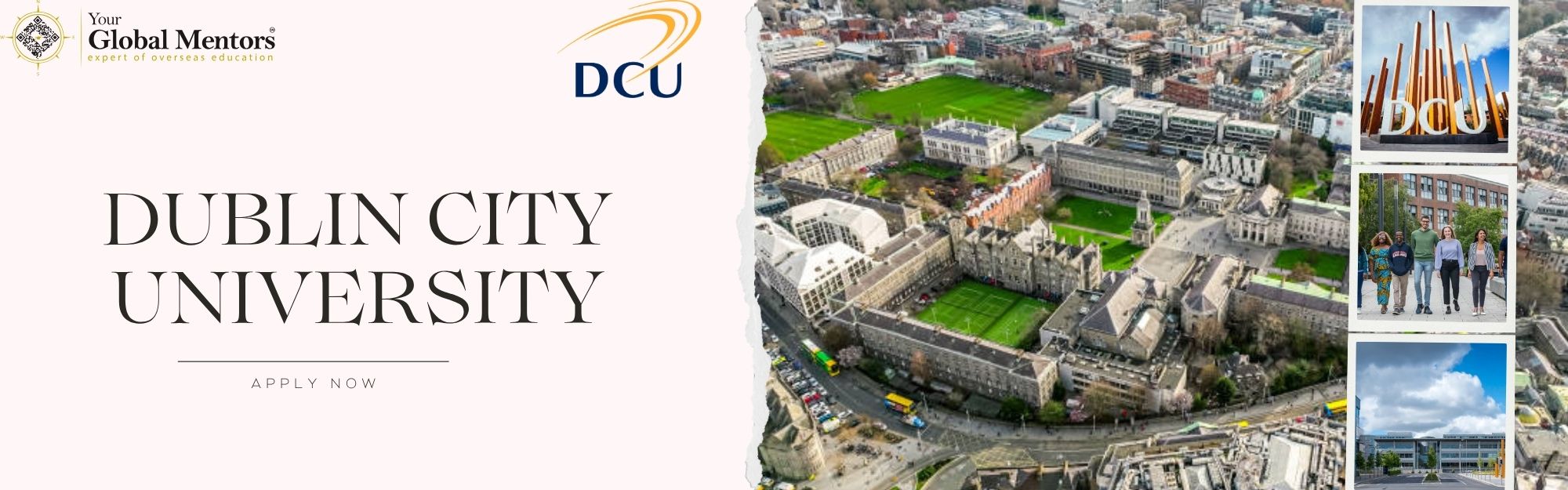
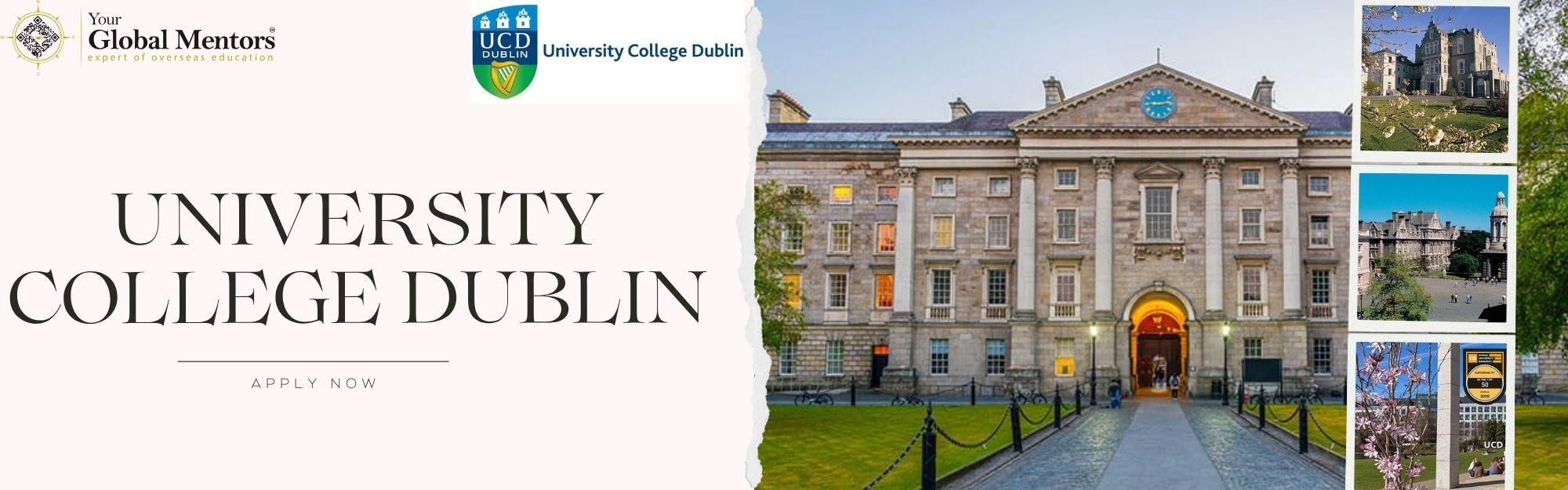
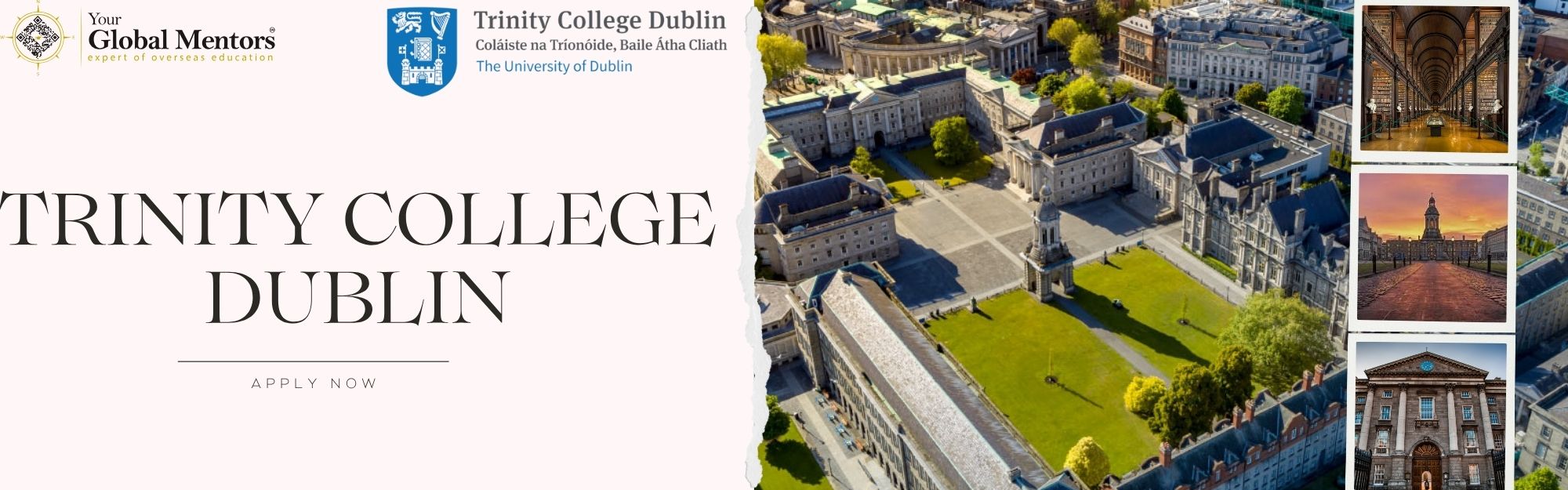
Computer Science programs at Trinity College Dublin, UCD, and Dublin City University are globally respected, with Ireland's tech ecosystem providing unmatched internship and employment connectivity from the very first semester. English-taught programs in Ireland in computer science attract some of the highest numbers of Indian postgraduate students.
Engineering - spanning pharmaceutical, biomedical, civil, electrical, and chemical disciplines- is a cornerstone strength of Irish higher education in Ireland, particularly given the country's world-leading pharmaceutical and medical device manufacturing sectors that create consistent graduate employment demand.
Business Management programs at UCD Smurfit School, Trinity Business School, and University College Cork attract significant numbers of international students in Ireland, offering internationally accredited qualifications with strong corporate networks and mandatory industry engagement built into the curriculum.
Finance and Accounting courses benefit directly from Dublin's growing status as a European fintech and financial services hub, with the International Financial Services Centre (IFSC) hosting the European operations of major global banks and creating strong graduate employment pathways.
Medicine programs in Ireland are among Europe's most rigorous and internationally respected. While highly competitive and carrying the highest tuition fees (up to €55,000/year), Irish medical degrees are globally recognized and open pathways to practice across Ireland, the UK, the EU, and internationally.
Hospitality and Tourism programs are gaining increasing relevance as Ireland's tourism sector continues to grow, with programs at Technological University Dublin and other institutions providing practical, industry-linked training in hospitality management and international tourism.
Artificial Intelligence is rapidly becoming one of Ireland's most sought-after academic disciplines, with dedicated AI programs now available at TCD, UCD, and DCU, directly aligned with Ireland's national ambition to become a European leader in AI research and development.
Not sure which course best matches your career ambitions? Let Your Global Mentors help you shortlist the perfect program to study in Ireland in 2026-2027.
6. Frequently Asked Questions (FAQs) — Study in Ireland
1. Do
Indian students need a visa to study in Ireland?
Yes. Indian students need a Long Stay "D" Study Visa for programs
longer than 90 days. Once in Ireland, students must register with Irish
immigration to receive an Irish Residence Permit (IRP) under Stamp 2, which
permits legal residence, study, and part-time work during the course. The
single journey visa fee is €60, and the multiple journey visa costs €100.
Students must demonstrate access to at least €10,000 in liquid funds for living
expenses.
2. Are
there English-taught programs in Ireland?
Yes. English is the primary and official language of instruction across all
Irish universities, making every program in Ireland an English-taught program —
a significant advantage for Indian students already educated in English-medium
institutions.
3. Are
there post-study work opportunities in Ireland?
Yes, and Ireland's post-study work pathway is one of Europe's most generous.
Bachelor's graduates receive a 12-month Stamp 1G post-study work permit, while
Master's and PhD graduates receive a full 24-month Stamp 1G, allowing full-time
work (40 hours/week) for any employer without requiring separate work permit
sponsorship during this period.
4. When
are the academic intake periods in Ireland?
The primary intake is September, with the widest program availability and best
scholarship options. A smaller January/February intake is available at select
institutions. For September 2027, students should begin shortlisting and
preparing applications from October 2026, with most deadlines falling between
February and May 2027.
5. What
are the employment prospects after studying in Ireland?
Exceptional. The Higher Education Authority Graduate Outcomes Survey 2025
reports a median graduate salary of €37,000 nine months after graduation, with
approximately 49% of graduates earning over €40,000 annually. Ireland's 86.9%
graduate employment rate, combined with the Critical Skills Employment Permit
pathway and Dublin's concentration of global tech, pharma, and finance
headquarters, makes the employment prospects for students who study in Ireland
among the strongest in Europe.
Have more questions about eligibility, university selection, scholarships, or the Irish Study Visa process? Connect with Your Global Mentors for comprehensive, personalized, end-to-end guidance on your journey to study in Ireland in 2026-2027.