
University of Connecticut
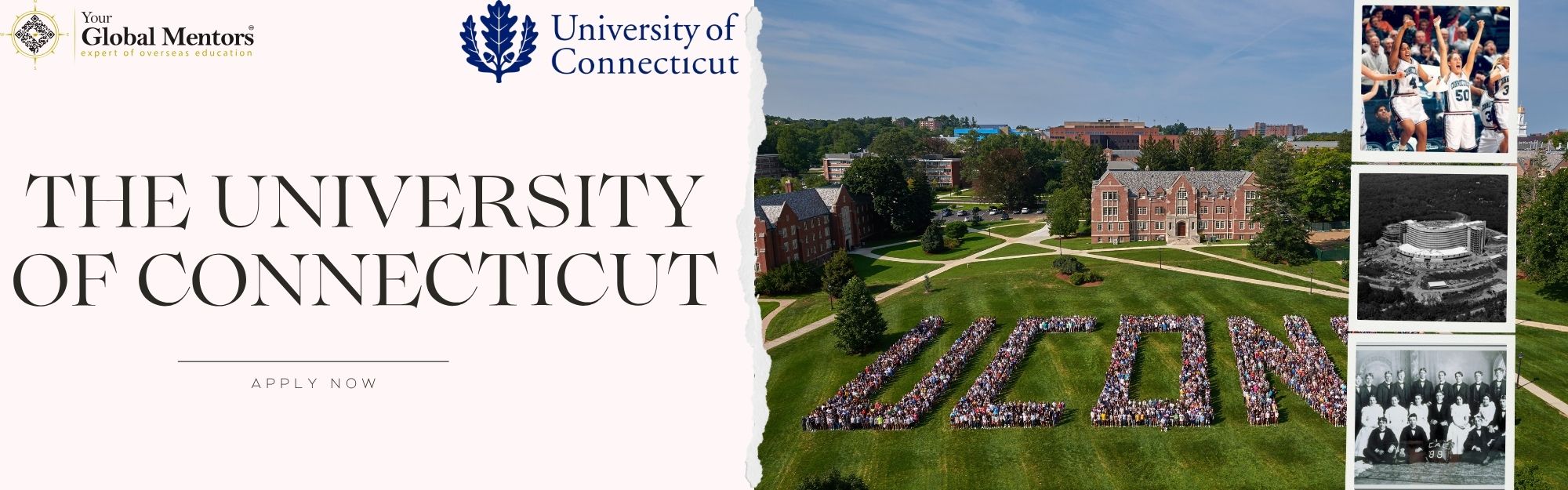
The University of Connecticut is a flagship public research university offering world-class undergraduate, graduate, and professional programs across a broad range of disciplines. As one of the leading public institutions in the United States, the University of Connecticut blends research excellence, strong industry partnerships, and a vibrant campus life that cultivates leadership, innovation, and global perspectives. The University of Connecticut’s academic portfolio includes award-winning programs in engineering, business, health sciences, environmental sciences, education, arts and humanities, and social sciences. With multiple campuses across Connecticut and cutting-edge research centres, the University of Connecticut provides a supportive environment for international students who seek rigorous academics, career-ready skills, and a welcoming community.
Why Indian students choose University of Connecticut: The University of Connecticut’s commitment to undergraduate research opportunities, strong faculty mentorship, proven career outcomes, and a diverse student body make it an attractive destination. The University of Connecticut emphasises experiential learning through internships, co-ops, and hands-on labs—critical for students aiming to launch careers in technology, healthcare, finance, and research. Your Global Mentors provides tailored University of Connecticut application strategies, ensuring your academic profile, Statement of Purpose (SOP), Letters of Recommendation (LOR), and supplemental materials highlight the unique strengths that UConn values. For international applicants, understanding University of Connecticut admission patterns, scholarship cycles, and visa documentation requirements is essential; our consultants guide you through each step of the University of Connecticut admissions journey with precision and clarity.
The University of Connecticut is recognised nationally and internationally for its research, academic quality, and student outcomes. When evaluating potential universities, the University of Connecticut consistently ranks among the top public universities in the United States for academic excellence, research output, and innovation. While QS World University Rankings may place the University of Connecticut variably by year and subject, UConn’s reputation in fields like Agricultural & Biological Sciences, Engineering, Business, and Health Sciences translates into strong subject-specific recognition. International ranking placements reflect the University of Connecticut’s research productivity, citation impact, and global collaborations.
For prospective international students, the University of Connecticut’s regional and subject rankings matter because they influence scholarship opportunities, employer recognition, and graduate employability. Your Global Mentors tracks annual ranking updates for the University of Connecticut and other top-tier institutions to align application timelines and scholarship planning with the University of Connecticut’s peak admission windows. For the most current and official University of Connecticut ranking data, prospective applicants can review the University of Connecticut’s institutional pages and recognised ranking providers, and Your Global Mentors will help interpret how those rankings affect your chances for merit-based aid and program competitiveness.
The University of Connecticut operates multiple campuses across the state of Connecticut, each designed to deliver specialised academic ecosystems while maintaining the University of Connecticut’s unified educational mission. The Storrs campus is the flagship hub, featuring expansive green quads, advanced research laboratories, comprehensive student services, and residential communities that create a classic collegiate experience. Other University of Connecticut campuses include regional centres and specialised facilities that support professional programs, health sciences, law, and industry partnerships.
Student life at the University of Connecticut blends academics with extracurriculars, athletic events, student clubs, cultural organisations, and service-learning opportunities. International students at the University of Connecticut benefit from dedicated orientation programs, English-language support, cultural exchange initiatives, and campus offices that provide visa guidance and employment regulations. Housing at University of Connecticut ranges from traditional dormitories to suite-style living and family housing, with campus accommodation help available for international students who need guidance on selecting walkable, safe, and convenient options. The University of Connecticut’s campus infrastructure also includes career centres, wellness services, and international student offices that assist with internships, on-campus jobs, and CPT/OPT processes.
Your Global Mentors provides a campus accommodation help service for University of Connecticut applicants—evaluating housing options near UConn campuses, budgeting accommodations, and arranging temporary stay logistics for international arrival. For visual references and virtual tours of the University of Connecticut campuses, prospective students can explore the University of Connecticut's official website and virtual tour pages to better understand site-specific amenities and campus culture.
The University of Connecticut offers an extensive portfolio of undergraduate and graduate programs that combine foundational learning with applied experience. Popular undergraduate majors at University of Connecticut include Mechanical Engineering, Computer Science, Finance, Business Analytics, Nursing, Psychology, Biology, Environmental Science, and Communications. Graduate programs at University of Connecticut span master’s and doctoral degrees, professional degrees in law and health, and interdisciplinary offerings such as biomedical engineering, public policy, and data science. Each University of Connecticut program includes a curriculum that emphasises research projects, capstone experiences, internships, and collaborative learning to prepare students for competitive roles in industry and academia.
At University of Connecticut, course descriptions typically include core subject areas, elective pathways, laboratory or practicum components, and research or thesis requirements for degree completion. University of Connecticut faculty are active researchers; many courses integrate current research findings and industry partnerships. For students seeking specialised tracks—such as Artificial Intelligence within Computer Science, Sustainable Systems within Environmental Science, or Healthcare Management within Business—the University of Connecticut provides clear course maps and elective clusters that enhance employability. Your Global Mentors help University of Connecticut applicants select the right courses and specialisations, create targeted SOPs aligned with University of Connecticut program objectives, and position transferable skills and project experiences to meet program expectations.
Accounting
Business Analytics
Business Economics
Business Information Systems
Finance Human Resources
Marketing
Innovation and Entrepreneurship
International Busines
International Researcher
Journalists and media personnel
Language translator
Sociologist
Management of a Hotel
Intelligence on cyber-threats and incident response
Software and security administration
Cryptography
Principles of security design
Computer ethics and law
Cyber security
Threats from cyberspace
Computer systems and networks
Environmental legislation
Petroleum Engineering
Electrical Engineering
Biomedical Engineering
Aerospace Engineering
Mechanical Engineering
Industrial Engineering
Manufacturing Engineering
Systems Engineering
Avionics and Aeronautical Engineering
Process engineering
Marine Engineering
Engineering Science
Materials and Mineral Engineering
Industrial Instrumentation
Building conservation
Interior design
Civil engineering
Structural engineering
Production design
Understanding the University of Connecticut tuition and cost of attendance is crucial for planning. Tuition for international students at University of Connecticut varies by program, level of study, and campus. Undergraduate international tuition typically reflects out-of-state rates plus program fees; graduate program fees vary by department and may include laboratory or clinical fees. Beyond tuition, students must budget for health insurance, housing, transportation, textbooks, and living expenses. The University of Connecticut offers assistantships, fellowships, and limited merit scholarships for graduate students, which can offset costs for eligible candidates.
Your Global Mentors provides a detailed cost projection for University of Connecticut applicants tailored to selected programs. Our package includes average tuition breakdowns, recommended budgets for living expenses (housing, food, transport), and financial planning support, including education loan assistance and scholarship application assistance. We also guide applicants through the University of Connecticut’s official tuition pages and financial aid portals to locate program-specific fees and payment deadlines. For the most accurate University of Connecticut tuition figures, applicants should consult the University of Connecticut’s official pages; Your Global Mentors will help interpret those numbers and craft a financial plan for your University of Connecticut education.
University of Connecticut’s acceptance rate varies across programs and levels. Competitive programs—like engineering, business, and healthcare—may exhibit lower acceptance rates due to high demand and selective criteria. Meanwhile, some regional or less competitive programs may offer higher acceptance rates. Acceptance decisions at University of Connecticut consider academic records, standardised test scores (where required), Statement of Purpose, Letters of Recommendation, and alignment with program objectives. For international applicants, English proficiency tests (e.g., IELTS, TOEFL) and validated academic credentials carry significant weight.
Your Global Mentors analyses historical admission trends at University of Connecticut and helps applicants craft a strategy that maximises acceptance probability. We recommend program selection aligned with your academic profile, strengthening supporting documents (SOP, LOR, resume), and timing applications to key University of Connecticut deadlines. While acceptance rates are valuable indicators, Your Global Mentors emphasises the qualitative aspects of admissions at University of Connecticut—demonstrated research experience, clarity of purpose, and fit with departmental goals often influence admissions outcomes as much as quantitative metrics.
Your Global Mentors (YGM) provides a holistic and transparent review service for University of Connecticut applicants. Our review includes a full audit of your academic profile, targeted feedback on your Statement of Purpose for University of Connecticut programs, editing of Letters of Recommendation, and a resume rewrite that aligns with the University of Connecticut’s expectations. YGM’s consultants specialise in University of Connecticut admissions norms and will assess your chances, recommend program matches, and draft persuasive, authentic narratives tailored to University of Connecticut faculty priorities.
What YGM Audit Includes for University of Connecticut applicants:
Comprehensive application checklist and deadline calendar for University of Connecticut programs.
SOP critique and rewrite, emphasising research alignment and career goals.
LOR guidance notes for recommenders to use when writing for the University of Connecticut.
Resume reformat to highlight projects, internships, and skills relevant to University of Connecticut programs.
Mock interview and interview preparation tailored to the University of Connecticut departmental interviews.
Scholarship and education loan assistance planning specific to the University of Connecticut costs.
YGM’s track record includes successful placements at U.S. public research universities, including the University of Connecticut; our University of Connecticut-focused packages are optimised for international applicants seeking clarity, confidence, and competitive advantage in their applications.
Scholarship opportunities at University of Connecticut vary by program, department, and student profile. The University of Connecticut offers merit-based scholarships, departmental fellowships, research assistantships, and needs-based financial aid for qualifying students. International students may be eligible for select scholarships and assistantships that offset tuition and living costs. Competitive scholarships at University of Connecticut often require early application, strong academic records, and demonstrable research potential. Your Global Mentors help University of Connecticut applicants identify scholarship opportunities, craft scholarship essays, and compile supporting documents that increase the likelihood of receiving awards.
How YGM supports scholarship applications for the University of Connecticut:
Database of University of Connecticut scholarships and external scholarship sources relevant to international students.
Application timelines and a prioritised list of scholarship targets for each program at University of Connecticut.
Scholarship essay coaching and editing with a focus on the University of Connecticut’s selection criteria.
Assistantship application guidance for research and teaching roles within the University of Connecticut departments.
Personalised cost-savings strategy combining scholarships, loans, and part-time work options.
For the latest University of Connecticut scholarship listings and eligibility criteria, applicants should consult the University of Connecticut’s official financial aid pages and departmental fellowship notices. Your Global Mentors will interpret those details and prepare a competitive application strategy.
Applying to the University of Connecticut requires a coherent set of academic and supporting documents. Typical University of Connecticut application components include: completed online application form, official transcripts (with certified translations if required), Statement of Purpose, Letters of Recommendation, standardised test scores (if required by program), English proficiency scores (IELTS/TOEFL), updated resume/CV, and any program-specific supplements such as portfolios or writing samples. International applicants to University of Connecticut must also provide proof of funding for visa purposes and comply with credential evaluation standards when requested.
Your Global Mentors assist University of Connecticut applicants by preparing a verified checklist and ensuring timely submission:
Application strategy and program matching to the University of Connecticut programs.
Document collection plan: transcripts, certificates, passport, and translations.
SOP and LOR drafting and best-practice templates for the University of Connecticut.
Credential evaluation guidance (if required by the University of Connecticut).
Assistance with university-specific forms and portal navigation for the University of Connecticut.
Final application review and submission monitoring to University of Connecticut’s deadlines.
Graduates from the University of Connecticut have strong placement records across industry sectors, including technology, consulting, healthcare, finance, and non-profit organisations. The University of Connecticut’s Career Services collaborates with employers to provide recruitment fairs, internships, on-campus interviews, and career coaching. Typical career outcomes for University of Connecticut graduates include roles at multinational corporations, research labs, startups, and graduate school placements at leading institutions.
Your Global Mentors provides placement-readiness coaching targeted to University of Connecticut programs: resume optimisation, LinkedIn profile overhaul, company-targeted application strategies, interview preparation tailored to U.S. employers, and networking tactics to leverage the University of Connecticut’s alumni network. For international students graduating from the University of Connecticut, YGM also offers guidance on CPT/OPT processes and employer sponsorship pathways. Placement success at University of Connecticut depends on academic performance, internship experience, and proactive career planning—areas where YGM provides hands-on coaching to maximise real-world outcomes.
Score cut-offs for admission to University of Connecticut programs can vary by program, level, and year. For undergraduate admissions, competitive GPA and standardised test scores (when required) matter; for graduate admissions, GPA, subject-specific tests (if required), and research experience are heavily weighted. English proficiency requirements at University of Connecticut often include minimum IELTS or TOEFL scores—specific thresholds depend on program and department. The University of Connecticut may accept other evidence of English proficiency, such as completion of prior degrees in English or institutional assessments.
Your Global Mentors help applicants decode the University of Connecticut’s score cut-offs and offer tailored strategies to meet or exceed them:
Minimum IELTS/TOEFL targets for University of Connecticut programs and exam preparation support.
GPA equivalency mapping for Indian university scores to University of Connecticut expectations.
Mock assessments and score-boosting strategies for University of Connecticut-aligned applications.
If a student falls short of the cut-off, alternative pathways and conditional admission strategies for the University of Connecticut are explored.
For precise University of Connecticut cut-off values and program-specific thresholds, authoritative University of Connecticut admissions pages should be consulted, and YGM will translate that guidance into an actionable applicant plan.