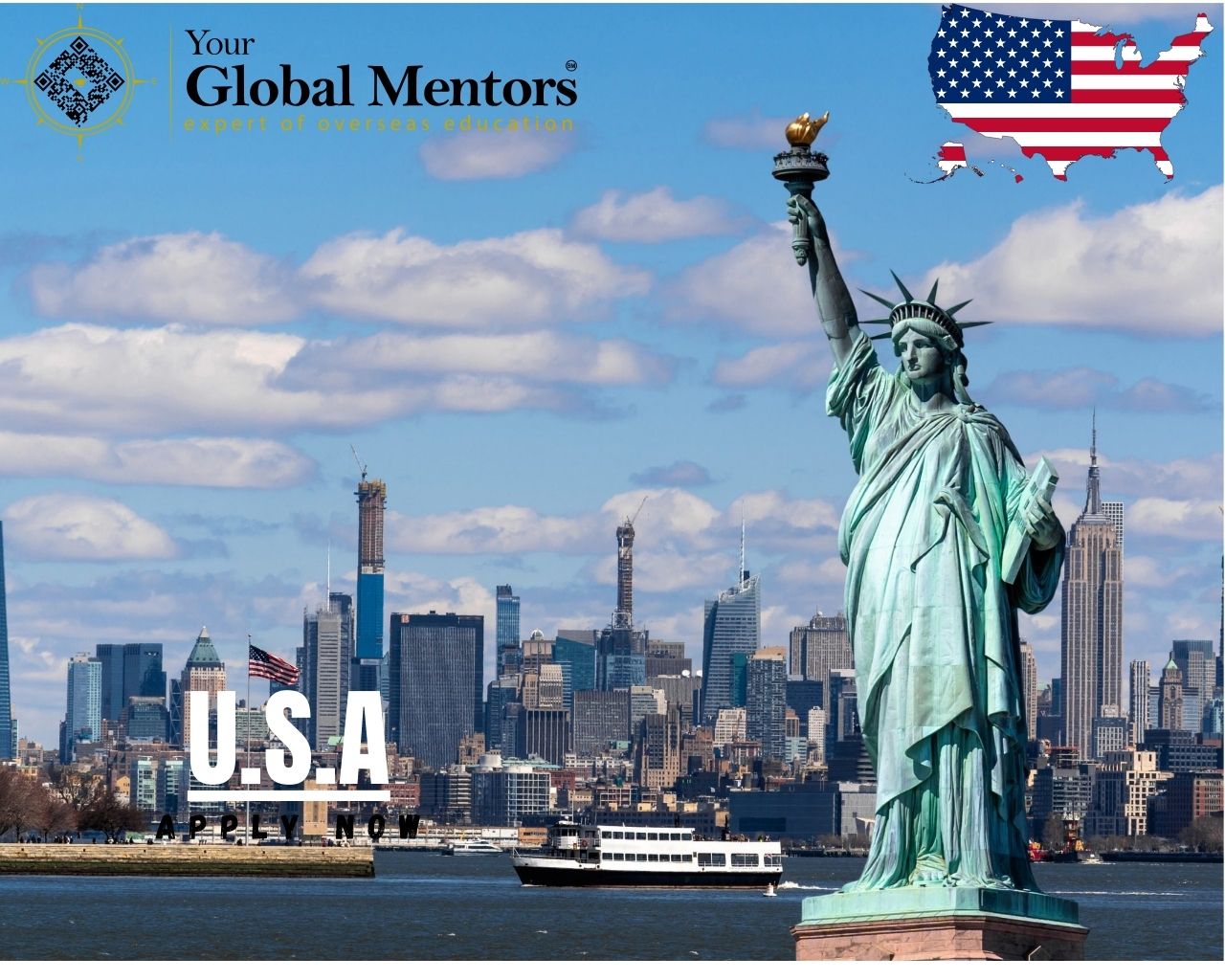
Why Study in the United States?
For Indian students with global ambitions, the decision to study in the United States remains one of the most powerful academic investments you can make. The USA is home to the world's largest concentration of globally ranked universities, the most generous post-study work pathway for STEM graduates anywhere in the world, and an economy that continues to lead globally in technology, finance, healthcare, and innovation. In 2026-2027, despite evolving immigration regulations, the case to study in the United States is compelling, and with the right guidance, fully navigable.
The United States consistently dominates global university rankings. MIT, Stanford, Harvard, Caltech, the University of Chicago, and Columbia collectively occupy the very top of QS World University Rankings 2026, and the country hosts over 200 universities in the global top 1,000. This extraordinary depth means that whether you are pursuing a Master's in computer science, an MBA, a medical degree, or a PhD in engineering, the US offers the world's best options at every level.
Academic excellence in the United States is built on a foundation of research intensity, industry-university collaboration, and genuinely world-class faculty. American universities spend more on research and development than any other country, over $800 billion annually, creating an academic environment where students engage directly with cutting-edge knowledge, live industry problems, and globally significant discoveries.
For Indian students considering affordability, it is important to be honest: the United States is not a low-cost destination. Annual total costs, including tuition and living expenses, range from $ 30,000 to $ 70,000 per year depending on the institution and location. However, the financial picture changes dramatically when you factor in Teaching Assistantships (TA) and Research Assistantships (RA), which pay $1,500-$3,000/month stipends in addition to full or partial tuition waivers, making graduate study in the US genuinely accessible for strong applicants.
The international student environment in the United States is unmatched globally, with over 1.1 million international students enrolled in 2025-2026, of whom Indian students form the single largest group at over 330,000, a powerful network of alumni, mentors, and community support that no other country can replicate for Indian students.
Degrees earned when you study in the United States are the most globally respected academic credentials available, recognized universally by employers, governments, and institutions on every continent, and particularly valued in technology, business, and research sectors worldwide.
Ready to navigate the path to study in the United States? Connect with Your Global Mentors today for expert, personalized guidance on your journey in 2026-2027.
Facts About United States
1. The United States is located in North America.
2. Its capital is Washington, D.C..
3. The United States has a population of over 340 million people.
4. It is the third-largest country by land area in the world.
5. The United States has no official language at the federal level, although English is the most widely spoken language.
6. Its official currency is the United States Dollar (USD, $).
7. The United States consists of 50 states and one federal district.
8. The United States is home to NASA, the world's leading civilian space agency.
9. The United States has more international students than any other country.
10. The United States has the largest economy in the world by nominal GDP.
Living Costs in the United States (Monthly Breakdown - 2026-2027):
|
Expense Category |
Average Monthly Cost (USD) |
Approx. Cost (₹)* |
|
Accommodation |
$700-$1,500 |
₹60,000-₹1,30,000 |
|
Food & Groceries |
$250$500 |
₹21,500-₹43,000 |
|
Transportation |
$50-$150 |
₹4,300-₹13,000 |
|
Utilities & Internet |
$100-$250 |
₹8,600-₹21,500 |
|
Personal Expenses |
$150-$400 |
₹13,000-₹34,500 |
|
Total Estimated Monthly Cost |
$1,250-$2,800 |
₹1.08-₹2.41 lakh |
*Note: All the cost mentioned are estimates and are subject to change.
Accommodation
Student accommodation in the United States typically costs $700-$1,500 (₹60,000-₹1,30,000) per month. Rent varies significantly depending on the city, type of housing, and whether students live on or off campus.
Food & Groceries
Students generally spend $250-$500 (₹21,500-₹43,000) per month on groceries and occasional dining out. Cooking meals at home is usually the most cost-effective option.
Transportation
Public transportation and local travel typically cost $50-$150 (₹4,300-₹13,000) per month. Expenses may be higher for students who own or regularly use a car.
Utilities & Internet
Utilities, including electricity, heating, water, and internet, usually cost $100-$250 (₹8,600-₹21,500) per month. These costs may be lower if they are included in the rent.
Personal Expenses
Students generally spend $150-$400 (₹13,000-₹34,500) per month on personal needs such as mobile bills, clothing, entertainment, study materials, and other miscellaneous expenses.
Total Monthly Living Cost
Overall, an international student in the United States can expect to spend approximately $1,250-$2,800 (₹1.08-₹2.41 lakh) per month on living expenses, depending on the city, accommodation choice, and lifestyle.
Benefits of Studying in the United States
Choosing to study in United States in 2026-2027 is the highest-return academic investment available to Indian students, delivering benefits that extend across career trajectory, professional network, financial earning power, and long-term life outcomes in ways that no other destination can fully replicate.
Quality education is the defining, irreplaceable strength of the US academic experience. American universities combine rigorous academic fundamentals with unmatched research infrastructure, industry-embedded curricula, and a culture of intellectual curiosity and innovation. The United States education system consistently produces more Nobel Prize winners, patent holders, and technology company founders per capita than any other country, and studying here puts you directly inside that ecosystem from day one.
Unlike some other regions, US degrees are not "recognized" by a specific body; they simply are the global benchmark. Every major employer, graduate school, and professional licensing body worldwide recognizes a degree earned when you study in United States as the gold standard credential. In fields like computer science, engineering, business, and medicine, an American degree is not just recognized, it is actively preferred.
Cultural diversity is built into the DNA of American university life. With students from over 200 countries enrolled across US universities, and over 330,000 Indian students forming the largest international group, Indian students find both genuine multicultural immersion and a deeply established Indian community offering mentorship, cultural familiarity, and professional networking from the very first week.
Safety and a student-friendly environment vary by location - American campuses invest heavily in campus security, international student support offices, and student wellness services. Choosing the right city and university for your personal preferences is important, and Your Global Mentors can guide this selection carefully.
The sheer size of the United States creates extraordinary travel opportunities, from the East Coast to the Pacific, from Yellowstone to New York, and with direct flight connections to every major destination globally from major US hub airports.
Finally, the US is the undisputed global leader in research and innovation, with Silicon Valley, Boston's biotech corridor, New York's fintech ecosystem, and Research Triangle Park all within reach of major university campuses, creating an academic environment built for tomorrow's industry leaders.
Want to understand exactly how the benefits of studying in the United States align with your specific goals? Connect with Your Global Mentors for a free, honest, personalized consultation.


No scholarships available right now.
Program Duration in the United States
Understanding program lengths is a critical part of planning your study in the United States journey, particularly given the new 2026 F-1 visa regulation changes that introduce fixed admission periods.
Bachelor's programs in the United States typically run for 4 years, structured around the American liberal arts model that requires students to complete general education requirements alongside their major, giving graduates broader intellectual foundations than many other systems. Annual undergraduate tuition ranges from $10,000-$25,000 at public universities for international students, and $30,000-$60,000 at elite private universities. A Bachelor's degree in the United States from a recognized institution carries the highest global brand recognition of any undergraduate credential available.
Master's programs are generally 1.5 to 2 years in duration and are the most popular entry point for Indian students who choose to study in the United States. The average total cost of a Master's in the United States is $29,000-$72,700/year in tuition, though TA/RA appointments can dramatically reduce or eliminate out-of-pocket costs for STEM applicants. Most STEM Master's programs are STEM-designated, qualifying graduates for up to 36 months of OPT work authorization, the most powerful post-study work pathway available globally.
MBA programs at top US business schools, Harvard Business School, Wharton, Booth, Kellogg, and Sloan, are the most sought-after business qualifications in the world, typically spanning 2 years with total program costs of $150,000-$250,000. The ROI, however, is extraordinary; the Harvard MBA median starting salary is $175,000+, with top consulting and finance roles paying significantly more.
PhD programs in the United States are fully funded at most research universities; doctoral students receive tuition waivers plus $1,500-$3,000/month stipends in exchange for TA/RA work. PhD programs typically run 4-6 years, and under new 2026 regulations, students in programs exceeding 4 years must proactively file extensions with DHS, a critical compliance requirement.
Academic intake periods in the United States follow a primary Fall intake in August/September, which carries the widest program availability, strongest scholarship pools, and best networking and orientation opportunities, and a secondary Spring intake in January, which offers faster admission timelines and lower competition but significantly fewer scholarship options. For Fall 2027, students should begin shortlisting universities and preparing for the GRE/GMAT and TOEFL/IELTS from October 2026.
Not sure which program and intake fit your goals? Let Your Global Mentors map out the ideal study in the United States academic pathway for your 2026-2027 plans.
Work Opportunities in United States
A. Most In-Demand Careers
The United States offers the most powerful post-study career landscape of any major study destination, driven by the world's largest economy, an extraordinary concentration of global industry leaders, and the uniquely generous STEM OPT pathway that gives eligible graduates up to 36 months of work authorization after graduation.
IT and Software Development is the single highest-demand professional sector for graduates who study in United States, with Silicon Valley, Seattle, Austin, and New York all maintaining insatiable demand for software engineers, cloud architects, cybersecurity specialists, and full-stack developers. Entry-level tech salaries range from $85,000-$130,000 in 2026, making this the highest-ROI career pathway for Indian STEM graduates in the US.
Engineering professionals, particularly in semiconductor, biomedical, aerospace, and civil engineering, are consistently in high demand across the US industrial and research landscape. Companies like Intel, Boeing, Tesla, Lockheed Martin, and Johnson & Johnson all actively recruit engineering graduates from US universities.
Business and Finance careers are abundant across New York's Wall Street, Chicago's trading ecosystem, and San Francisco's fintech sector, with US business graduates from top programs stepping into roles with starting salaries that are among the highest in the world.
Healthcare is one of the fastest-growing employment sectors in the United States, driven by demographic aging and sustained public and private investment in health infrastructure. The US faces a massive talent shortage in healthcare administration, health informatics, and public health roles, sectors where internationally trained graduates are actively welcomed.
Logistics and Supply Chain careers benefit from the enormous scale of the US economy and its complex domestic and international trade networks, with companies like Amazon, FedEx, UPS, and Walmart consistently recruiting supply chain management graduates.
Data Science and AI is the most rapidly expanding career field in the United States, with AI investment exceeding $100 billion annually in 2026, creating extraordinary post-study work opportunities in United States for graduates in machine learning, data engineering, and AI research from virtually every major US university.
Want to align your course and university selection with the strongest US career pathways? Talk to Your Global Mentors for expert, career-mapped academic guidance.
B. Popular Courses to Study in United States
Choosing the right program is the single most important decision in your study in the United States journey, and certain disciplines consistently deliver the strongest combination of academic quality, STEM OPT eligibility, and graduate employment outcomes.
Computer Science is the most popular and strategically strongest choice for Indian students who study in United States. Programs at MIT, Stanford, Carnegie Mellon, UC Berkeley, and University of Illinois at Urbana-Champaign are globally regarded as the pinnacle of CS education, with direct pipelines to Google, Microsoft, Apple, Meta, and Amazon. STEM designation ensures 36-month OPT eligibility for graduates.
Engineering - spanning electrical, mechanical, aerospace, biomedical, and chemical disciplines, is a cornerstone strength of US higher education, with American engineering programs consistently ranked among the world's best and graduates commanding premium salaries across both US and global job markets.
Business Management programs at top US business schools attract the largest numbers of international students in United States, with MBA and MS in Management programs from Harvard, Wharton, Kellogg, and Booth delivering globally unmatched career network access and graduate employment outcomes.
Finance and Accounting programs at New York University Stern, Columbia Business School, and University of Chicago Booth place graduates directly into Wall Street, private equity, and global investment banking roles, with entry-level salaries consistently exceeding $100,000 in 2026.
Medicine in the US is one of the most rigorous and globally respected academic pathways, though it requires completion of a pre-med undergraduate degree followed by 4-year MD programs at accredited medical schools. US medical degrees are recognized worldwide and command the highest physician salaries globally.
Hospitality and Tourism programs at institutions like Cornell's School of Hotel Administration are globally regarded as the gold standard, with graduates placed in leadership roles across the world's leading hotel, resort, and travel companies.
Artificial Intelligence is rapidly becoming the most sought-after graduate discipline in the US, with dedicated Master's programs at Stanford, MIT, CMU, and University of Washington placing graduates directly into AI research labs, tech companies, and government innovation agencies, all offering STEM OPT eligibility for the full 36-month period.
Not sure which course best aligns with your career goals? Let Your Global Mentors help you shortlist the perfect program to study in United States in 2026-2027.
Frequently Asked Questions (FAQs) - Study in United States
1. Are
scholarships in the United States available for international students?
Yes. The Fulbright-Nehru Master's Fellowship covers full tuition, airfare, and
living expenses. The Tata Scholarship covers full costs for Indian
undergraduates at Cornell. Graduate TA/RA assistantships are the most common
and most financially significant form of support, covering tuition plus monthly
stipends. Many universities also offer merit-based partial scholarships for top
international applicants.
2. Are
there English-taught programs in United States?
Yes, virtually all programs at US universities are taught in English, making
the US one of the most accessible study destinations for Indian students
already comfortable in English-medium education. Most universities require
IELTS 6.5-7.5 or TOEFL iBT 90-110 for admission.
3. Can
international students take up part-time jobs in the United States?
Yes, with restrictions. F-1 students can work on-campus up to 20 hours per week
during term time and full-time during official breaks. Off-campus work is only
permitted through authorized programs: CPT (Curricular Practical Training)
during the program and OPT (Optional Practical Training) after graduation.
Unauthorized off-campus work is a serious visa violation that can result in
immediate status termination.
4. Are
there post-study work opportunities in United States?
Yes, and the US STEM OPT pathway is the most generous post-study work provision
of any major study destination. STEM graduates receive 12 months of standard
OPT plus a 24-month STEM OPT extension, totaling 36 months of full-time work
authorization. The USCIS Form I-765 filing fee for OPT increased to $1,780 in
2026, budget for this before graduation. Non-STEM graduates receive 12 months
of OPT only.
5. When
are the academic intake periods in United States?
The primary Fall intake begins in August/September, with application deadlines
typically falling between November and January for the following Fall. A
secondary Spring intake begins in January, with applications due between August
and October. Fall is strongly recommended for its superior scholarship
availability, broader program selection, and stronger networking
infrastructure. For Fall 2027, begin university shortlisting and test
preparation from October 2026.
Have more questions about F-1 visa requirements, the new 2026 Duration of Status rules, OPT filing, university selection, or scholarships? Connect with Your Global Mentors for comprehensive, personalized, end-to-end guidance on your journey to study in the United States in 2026-2027.