
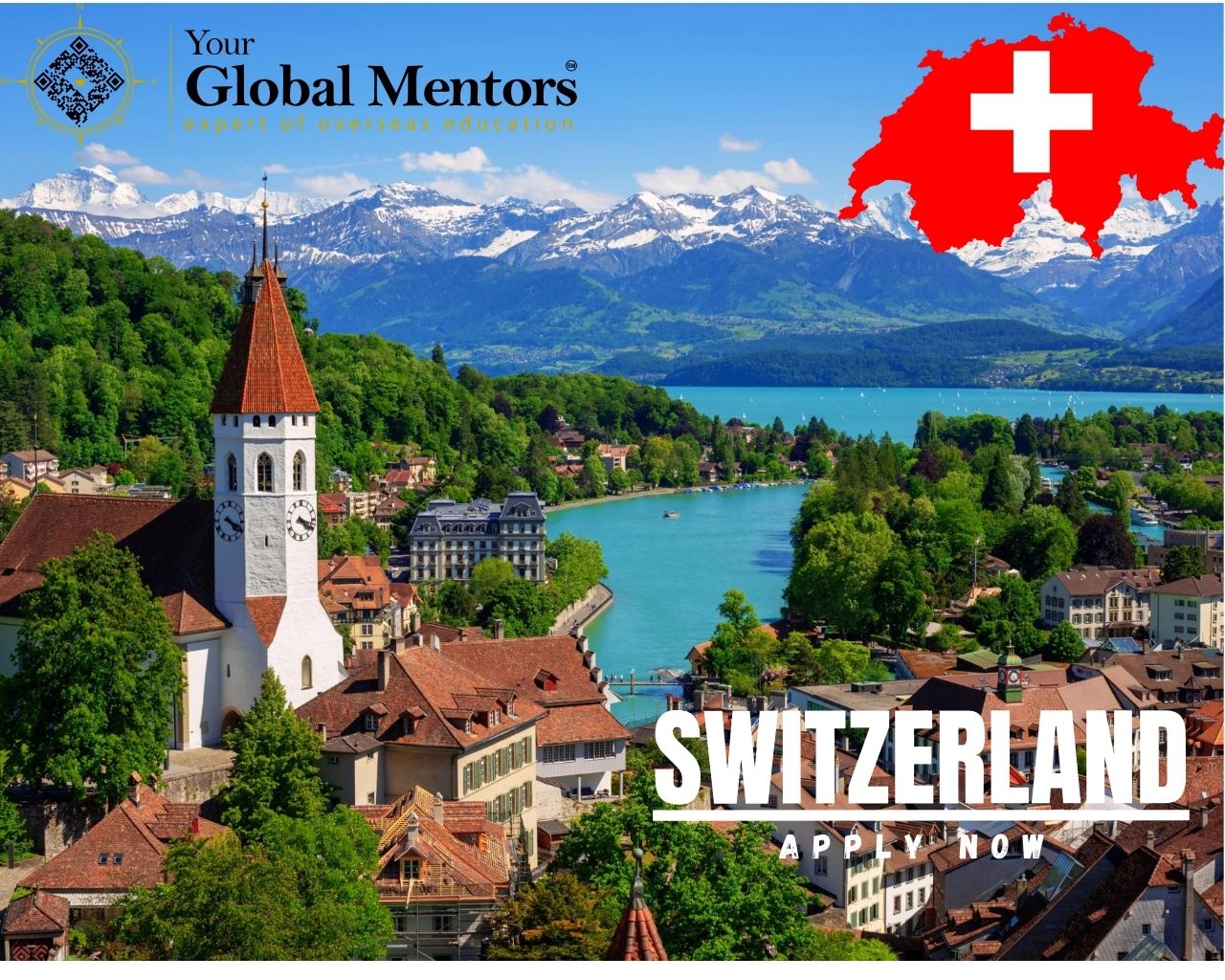
Why Study in Switzerland?
If you're planning to study abroad, Switzerland deserves a top spot on your shortlist. Nestled in the heart of Europe, this small but powerful nation has built a global reputation for academic rigor, innovation, and an unmatched quality of life. For students from India and across Asia, the decision to study in Switzerland often comes down to one simple truth: it offers world-class higher education in Switzerland without the inflated costs typically associated with Western Europe or the US.
Academically, Switzerland is home to globally ranked institutions like ETH Zurich and EPFL Lausanne, both consistently placed among the world's top 10 universities. The country invests roughly 5.6% of its GDP into education, ensuring students get access to cutting-edge labs, research facilities, and industry-linked curricula. This commitment to academic excellence is precisely why studying in Switzerland remains such a sought-after pathway for ambitious students.
What truly sets Switzerland apart is affordable education in Switzerland at the public university level; tuition fees range from just CHF 500 to CHF 2,200 per semester, a fraction of what you'd pay in the UK or USA. Combine that with a genuinely international student environment, over 70,000 international students currently study in Switzerland, and you get a culturally rich, English-friendly academic ecosystem.
Finally, Swiss degrees carry serious global weight. Whether you pursue a Bachelor's degree in Switzerland or a Master's in Switzerland, your qualification is recognized by employers and universities worldwide, opening doors across Europe, India, and beyond.
Ready to explore your options? Connect with Your Global Mentors today, and let our experts guide your journey to study in Switzerland with confidence.
Facts About Switzerland
1. Switzerland has four official languages - German, French, Italian, and Romansh, though most university programs are English-taught.
2. The country is home to world-renowned institutions like ETH Zurich, ranked among the global top 10.
3. Switzerland invests nearly 5.6% of its GDP in education, among the highest in the world.
4. Over 70,000 international students currently study in Switzerland.
5. PhD programs in Switzerland are often fully funded, with little to no tuition fees.
6. Switzerland is consistently ranked one of the safest countries globally for students.
7. The Swiss franc (CHF) is the local currency, and the cost of living is high, but tuition remains low.
8. Switzerland's central location makes weekend travel to France, Italy, and Germany incredibly easy.
9. The country has a 79.3% employability rate, reflecting strong job market stability.
10. Around 750+ Indian students currently pursue higher education in Switzerland, a number growing steadily.
Understanding the Living Costs in Switzerland
Switzerland presents a unique financial picture for international students: tuition fees are surprisingly low at public universities, but day-to-day living expenses are among the highest in the world. Understanding why costs break down the way they do helps you budget realistically before you arrive.
|
Expense Category |
Estimated Monthly Cost (CHF) |
Estimated Monthly Cost (INR) |
|
Accommodation |
CHF 800 – 1,700 |
93,514.88 – 1,98,719.12 |
|
Food & Groceries |
CHF 450 – 750 |
52,602.12 – 87,670.20 |
|
Transportation |
CHF 100 – 200 |
11,689.36 – 23,378.72 |
|
Health Insurance |
CHF 300 – 400 |
35,068.08 – 46,757.44 |
|
Study Materials & Leisure |
CHF 150 – 250 |
17,534.04 – 29,223.40 |
|
Total Estimated Monthly Cost |
CHF 1,800 – 3,300 |
2,10,408.48 – 3,85,748.88 |
1. Accommodation (CHF 800 - 1,700/month)
This is almost always the single biggest expense in a student's monthly budget, often 40-50% of total spending. The wide range exists because location dictates price:
2. Food and Groceries (CHF 450 - 750/month)
Switzerland's cost of living is high partly because of import costs and a strong currency, but students can manage this well by shopping smart:
3. Transportation (CHF 100 - 200/month)
Swiss public transport is famously efficient; trains, trams, and buses are well-integrated, but it isn't cheap by default.
4. Health Insurance (CHF 300 - 400/month) - Mandatory
This is non-negotiable under Swiss law (KVG/LAMal regulations); every student, regardless of nationality, must carry compliant health insurance.
5. Study Materials, Leisure & Miscellaneous (CHF 150 - 250/month)
This covers books, course materials, phone/internet plans, and social or recreational activities. While smaller than other categories, it's easy to overspend here if not tracked.
Why the Range Is So Wide: CHF 1,800-2,800/month
The CHF 1,000 spread mostly comes down to one variable: which city you choose. A student in Bern living in shared university housing and cooking at home might land near CHF 1,800/month, while a student renting privately in central Zurich and eating out frequently could easily hit CHF 2,800/month or more.
How Students Offset These Costs
Benefits of Studying in Switzerland
Choosing to study in Switzerland isn't just about prestige; it's a strategic investment in your future. Here's why thousands of international students in Switzerland consider it one of the best decisions of their academic journey.
Quality education stands at the core of the Swiss appeal. The Swiss education system blends rigorous theory with hands-on, practical learning, especially in STEM, business, and hospitality fields. Professors often come from industry backgrounds, giving students real-world exposure alongside academic depth.
While Switzerland isn't an EU member, its degrees are widely recognized across the EU and globally, thanks to participation in the Bologna Process. This means a Bachelor's degree in Switzerland or a Master's degree in Switzerland holds the same credibility as degrees from EU member states, a huge advantage for students planning careers across borders.
Switzerland's multicultural fabric, with four official languages and a huge international population, creates a uniquely diverse campus environment. You'll study, live, and network with peers from dozens of nationalities, building a global outlook from day one.
Safety is another underrated benefit. Switzerland ranks among the world's safest countries, giving students and parents real peace of mind, a key reason many Indian families choose Switzerland for Indian students over riskier alternatives.
Its central European location also means travel opportunities are endless; Paris, Milan, and Munich are just hours away by train. Add to this Switzerland's reputation for research and innovation, home to CERN and countless tech startups, and you have an environment built for curious, ambitious minds.
Curious how these benefits apply to your specific goals? Reach out to Your Global Mentors for a personalized consultation.
No universities listed for Switzerland yet.
No scholarships available right now.
Program Duration in Switzerland
Understanding program length is essential when planning your study abroad in Switzerland journey, as it directly affects your budget, visa timeline, and career planning.
Bachelor's programs
Bachelor's programs in Switzerland typically run for 3 years (6 semesters), covering fields like business, engineering, computer science, and hospitality management. Public universities and universities of applied sciences (Fachhochschulen) both offer robust Bachelor's degree options in Switzerland, often with mandatory internship components built into the curriculum.
Master's programs
Master's programs generally take 1.5 to 2 years to complete. A Master's in Switzerland is especially popular among Indian students pursuing STEM, finance, or data science, as it bridges academic learning with strong industry connectivity; many programs include thesis work tied directly to ongoing research projects at institutions like ETH Zurich or EPFL.
MBA programs
MBA programs vary more widely, ranging from 12 to 18 months depending on the institution. Switzerland is globally recognized for its MBA offerings, particularly at private business schools like IMD Lausanne, though these come at a premium, often CHF 60,000 or more for the full program.
PhD programs
PhD programs typically span 3 to 5 years and are often fully funded through research assistantships or university grants, making them a financially smart option for advanced scholars.
Academic intake periods in Switzerland are mainly twice a year: the primary intake in September (Autumn semester) and a secondary intake in February (Spring semester), though exact dates vary by institution.
Not sure which program length fits your career timeline? Let Your Global Mentors map out the right academic path for you.
Work Opportunities in Switzerland
A. Most In-Demand Careers
Switzerland's economy is one of the most stable and innovation-driven in the world, and this directly translates into strong work opportunities in Switzerland for graduates and students alike.
IT and Software Development tops the list - Switzerland's tech sector employs over 300,000 professionals, and demand for software engineers, cybersecurity experts, and network specialists continues to climb.
Engineering remains a cornerstone industry, with Swiss companies in precision manufacturing, robotics, and civil infrastructure consistently hiring skilled engineering graduates, including many from international student backgrounds in Switzerland.
Business and Finance thrive thanks to Switzerland's status as a global banking hub; Zurich and Geneva host major financial institutions offering roles in investment banking, asset management, and fintech.
Healthcare professionals are in high demand, particularly nurses, doctors, and healthcare administrators, as Switzerland's aging population drives consistent hiring in this sector.
Logistics and Supply Chain roles have grown alongside Switzerland's strong trade and pharmaceutical industries, with companies seeking professionals who understand international logistics frameworks.
Data Science and AI are the fastest-rising fields, with Swiss universities and tech firms investing heavily in machine learning research, creating excellent post-study work opportunities in Switzerland for qualified graduates.
Swiss workers earn an average of CHF 6,502/month, among the highest in the OECD, a strong incentive for students considering long-term career building here.
B. Popular Courses to Study in Switzerland
Choosing the right course is the foundation of a successful study in Switzerland journey, and certain disciplines consistently deliver the strongest academic and career returns.
Computer Science is hugely popular, especially at ETH Zurich and EPFL, both globally ranked for technology and engineering education. Graduates step into a thriving tech ecosystem with strong English-taught programs in Switzerland available at both Bachelor's and Master's levels.
Engineering - covering mechanical, civil, electrical, and chemical disciplines- remains a flagship strength of Swiss higher education in Switzerland, backed by world-class labs and industry partnerships.
Business Management programs are widely chosen by international students in Switzerland, particularly at institutions in St. Gallen and Lausanne, known for producing globally employable graduates.
Finance and Accounting courses benefit directly from Switzerland's status as a banking and wealth management capital, giving students access to internships at major financial institutions during their studies.
Medicine programs, though competitive and often requiring local language proficiency, are highly respected, with Swiss medical degrees recognized across Europe and beyond.
Hospitality and Tourism is a uniquely Swiss specialty; the country practically invented modern hospitality education, with schools like EHL Lausanne regarded as the gold standard worldwide.
Artificial Intelligence is an emerging favourite, with dedicated Master's tracks now offered at top technical universities, aligning perfectly with Switzerland's growing AI and research economy.
Frequently Asked Questions (FAQs)
1. Do
Indian students need a visa to study in Switzerland?
Yes. Indian students need a Type D national visa for courses longer than 90
days, along with a residence permit obtained after arrival.
2. What
are the tuition fees to study in Switzerland?
Public universities charge CHF 500-2,200 per semester, making it one of the
most affordable education options in Switzerland compared to the US or UK.
3. Are
scholarships in Switzerland available for international students?
Yes, though limited. Options include the Swiss Government Excellence
Scholarships (ESKAS) and university-specific merit awards covering tuition and
sometimes living costs.
4. Are
there English-taught programs in Switzerland?
Yes, many Bachelor's and Master's programs, especially in business,
engineering, and computer science, are fully taught in English.
5. Are
there post-study work opportunities in Switzerland?
Switzerland doesn't offer a dedicated post-study work visa, but graduates
receive a 6-month residence permit to search for skilled employment.
Have more questions about your eligibility or application process? Want to know which career path aligns with the best programs? Not sure which course suits your career goals? Let Your Global Mentors help you shortlist the perfect program to study in Switzerland.