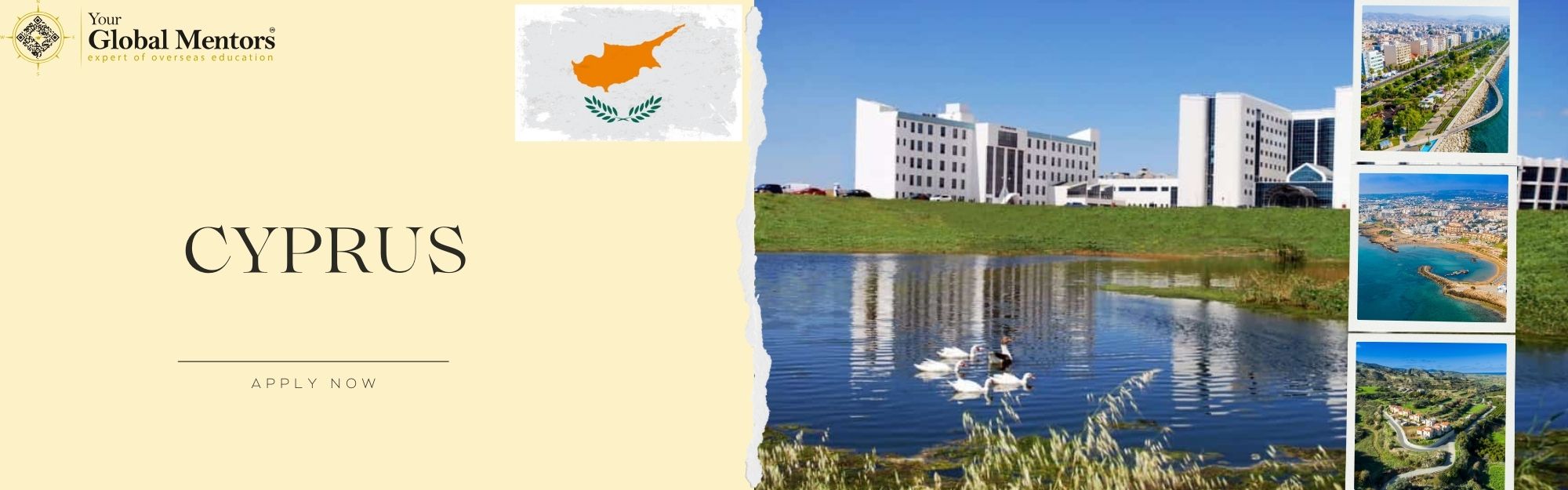
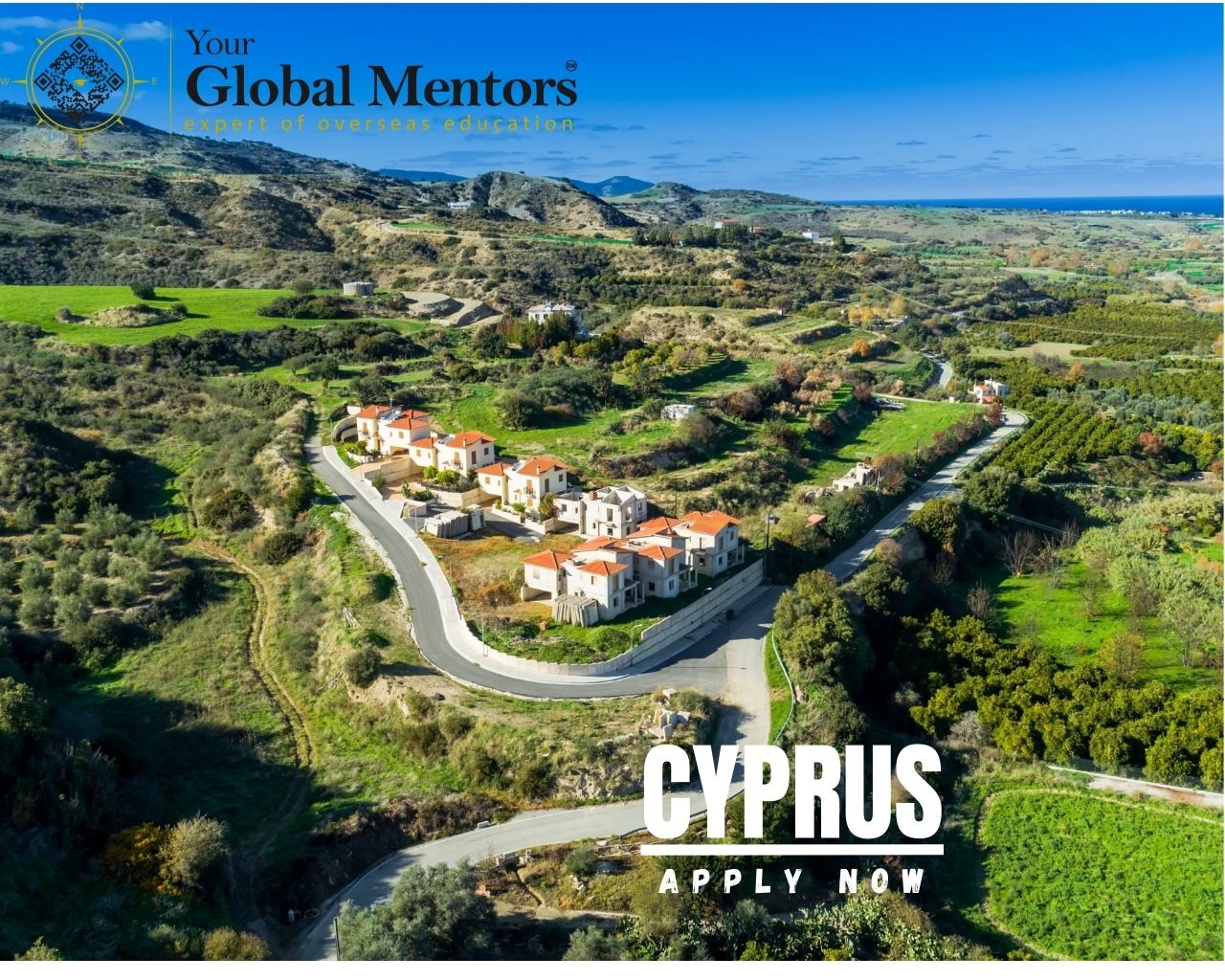
Why Study in Cyprus?
If you are searching for an affordable, English-friendly European study destination that delivers internationally recognized degrees without the financial burden of the UK, Ireland, or Australia, Cyprus deserves serious attention. This beautiful Mediterranean island, a full European Union member state, has quietly emerged as one of the smartest study abroad choices for Indian students in 2026-2027, combining genuine academic quality with living costs that are among the lowest in the EU.
Affordable education in Cyprus is one of the destination's most compelling selling points. Undergraduate tuition ranges from €3,000-€8,000 per year, while postgraduate programs cost €5,000-€10,000 per year, dramatically lower than equivalent programs in the UK (£20,000-£35,000/year) or the USA ($30,000-$60,000/year). Many universities offer scholarships covering 20-50% of tuition fees, making studying in Cyprus even more financially accessible for high-achieving Indian students.
The international student environment in Cyprus is vibrant and growing, with students from over 50 countries studying on the island. Nearly three-quarters of the Cypriot population speaks English fluently, and most university programs are taught entirely in English, making the academic and social transition seamless for Indian students.
Degrees earned when you study in Cyprus are EU-recognized and internationally respected, aligned with the Bologna Process framework, and valued by employers across Europe, the UK, India, and the GCC.
Ready to explore Cyprus as your next academic home? Connect with Your Global Mentors today for expert guidance on your study in Cyprus journey in 2026-2027.
Facts About Cyprus
1. Cyprus is a member of the European Union and uses the euro (€) as its official currency.
2. Cyprus is part of the European Higher Education Area (Bologna Process), promoting internationally recognized academic qualifications.
3. Nicosia is the capital and largest city of Cyprus.
4. Cyprus enjoys around 340 days of sunshine each year, making it one of Europe's sunniest destinations.
5. English is widely spoken, and many university programmes are taught entirely in English.
6. Cyprus offers internationally accredited bachelor's, master's, and doctoral degrees.
7. Cyprus is known for its safe, welcoming, and multicultural environment for international students.
8. Tuition fees and living costs in Cyprus are generally lower than in many Western European countries.
9. Cyprus is strategically located at the crossroads of Europe, Asia, and Africa.
10. Universities in Cyprus offer programmes in fields such as medicine, engineering, business, law, information technology, and hospitality.
Living Cost
|
Expense Category |
Monthly Cost (EUR) |
Monthly Cost (INR) |
|
Accommodation (University Housing) |
€150 – €300 |
₹16,401 – ₹32,802 |
|
Accommodation (Shared Private Apt) |
€250 – €450 |
₹27,335 – ₹49,203 |
|
Food & Groceries |
€150 – €250 |
₹16,401 – ₹27,335 |
|
Transportation |
€30 – €50 |
₹3,280 – ₹5,467 |
|
Health Insurance (mandatory) |
€17 – €33 |
₹1,859 – ₹3,608 |
|
Mobile & Internet |
€15 – €30 |
₹1,640 – ₹3,280 |
|
Study Materials & Books |
€20 – €40 |
₹2,187 – ₹4,374 |
|
Personal & Miscellaneous |
€80 – €150 |
₹8,747 – ₹16,401 |
|
Total (University Housing) |
€462 – €853/month |
₹50,515 – ₹93,277/month |
|
Total (Shared Private Apt) |
€562 – €1,003/month |
₹61,449 – ₹1,09,668/month |
Accommodation
(University Housing)
University housing is
the most budget-friendly option, costing about €150-€300 monthly. It typically
includes basic utilities and is close to campus, making it convenient and
cost-effective for students.
Accommodation
(Shared Private Apt)
A shared private
apartment costs around €250-€450 per month, offering more privacy and
flexibility than campus housing but higher rent and utility responsibilities.
This option suits students who prefer independence or living with friends.
Food &
Groceries
Monthly food and grocery expenses range from € 150 to € 250, depending on eating
habits and whether you cook at home or eat out. Shopping at local markets and
cooking most meals keeps costs near the lower end.
Transportation
Public transport and
occasional taxis cost about €30-€50 per month, sufficient for regular student
commuting. Cycling or walking can reduce this further in compact towns.
Health
Insurance (mandatory)
Mandatory health insurance runs roughly €17-€33 monthly and covers basic
medical care, which is essential for international students. Confirm coverage
details to avoid unexpected out-of-pocket bills.
Mobile
& Internet
Mobile and internet
plans typically cost €15-€30 per month, providing enough data and connectivity
for study and communication. Look for student discounts or bundled offers to
save money.
Study
Materials & Books
Allocate €20-€40 monthly for textbooks and supplies; using second-hand books or
digital resources lowers expenses. Libraries and course-sharing also help
reduce this cost.
Personal
& Miscellaneous
Personal spending
(entertainment, clothing, toiletries) is around €80-€150 per month and varies
with lifestyle choices. Setting a monthly budget helps control discretionary
spending.
Estimated
Monthly Total - University Housing
With university housing, expect total living costs of about €462-€853 (₹50,515-₹93,277)
per month, making it the more economical student option.
Estimated
Monthly Total - Shared Private Apartment
If you choose a
shared private apartment, monthly costs rise to roughly €562-€1,003 (₹61,449-₹1,09,668),
reflecting higher accommodation and utility expenses.
*Note: All the costs mentioned are estimates and are subject to change.
Benefits of Studying in Cyprus
Choosing to study in Cyprus in 2026-2027 delivers a uniquely compelling combination of EU academic credibility, Mediterranean lifestyle, genuine affordability, and long-term career potential, a package that is attracting a growing number of Indian students who want European education without European price tags.
Quality education is the cornerstone of Cyprus's academic appeal. The Cyprus education system follows internationally aligned standards overseen by the Ministry of Education and Culture, and institutions ranging from the research-focused University of Cyprus to professionally oriented private universities like the University of Nicosia and European University Cyprus consistently deliver strong academic outcomes across technology, health sciences, business, and engineering.
As a full EU member state, Cyprus offers genuinely EU-recognized degrees that are fully compatible with the Bologna Process framework - meaning qualifications earned when you study in Cyprus are respected by employers and institutions across all 27 EU member countries, as well as in the UK, India, and internationally. This gives Cypriot graduates geographic career flexibility that few non-EU destinations can match.
Cultural diversity is embedded in everyday life in Cyprus. With students from over 50 countries studying on the island and a local culture shaped by Greek, Turkish, British, and Middle Eastern influences, international students experience genuine multicultural immersion from day one. The large and growing Indian student community in Cyprus makes settling in particularly smooth for Indian students.
Safety and a student-friendly environment consistently rank among Cyprus's most cited advantages. Cyprus is one of the safest countries in Europe, with very low crime rates, stable governance, and universities that maintain dedicated international student support offices providing academic, welfare, and housing guidance.
Cyprus's stunning Mediterranean location creates outstanding travel opportunities; ferry and flight connections put Greece, Israel, Egypt, Turkey, and mainland Europe within easy and often affordable reach during semester breaks.
Finally, Cyprus is steadily developing as a hub for research and innovation, particularly in shipping, financial services, health technology, and tourism management, creating an increasingly stimulating academic environment for industry-focused students.
Interested in how these benefits align with your personal goals? Connect with Your Global Mentors for a free personalized consultation on your study in Cyprus journey.
No universities listed for Cyprus yet.
No scholarships available right now.
Program Duration in Cyprus
Understanding program lengths is essential for planning your study in Cyprus journey effectively; it directly shapes your financial planning, visa timelines, and post-graduation career strategy.
Bachelor's programs in Cyprus typically run for 3 to 4 years, depending on the discipline. Engineering, nursing, and science programs generally take 4 years, while business, humanities, and social science programs complete in 3 years. Undergraduate tuition for non-EU/EEA international students ranges from €3,000-€8,000 per year at public universities, and €3,500-€7,000 per year at private institutions, making a Bachelor's degree in Cyprus one of the most cost-effective undergraduate options available within the EU. Many programs include practical placement components that strengthen graduate employability.
Master's programs are generally 1 to 2 years in duration, with most taught Master's programs completing in 1 year, an important cost advantage. Annual fees for a Master's in Cyprus range from € 5,000 to € 10,000 depending on the institution and discipline, with STEM and business programs at the upper end. Master's programs from institutions like the University of Cyprus and the University of Nicosia are increasingly recognized by employers across Europe and the GCC.
MBA programs are available at several Cyprus institutions, including the University of Nicosia and Cyprus International University, typically spanning 12 to 18 months. MBA programs combine internationally aligned business curricula with Cyprus's unique position at the crossroads of European, Middle Eastern, and African commerce, a valuable combination for career-focused students.
PhD programs in Cyprus generally run for 3 to 4 years, with research tracks available in medicine, engineering, computer science, and business. Research scholarship opportunities are available at public universities for exceptional doctoral candidates, helping offset program costs.
Academic intake periods in Cyprus follow two main cycles - a primary September intake, which is the most popular and carries the widest program availability, and a secondary February/January intake available at most institutions. Both intakes are well-supported for international students from India, and application processes are relatively streamlined compared to more competitive EU destinations.
Not sure which program level and intake fit your timeline? Let Your Global Mentors map out your ideal academic pathway to study in Cyprus in 2026-2027.
Work Opportunities in Cyprus
A. Most In-Demand Careers
Cyprus's growing, diversified economy, built around financial services, tourism, shipping, and an expanding technology sector, creates meaningful work opportunities in Cyprus for skilled graduates, particularly those with internationally recognized EU qualifications.
IT and Software Development is one of Cyprus's fastest-growing professional sectors, supported by the government's active push to develop Limassol and Nicosia as regional technology and fintech hubs. Software developers, cybersecurity professionals, and cloud engineers are among the most in-demand roles, and graduates who study in Cyprus in IT-related disciplines step directly into a market that is actively seeking international talent.
Engineering professionals find consistent demand across Cyprus's construction, renewable energy, and infrastructure sectors, all areas of sustained investment as the island modernizes and expands its urban and energy infrastructure.
Business and Finance careers thrive in Limassol, Cyprus's financial capital and home to a dense cluster of international financial services firms, shipping companies, and investment funds, creating strong graduate employment pathways for business and finance students.
Healthcare is a priority employment sector, with Cyprus investing significantly in upgrading its public and private healthcare infrastructure. Nursing, pharmacy, dentistry, and healthcare administration graduates from Cyprus's internationally recognized health programs find consistent employment across the island and in broader EU markets.
Logistics and Supply Chain careers benefit from Cyprus's strategic position as a maritime and trade hub between Europe, the Middle East, and Africa, home to major shipping and logistics companies like Columbia Shipmanagement and Marlow Navigation.
Data Science and AI are an emerging priority field, with Cypriot universities and government agencies investing in digital transformation and tech innovation, creating fresh post-study work opportunities in Cyprus for analytically skilled graduates.
5B. Popular Courses to Study in Cyprus
Choosing the right course is the most important decision in your study in Cyprus journey. Certain disciplines consistently deliver the strongest combination of academic quality, affordability, and graduate employment outcomes.
Computer Science programs are widely available across public and private institutions in Cyprus, with the University of Nicosia and the University of Cyprus offering strong programs aligned with the island's growing tech and fintech sectors. Most Computer Science programs are available as English-taught programs in Cyprus, making them highly accessible for Indian students.
Engineering - spanning civil, mechanical, electrical, and computer engineering is a flagship discipline at the Cyprus University of Technology and the University of Cyprus, both of which maintain strong industry partnerships and research links with major Cypriot and European employers.
Business Management programs attract the largest numbers of international students in Cyprus, with institutions like the University of Nicosia, European University Cyprus, and Frederick University offering internationally accredited programs with strong corporate placement networks across the EU and GCC.
Finance and Accounting courses benefit from Cyprus's status as a major European financial services hub, particularly in Limassol, giving students practical exposure to international banking, investment management, and offshore financial services.
Medicine and Dentistry programs are a major draw for Indian students who study in Cyprus. The University of Nicosia Medical School offers an internationally recognized MD program, and dental programs at several institutions are held to EU academic standards, creating pathways to practice across Europe and beyond.
Hospitality and Tourism is a natural specialty for Cyprus, given its position as one of the Mediterranean's premier tourism destinations. Programs combine academic rigor with hands-on industry exposure through Cyprus's world-class hotel and resort sector.
Artificial Intelligence is an emerging discipline, with dedicated AI and data science tracks now available at leading Cypriot institutions, directly aligned with the government's digital economy ambitions and the island's growing tech ecosystem.
Not sure which course best matches your goals? Let Your Global Mentors help you shortlist the perfect program to study in Cyprus in 2026-2027.
Frequently Asked Questions (FAQs) - Study in Cyprus
1. Do
Indian students need a visa to study in Cyprus?
Yes. Indian students need to obtain an Entry Permit (also called a Blue Slip or
Pink Slip) before traveling to Cyprus. This is arranged through your
university, which submits your file to the Cyprus Migration Department in
Nicosia. Upon arrival, students must complete medical tests, open a bank
account, and apply for a Student Residence Card within 10 days of landing. The
process is generally straightforward compared to many other EU destinations.
2. Are
scholarships in Cyprus available for international students?
Yes. Most private universities offer merit-based tuition waivers of 2-50% for
Indian students based on academic performance. Some institutions offer up to 75-100%
scholarships for exceptional candidates. University of Cyprus and Cyprus
University of Technology also offer research-based funding for postgraduate and
doctoral students.
3. Are
there English-taught programs in Cyprus?
Yes. The vast majority of undergraduate and postgraduate programs at both
public and private universities in Cyprus are taught entirely in English. Many
universities accept a Medium of Instruction (MOI) certificate instead of IELTS,
significantly simplifying the admission process for Indian students from
English-medium schools.
4. Can
international students take up part-time jobs in Cyprus?
Yes, but only after completing the first 6 months of legal residency in Cyprus.
After this period, students can work up to 20 hours per week during the
academic semester and 38 hours per week during official holiday periods. Jobs
are most commonly available in hospitality, retail, and services sectors, where
Cyprus's booming tourism industry creates consistent demand.
5. Are
there post-study work opportunities in Cyprus?
Yes. After completing their degree, international graduates can apply for a
work permit in Cyprus, typically sponsored by an employer. Cyprus's growing
financial services, technology, shipping, and tourism sectors create genuine
post-study work opportunities in Cyprus for skilled graduates, particularly
those with EU-recognized qualifications from Cypriot universities.
Have more questions about eligibility, university selection, scholarships, or the Cyprus student visa process? Connect with Your Global Mentors for comprehensive, personalized, end-to-end guidance on your journey to study in Cyprus in 2026-2027.