


Why Study in Canada?
For Indian students seeking a world-class English-medium education, globally recognized degrees, genuinely multicultural campuses, and the clearest pathway from graduation to permanent residency among all major English-speaking study destinations, Canada remains one of the most strategically powerful academic investments available. In 2026-2027, the case to study in Canada has evolved significantly; important policy changes have reshaped the landscape, and understanding these changes is now the most critical factor in making a smart, successful application.
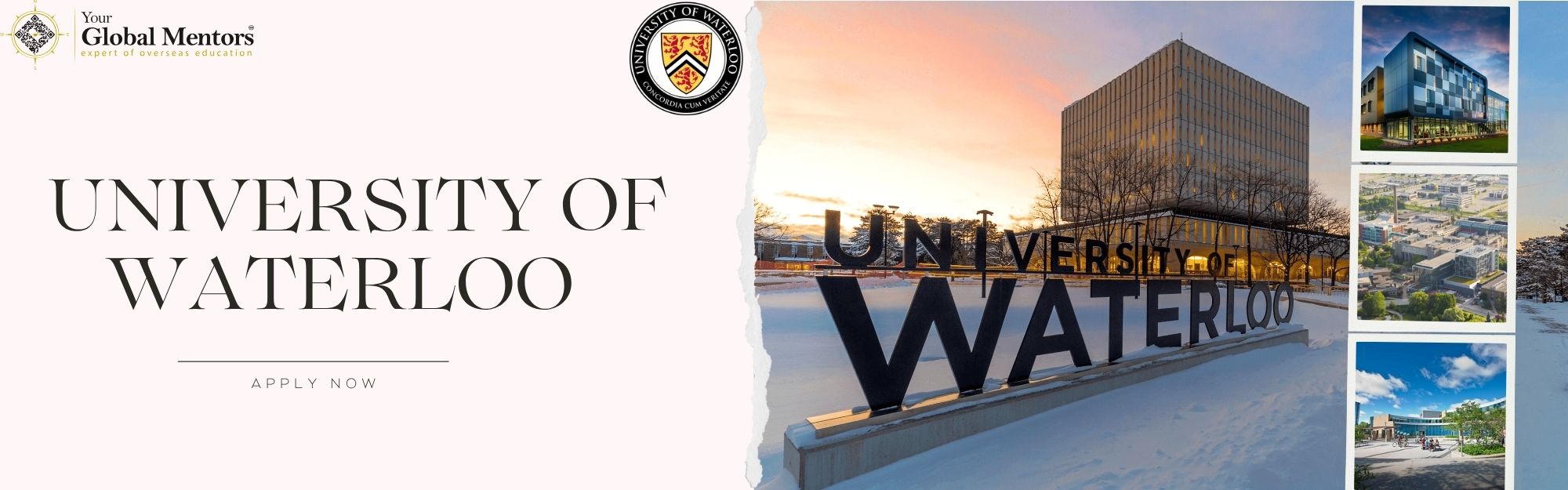
Canada is home to globally ranked institutions that consistently deliver outstanding academic outcomes. The University of Toronto, McGill University, University of British Columbia, McMaster University, and the University of Waterloo all rank among the world's top universities in QS World University Rankings 2026, and Canada's 10 leading research-intensive U15 universities collectively represent some of the world's finest academic environments for STEM, business, healthcare, and social sciences.
Academic excellence in Canada is underpinned by a rigorous quality assurance framework, and Canada's higher education system has built its global reputation on genuinely practical, research-driven, industry-connected learning, particularly strong in engineering, computer science, AI research, public health, and business administration.
Undergraduate tuition averages CAD 25,000-45,000/year; Master's programmes CAD 20,000-35,000/year, meaningfully lower than equivalent programs in the USA or the UK, and Canada is generally 20-30% cheaper than the United States, making affordable education in Canada a genuine rather than theoretical proposition for well-prepared Indian families.
Canada remains the top study destination for Indian students in 2025; roughly 34% of Canada's study permit holders were Indian nationals. This extraordinary community of Indian students, alumni, and professionals embedded in Canadian society provides new arrivals with cultural familiarity, mentorship networks, and professional connectivity from the very first week.
Degrees earned when you study in Canada are globally recognized, respected by employers across India, the US, the UK, Europe, and the GCC, and particularly valued in technology, engineering, business, and health sciences disciplines worldwide.
Ready to navigate Canada's 2026-2027 application landscape? Connect with Your Global Mentors today for expert, honest, and personalized guidance on your study in Canada journey.
Facts About Canada
Estimated Monthly Living Cost for International Students in Canada
|
Expense Category |
Average Monthly Cost (CAD) |
Approx. Cost (₹)* |
|
Accommodation |
C$700–1,500 |
₹44,000–₹95,000 |
|
Food & Groceries |
C$250–500 |
₹16,000–₹32,000 |
|
Transportation |
C$80–150 |
₹5,000–₹9,500 |
|
Utilities & Internet |
C$100–200 |
₹6,000–₹13,000 |
|
Personal Expenses |
C$200–400 |
₹13,000–₹25,000 |
|
Total Estimated Monthly Cost |
C$1,330–2,750 |
₹84,000–₹1.74 lakh |
Accommodation
Student accommodation in Canada typically costs C$700-1,500 (₹44,000-₹95,000) per month. Rent is generally higher in cities such as Toronto and Vancouver, while smaller cities are usually more affordable.
Food & Groceries
Students generally spend C$250-500 (₹16,000-₹32,000) per month on groceries and occasional dining out. Cooking meals at home is the most economical way to manage food expenses.
Transportation
Public transportation typically costs C$80-150 (₹5,000-₹9,500) per month. Many Canadian cities offer discounted transit passes for students, helping reduce commuting costs.
Utilities & Internet
Utilities, including electricity, heating, water, and internet, generally cost C$100-200 (₹6,000-₹13,000) per month. These expenses may be lower if they are included in the accommodation rent.
Personal Expenses
Students usually spend C$200-400 (₹13,000-₹25,000) per month on personal needs such as mobile bills, clothing, entertainment, study materials, and other miscellaneous expenses.
Total Monthly Living Cost
Overall, an international student in Canada can expect to spend approximately C$1,330-2,750 (₹84,000-₹1.74 lakh) per month on living expenses, depending on the city, accommodation choice, and lifestyle.
*Note: All the costs mentioned are estimates and are subject to change.
In addition to tuition fees, you should budget a minimum of CAD 23,000 per year for living costs. Want a personalized, city-specific cost plan? Reach out to Your Global Mentors today.
Benefits of Studying in Canada
Choosing to study in Canada in 2026-2027, with the right program, the right institution, and the right strategy, delivers a uniquely powerful combination of academic quality, multicultural society, career opportunity, and the world's most accessible permanent residency pathway for skilled international graduates.
Quality education is the defining strength of the Canadian academic experience. Canada's higher education system combines rigorous academic foundations with practically oriented, industry-linked curricula, particularly strong in engineering, computer science, AI, public health, and business. Canadian universities invest heavily in research partnerships with government and industry, and programs are regularly updated to reflect real-world employer needs, producing graduates who are analytically strong and genuinely job-ready.
Canadian degrees are globally recognized and valued by employers across India, the US, the UK, Europe, and the GCC. A Bachelor's degree in Canada or Masters in Canada from institutions like the University of Toronto, UBC, or McGill carries genuine international credibility, and the Post-Graduation Work Permit (PGWP) pathway means the degree is the first step in a carefully structured route to permanent residency.
Cultural diversity is perhaps Canada's most celebrated national characteristic. As one of the world's most genuinely multicultural countries, Canada's campuses reflect an extraordinary mix of global perspectives, and with one of the world's largest Indian diaspora communities deeply embedded in Canadian professional and social life, Indian students arrive to both cultural familiarity and true global immersion.
Safety and a student-friendly environment are hallmarks of life in Canada. Canada consistently ranks among the world's safest and most politically stable countries, with a strict rule of law, excellent public services, and university campuses that invest heavily in international student support, mental health services, and career guidance.
Canada's vast geography creates extraordinary travel opportunities, from the Rockies and Niagara Falls to cosmopolitan Montreal and the Pacific Coast of British Columbia, while direct flight connections make returning to India for holidays straightforward and increasingly affordable.
Canada is a genuine global leader in research and innovation, particularly in AI, quantum computing, clean energy, robotics, and public health, with universities like the University of Toronto, Waterloo, and UBC maintaining deep research partnerships with global technology companies that give students direct access to frontier research and startup ecosystems.
Curious how these benefits align with your goals? Connect with Your Global Mentors for a free, personalized consultation on your study in Canada plans.












































No scholarships available right now.
Program Duration in Canada
Understanding program lengths is a critical part of planning your study in Canada journey, particularly given Canada's 2026 policy landscape, which now creates meaningfully different PGWP and PR outcomes depending on your program level and institution type.
Bachelor's programs in Canada typically run for 4 years for most disciplines, with some co-op programs extending to 5 years due to mandatory work placement semesters. International undergraduate students pay an average of CAD 41,746 per year (Statistics Canada, 2026). Engineering, computer science, and health sciences programs sit at the higher end of the tuition range. A Bachelor's degree in Canada from a public university makes graduates eligible for a 3-year Post-Graduation Work Permit, giving graduates three years of unrestricted Canadian work experience to build toward permanent residency.
Master's programs in Canada are generally 1.5 to 2 years in duration and represent the strongest strategic choice for Indian students planning to study in Canada in 2026. Even one-year Master's graduates can receive a three-year PGWP. High-demand areas include Data Science, Public Health, Engineering Management, and Finance. Annual fees for a Master's in Canada range from CAD 20,000-35,000 per year. The Master's pathway is particularly powerful in 2026 because Master's students at public universities are exempt from the PAL requirement, significantly improving visa approval prospects.
MBA programs at Canada's leading business schools are among the world's most respected, with the Rotman School of Management (University of Toronto), Ivey Business School, and Desautels Faculty of Management (McGill) all globally ranked. An MBA costs CAD 88,000 for the full program at the University of Alberta and CAD 73,388.72 per year at the University of Toronto. MBA programs typically span 12 to 20 months and qualify graduates for the full 3-year PGWP.
PhD programs in Canada generally run 4 to 5 years and represent one of the most financially strategic options available. Graduate students in STEM often have access to Research Assistantships (RA) or Teaching Assistantships (TA) covering CAD 15,000-25,000/year in stipends, significantly offsetting tuition costs. Public university doctoral students benefit from a 14-day visa processing target when applying from outside Canada.
Academic intake periods in Canada follow a primary September/Fall intake, the most popular with the widest program availability and strongest scholarship options, a secondary January intake, and a smaller May/Summer intake available at select institutions. For September 2027, students should begin applications from July 2026.
Not sure which program and intake fit your goals? Let Your Global Mentors map out the ideal study in Canada pathway for 2026-2027.
Work Opportunities in Canada
A. Most In-Demand Careers
Canada's knowledge-driven economy, consistent skilled labor shortages, and Express Entry immigration system collectively create some of the strongest and most accessible work opportunities in Canada for skilled international graduates of any major English-speaking destination.
IT and Software Development is Canada's highest-demand professional sector, with Toronto's tech hub, Vancouver's Silicon North, Waterloo's innovation corridor, and Montreal's AI research ecosystem all maintaining insatiable demand for software engineers, cloud architects, cybersecurity specialists, and full-stack developers. Canadian technology salaries are competitive; entry-level tech roles in Toronto and Vancouver generate CAD 70,000-95,000 annually, providing strong PGWP-period earning potential for graduates who study in Canada in IT disciplines.
Engineering professionals, particularly in civil, software, mechanical, and chemical engineering, are consistently in high demand across Canada's infrastructure, construction, energy, and manufacturing sectors. Engineering occupations are well-represented on Canada's Federal Skilled Worker list and provincial nominee streams, making engineering one of the strongest PR-pathway disciplines available.
Business and Finance careers thrive in Toronto, Canada's financial capital and home to the country's major banks (RBC, TD, BMO, Scotiabank, CIBC), investment firms, and a growing fintech ecosystem, with strong graduate employment demand across corporate finance, accounting, management consulting, and banking.
Healthcare is Canada's most consistently high-demand employment sector, driven by an aging population and well-documented workforce shortages across nursing, pharmacy, physiotherapy, and medicine. Healthcare occupations are strongly represented in Express Entry and Provincial Nominee Programs (PNP), creating clear PR pathways for qualified graduates.
Logistics and Supply Chain careers benefit from Canada's substantial trade economy, spanning agricultural exports, manufactured goods, and natural resources, creating professional openings in supply chain management, procurement, and international trade.
Data Science and AI are one of Canada's fastest-rising career fields, with Toronto, Montreal, and Edmonton emerging as global AI research hubs and companies like Google, Microsoft, Meta, and dozens of homegrown AI startups maintaining major Canadian operations, creating strong post-study work opportunities in Canada for analytically skilled graduates.
International students on a valid study permit can work up to 24 hours per week during academic sessions and full-time during scheduled breaks.
Want to align your course with Canada's strongest employment and PR-pathway sectors? Speak with Your Global Mentors for expert, career-mapped academic guidance.
5B. Popular Courses to Study in Canada
Choosing the right course is the single most important decision in your study in Canada journey, and in 2026, courses must be evaluated not just on academic quality but on their PGWP eligibility and Express Entry CRS score contribution.
Computer Science programs at the University of Waterloo, University of Toronto, UBC, and McGill University are globally respected, and Waterloo's co-op CS program in particular is considered one of the world's finest for producing immediately employable tech graduates with real industry experience built into the degree. University CS graduates receive the full 3-year PGWP regardless of course subject.
Engineering, spanning software, civil, electrical, mechanical, and chemical disciplines, is one of Canada's academically strongest and most PR-strategically powerful disciplines. Engineering occupations consistently appear on Federal Skilled Worker lists and provincial nominee streams, making an engineering degree from a Canadian public university one of the most comprehensive study-to-PR packages available.
Business Management programs at Rotman, Ivey, Desautels, and Schulich attract significant numbers of international students in Canada, offering internationally accredited qualifications with extraordinary corporate network access and strong graduate employment outcomes in Toronto, Vancouver, and Calgary's business communities.
Finance and Accounting courses benefit from Toronto's status as Canada's financial capital and one of North America's major financial centers, giving students direct exposure to Canadian and international banking, investment management, and the growing Canadian fintech ecosystem.
Medicine programs at the University of Toronto, McGill, UBC, and McMaster are among North America's most respected, though Canadian medical programs are extremely competitive for international applicants and require exceptional academic credentials. Medical graduates qualify for work permits and strong PR pathways through healthcare occupation streams.
Hospitality and Tourism programs at institutions like Ryerson (Toronto Metropolitan University) and Niagara College provide strong practical training backed by Canada's growing tourism and hospitality sector, with co-op placements embedded in most programs.
Artificial Intelligence is rapidly becoming Canada's most strategically important academic discipline, with dedicated AI programs at the University of Toronto, the University of Alberta, and McGill directly aligned with Canada's national AI strategy and the Vector Institute, one of the world's leading AI research organizations.
Not sure which course best aligns with your career and PR goals? Let Your Global Mentors help you shortlist the ideal program to study in Canada in 2026-2027.
Frequently Asked Questions (FAQs) - Study in Canada
1. Are
there English-taught programs in Canada?
Yes, virtually all programs at Canadian universities and colleges in
English-speaking provinces are taught in English, making Canada highly
accessible for Indian students already educated in English-medium institutions.
IELTS 6.5 overall (with no band below 6.0) is the standard requirement for most
undergraduate and postgraduate admissions. French-medium programs are available
in Quebec, with institutions like McGill offering both English and
French-medium streams.
2. Can
international students take up part-time jobs in Canada?
Yes. International students on a valid study permit can work up to 24 hours per
week during academic sessions and full-time during scheduled breaks. Part-time
income can meaningfully offset living expenses, but should not be factored into
tuition calculations. Popular student jobs include retail, hospitality, campus
roles, and tech internships through co-op programs.
3. Are
there post-study work opportunities in Canada?
Yes, Canada's PGWP is one of the most generous post-study work provisions in
the English-speaking world. University graduates can receive up to a three-year
PGWP regardless of subject. College graduates must complete one of the 1,107
approved field-of-study codes to qualify. Applicants must also meet language
levels of CLB 7 for university programs or CLB 5 for college programs.
4. When
are the academic intake periods in Canada?
Canada offers three main intakes: a primary September/Fall intake (most
popular, widest program availability), a January/Winter intake, and a smaller
May/Summer intake at select institutions. The Fall intake is the most popular
for students from India, though January and May intakes are possible at many
colleges, giving students more options if they miss the Fall intake. For
September 2027, begin applications from July 2026.
5. What
are the employment prospects after studying in Canada?
Strong, particularly in technology, engineering, healthcare, and finance. A
Master's at a mid-tier Canadian university with a clear PGWP-PR strategy can be
excellent value; Canadian entry-level salaries in tech average CAD 78,000/year.
The 3-year PGWP combined with Express Entry and PNP streams creates one of the
most structured and accessible pathways from graduation to permanent residency
of any English-speaking destination in the world.
Have more questions about 2026 study permit requirements, PAL exemptions for Master's students, PGWP field-of-study rules, scholarship applications, or building a strong Regular Stream application? Connect with Your Global Mentors for comprehensive, personalized, end-to-end guidance on your journey to study in Canada in 2026-2027.