

Study in UK Without IELTS 2026
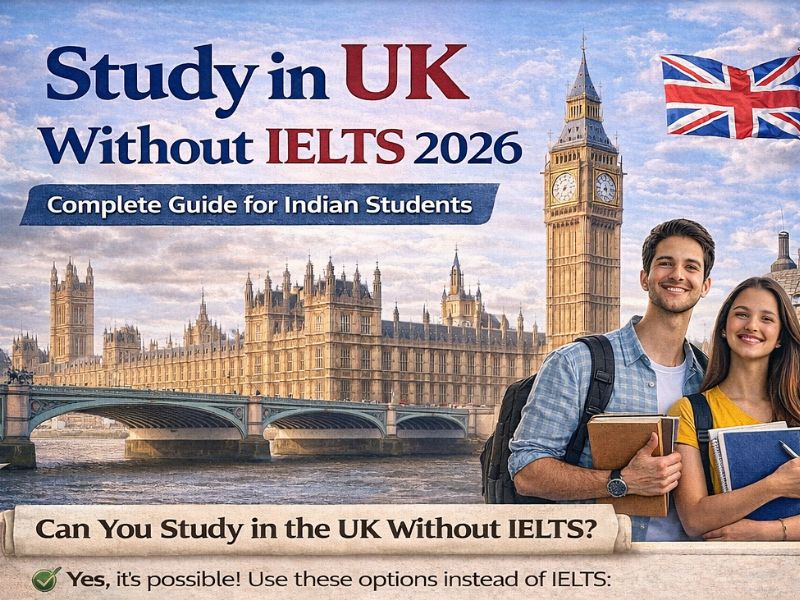
Table of Contents
If you’ve always dreamed of studying in the United Kingdom but feel stuck because of IELTS, you’re not alone. Thousands of students believe IELTS is mandatory, but the truth is, you can study in the UK without IELTS under specific conditions.
This guide is for students and parents who want clear, practical, and real insights into studying in the UK without IELTS. By the end, you’ll know how it works, which universities accept it, visa rules, and smart strategies to get admission easily.
why choose study in uk
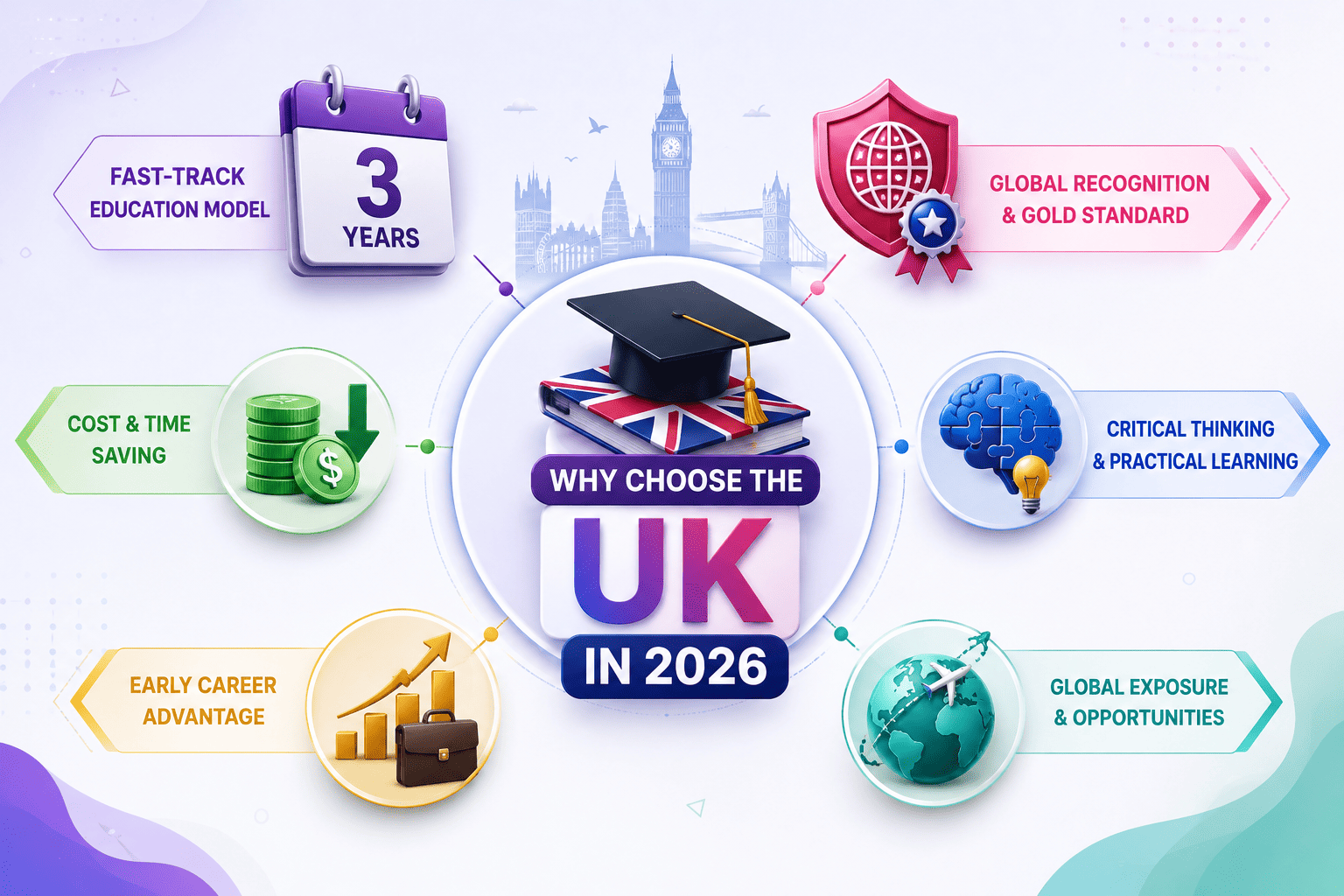
The UK education system is designed for efficiency and employability. In a world where "time is money," the UK allows you to complete your education and enter the professional workforce with a world-class brand on your CV in record time.
1. The "Fast-Track" Education Model
The biggest advantage of the UK is its shorter course durations. While most countries require 4 years for an Undergraduate degree and 2 years for a Master’s, the UK finishes them in 3 years and 1 year, respectively.
The Financial Benefit: You save one full year of tuition fees and one full year of living expenses.
The Career Benefit: You enter the job market 12 months earlier than your peers in the US or India, gaining a massive head start in earnings.
2. Global Recognition & The "Gold Standard"
The UK is home to 4 of the world's top 10 universities and has a centuries-old tradition of academic excellence.
Universal Credibility: A degree from a UK university is a "Global Passport." Employers from New York to Singapore recognise the rigour and quality of British education.
Critical Thinking: The teaching style focuses on practical application and independent research rather than rote learning, making you a more creative problem-solver in a corporate setting.
Can You Study in the UK Without IELTS?
Is IELTS Mandatory?
No, IELTS is not always mandatory. Many universities in the UK accept alternative proofs of English proficiency.
When Can You Skip IELTS?
You can study without IELTS if:
- Your previous education was in the English medium
- You provide a Medium of Instruction (MOI) certificate
- You clear a university interview
- You meet internal English requirements
Simple Example
If you completed your graduation in English medium, many UK universities will accept that instead of IELTS.
While some of the UK’s most prestigious institutions appear on this list, getting an "IELTS Waiver" in 2026 is about more than just picking the right college—it is about meeting specific alternate criteria.
Top UK Universities Accepting Students Without IELTS (2026)
1. University of Bristol
Ranked among the top 60 globally, Bristol is one of the most prestigious names on this list.
The Policy: Bristol may waive IELTS if you have a Medium of Instruction (MOI) certificate from a reputable English-medium university.
The Catch: This waiver is often department-specific (e.g., Engineering or Science) and may require an additional interview to confirm your fluency.
2. University of Warwick
Warwick is a member of the elite Russell Group and is famous for its Business and Economics programs.
The Policy: They are known to accept high scores (usually 75% to 80%+) in Class 12 English from CBSE or ICSE boards.
The Catch: If your board marks are lower, they might suggest their own internal English test or a 6-week pre-sessional course.
3. University of Bolton
Bolton is known for its "student-first" approach and vocational focus.
The Policy: They are very flexible and often accept students based on a successful Internal English Assessment or a strong MOI letter.
The Catch: While they waive IELTS easily for admission, you must ensure your English level is strong enough to handle their professional-grade curriculum.
4. London South Bank University (LSBU)
Located in the heart of London, LSBU is a favourite for Indian students looking for urban exposure.
The Policy: They frequently waive IELTS for applicants who have completed a degree in an English-speaking country or have an English-medium graduation from India.
The Catch: Some professional courses (like Nursing or Law) may still have strict IELTS requirements due to licensing regulations.
5. Northumbria University
Based in Newcastle and London, this university is highly focused on employability.
The Policy: Northumbria often accepts a 70% score in Class 12 English or a verified MOI certificate.
The Catch: If your academic records are older than 5 years, they may ask for a fresh English test to ensure your skills are still current.
The UK Student Visa: Navigating the "No-IELTS" Route
Many students mistakenly believe that the UK Home Office (Embassy) requires a mandatory IELTS certificate for a visa. In reality, under the Points-Based Immigration System, the responsibility for verifying your English skills lies primarily with your Sponsoring University. If the university is satisfied with your language proficiency, the visa office generally accepts their judgment.
The "No-IELTS" Visa Framework
To successfully apply for a visa without an IELTS score, your application must be anchored by these three pillars:
CAS (Confirmation of Acceptance for Studies): This is the most critical document. For a "No-IELTS" visa, your CAS must explicitly state that the university has assessed your English language ability through an alternative method (such as your Class 12 marks or a Medium of Instruction certificate).
Proof of Funds: You must demonstrate that you have enough money to cover your tuition fees and living expenses. For 2026, this amount must be held in your bank account for a consecutive 28-day period before you hit "submit" on your visa application.
University Endorsement: Since you are skipping the English test, your university acts as your "Language Sponsor." Their confirmation in the CAS serves as the legal proof required by the UK Home Office to grant your visa.
Key Insight for 2026 Applicants
If your university accepts you without IELTS, your visa process actually becomes smoother and faster. Why? Because you don't have to wait for test results or worry about "TRF" (Test Report Form) verification. As long as your CAS is marked as "Higher Education Institution (HEI) has made their own assessment," the visa officer is much less likely to interview you regarding your language skills.
The Strategic Balance: Pros & Cons of Skipping IELTS
Deciding whether to take the IELTS or apply for a waiver is a critical step in your 2026 study plan. This decision should be based on your confidence level, your budget, and the specific ranking of the universities you are targeting.
✔ The Advantages: Why Students Choose the Waiver
For many Indian aspirants, skipping the IELTS is the most efficient way to secure an international seat.
Saves Time and Reduces Stress: Preparing for IELTS can take anywhere from 4 to 8 weeks. By opting for a waiver, you can use that time to focus on your Statement of Purpose (SOP) or scholarship applications.
Faster Admission Process: Universities can issue your Conditional Offer Letter much quicker if they aren't waiting for a test score. This is a massive advantage during the high-demand September intake.
Ideal for English-Medium Students: If you have spent 15+ years studying in English-medium schools and colleges, the IELTS often feels like a redundant hurdle. A waiver acknowledges your existing skills without making you "prove" them again.
❌ The Disadvantages: The Trade-offs You Should Know
While the waiver route is convenient, it isn't without its limitations.
Limited University Options: Not every university offers a waiver. Some of the most elite "Russell Group" institutions still maintain strict IELTS requirements to ensure a uniform standard in their classrooms.
Narrower Safety Net: If you apply without IELTS and get rejected by your "No-IELTS" colleges, you have fewer backup options. Having an IELTS score of 6.5 or 7.0 effectively opens the doors to every single university in the UK.
Impact on Visa Confidence: While rare in 2026, if a visa officer decides to conduct a Credibility Interview, they may scrutinise your language skills more closely if you don't have a standardised test score to back you up.
The 2 Main Routes to Study in the UK Without IELTS
By leveraging these two pathways, you can save significant time, reduce exam stress, and fast-track your application for the 2026 intake.
Route 1: The High School Excellence Pathway (Class 12 Marks)
The most common way for Indian students to skip IELTS is by using their Senior Secondary (Class 12) English scores. UK universities recognise the rigorous English curriculum of major Indian education boards.
Criteria for this route: If you scored 70% to 80% or higher in English in your Class 12 exams, many universities will waive the IELTS requirement completely. This usually applies to students from CBSE, CISCE (ISC), and prominent State Boards (such as Maharashtra, West Bengal, or Karnataka). This is a zero-cost route. Your existing mark sheet acts as your proof of proficiency, allowing for a much faster application turnaround.
Route 2: The Medium of Instruction (MOI) Pathway
If you are applying for a Master's degree or an MBA, your previous academic background is your strongest asset. This route relies on a formal document known as the MOI Certificate.
Criteria for this route: You must obtain an official certificate from your previous college registrar confirming that your entire degree was taught and examined in English. Universities like Bristol, Northumbria, and Greenwich accept this, provided you graduated within the last 2 to 5 years. It demonstrates to the admissions committee that you are already comfortable with "Academic English," making you a low-risk, high-potential candidate for their program.
Strategic Insight for 2026
The "No-IELTS" route is not just about avoiding an exam; it is about speed-to-market. By skipping the 8-week IELTS preparation cycle, you can submit your application earlier, which significantly increases your chances of securing Early-Bird Scholarships. Always ensure your MOI letter is on the official institutional letterhead with the appropriate registrar stamps to ensure a smooth visa process. In 2026, the United Kingdom will remain one of the most flexible destinations for international students. You don't necessarily need a standardised English test to prove your capabilities. If you have been educated in an English-medium environment, several universities are willing to waive the IELTS requirement based on your past academic performance.
Strategic Ways to Study in the UK Without IELTS
The UK admission system focuses on your overall ability to succeed in a professional academic environment. For Indian students, there are three main pathways to bypass the IELTS exam while staying fully compliant with visa regulations.
1. High School English Proficiency (Class 12th Marks)
This is the most common route for students coming from reputable Indian boards. Most UK universities view your Senior Secondary English score as a direct reflection of your language skills.
The Criteria: You generally need a score of 70% to 80% or higher in English in your Class 12th board exams. This waiver is widely accepted for students from CBSE, ICSE, and major State Boards (like Maharashtra, Karnataka, or West Bengal). This method is instant—no extra paperwork or exams are needed beyond your high school mark sheet.
2. Medium of Instruction (MOI) Certificate
If you are a graduate applying for a Master's or an MBA, your university degree can act as proof of your English proficiency. This is handled through a document called the Medium of Instruction (MOI) certificate.
The Criteria: You must provide an official letter from your college registrar stating that your entire degree was taught and assessed in English. Most universities accept this if you graduated within the last 2 to 5 years. It proves that you are already habituated to "Academic English," which is highly valued by admissions committees at universities like Greenwich, Portsmouth, and Northumbria.
3. The University Interview & Internal Assessment
In cases where your marks are slightly lower or your degree is older, some universities offer a "Personal Assessment" route.
The Criteria: The university may conduct a 10-15-minute online interview (via Zoom or Teams) to check your speaking and listening skills. Alternatively, some institutions have their own Internal English test, which is often free of charge and less stressful than the formal IELTS. Once you pass this interview or internal test, the university will mark your CAS (Confirmation of Acceptance for Studies) as "English assessed by the institution," which is all the Visa Office needs.
Why This Strategy Works in 2026
Choosing a "No-IELTS" route is a smart financial and time-saving move. By skipping the 2-month preparation cycle for IELTS, you can apply much earlier in the cycle. This gives you a massive advantage in securing Early-Bird Scholarships and ensures that your visa is processed well before the September rush.
Always remember that even without IELTS, your goal is to show the university that you are a serious, capable student. Ensure your Statement of Purpose (SOP) is written in high-quality English to reinforce the university's confidence in your waiver.
Checklist: Documents for UK Admission Without IELTS
When you bypass the IELTS, the burden of proof shifts to your previous academic records. You must provide official evidence that your education was conducted entirely in English.
1. The Alternative English Evidence
This is the most critical part of your "No-IELTS" application. Depending on the route you choose, you will need:
Class 12th Marksheet: If you are using your high school grades, the original marksheet showing 70%-80%+ in English is required.
Medium of Instruction (MOI) Certificate: For Master's applicants, this is an official letter from your college registrar stating that your degree was taught and examined in English.
University Interview Confirmation: If the university conducted a video interview, keep a copy of the email confirming you passed the English assessment.
2. Standard Academic & Professional Documents
Academic Transcripts: Year-wise marksheets for 10th, 12th, and all years of your Graduation.
Degree Certificate: Your provisional or final degree certificate.
Statement of Purpose (SOP): A well-written essay in high-quality English, explaining why you chose the UK and how your background qualifies you for the course.
Letters of Recommendation (LOR): Typically two letters—one from a professor and one from an employer (if you have work experience).
Updated CV: A professional resume highlighting your academic and extra-curricular achievements.
The Visa Document Kit (The Final Step)
Once the university accepts your documents and issues your CAS (Confirmation of Acceptance for Studies), you will need these for the UKVI visa process:
Valid Passport: Must have at least 6 months of validity and one blank page.
The CAS Letter: Your unique digital reference number provided by the university.
Proof of Funds: Bank statements showing you have the tuition fees and living expenses (approx. £12,030–£15,840 depending on the city) held for at least 28 consecutive days.
TB Test Certificate: A clearance certificate from a UK-approved clinic in India.
IHS Payment Receipt: Proof that you have paid the Immigration Health Surcharge (approx. £776 per year).
Strategic Insight for 2026
The MOI Certificate is your strongest weapon. Ensure it is printed on your college's official letterhead, signed by the Registrar or Principal, and carries the official seal. In 2026, many universities will also accept a digital "E-MOI" if it can be verified through an official portal. Having this document ready before you apply can cut your admission time in half.
Top Courses to Study in the UK Without IELTS (2026)
Choosing a course that matches your "No-IELTS" eligibility is a strategic move. Most universities prioritise waivers for technical and creative fields where your academic portfolio and prior marks carry more weight than a standardised language test.
1. Management and Business (MBA & MSc)
This is the most popular category for waivers. UK Business Schools are highly interested in candidates with professional experience and English-medium degrees.
Specialisations: Digital Marketing, International Business, Supply Chain Management, and FinTech.
Why it works: Universities like Northumbria and Greenwich often accept an MOI Certificate for these courses because business communication is assessed during your admission interview.
2. Data Science and Computer Science
With the UK’s massive push into AI and Big Data in 2026, STEM courses are increasingly accessible via the "No-IELTS" route.
Specialisations: Artificial Intelligence, Cybersecurity, and Software Engineering.
Why it works: These are technical subjects where your mathematical and logical skills are prioritised. As long as your graduation was in English, many universities will waive the test.
3. Engineering and Technology
The UK is a global hub for innovation. Engineering departments often have their own internal assessments, making the IELTS optional.
Specialisations: Civil Engineering, Mechanical Engineering, and Renewable Energy.
Why it works: If you have an Engineering degree from a recognised Indian university, your MOI (Medium of Instruction) is usually sufficient proof of your proficiency.
4. Creative Arts and Design
For creative fields, your "Portfolio" is your real voice. Universities focus more on your work than your test scores.
Specialisations: Fashion Design, Graphic Design, Interior Design, and Film Production.
Why it works: Institutions like LSBU or Bolton often waive IELTS if your creative portfolio is exceptional and you can demonstrate basic communication during a video call.
The Selection Strategy: Course vs. Eligibility
Before choosing your course, keep these three factors in mind for a successful waiver:
Professional Alignment: It is easier to get a waiver if your previous degree matches your chosen UK course (e.g., B.Com to MBA).
Recent Graduation: If you graduated within the last 2-3 years, universities are much more likely to accept your MOI for any course.
Board Reputation: For Undergraduate courses, having high English marks in CBSE or ICSE makes almost any course accessible without IELTS.
Starting your international journey right after school is a major step. In 2026, the UK remains a top destination for Indian students because of its "Direct Entry" system for Undergraduate (UG) programs. If you have strong marks in your Class 12 English subject, you can bypass the IELTS and jump straight into your degree.
Top UG Courses to Study in the UK Without IELTS (2026)
UK universities offer a wide variety of Bachelor's degrees where your high school performance acts as the primary proof of your English skills.
1. Business and Management (BBA/BSc)
This is the most popular choice for Indian students. UK business degrees are highly practical and focused on global markets.
Specialisations: International Business, Marketing, Accounting & Finance, and Entrepreneurship.
Eligibility: Most universities will waive IELTS if you have 70% to 75% in Class 12 English (CBSE/ISC/Selected State Boards).
2. Computer Science and IT (BSc/BEng)
As the tech capital of Europe, the UK offers cutting-edge programs in emerging technologies.
Specialisations: Artificial Intelligence (AI), Cyber Security, Game Development, and Data Analytics.
Eligibility: Universities like Greenwich and Northumbria prioritise your Mathematics and Science scores, often waiving English tests for students from English-medium schools.
3. Engineering and Architecture (BEng)
The UK’s engineering degrees are recognised globally, often coming with integrated "Placement Years" in top firms.
Specialisations: Civil, Mechanical, Aeronautical, and Automotive Engineering.
Eligibility: If you are applying from a reputed English-medium school with 75%+ in English, you can often skip the IELTS at universities like Portsmouth or Bolton.
4. Law and Humanities (LLB/BA)
For those interested in legal systems or social sciences, the UK is the birthplace of the Common Law.
Specialisations: Corporate Law, International Relations, Psychology, and Media Studies.
Eligibility: Since these courses are communication-heavy, a high Class 12 English score (80%+) is usually required for a waiver. Some universities may also conduct a brief 10-minute video interview.
Top UK Universities Accepting Students Without IELTS (2026)
UK ki top universities ne 2026 mein admission process ko kaafi flexible bana diya hai. Agar aap IELTS nahi dena chahte, toh aap niche di gayi universities aur unki conditions par focus kar sakte hain.
University of Bristol
Bristol University ka naam duniya ki top 60 ranking mein aata hai. Ye university aksar un students ko IELTS waiver deti hai jinke paas unke pichle college se ek valid Medium of Instruction (MOI) certificate hota hai. Dhyan rahe ki ye waiver Engineering aur Science jaise technical subjects ke liye zyada aasaan hota hai.
University of Warwick
Russell Group ki ye prestigious university apne Business aur Economics programs ke liye mashhoor hai. Warwick aam taur par CBSE aur ICSE board ke students ko 75% se 80% marks hone par bina IELTS ke admission de deti hai. Agar aapke marks thode kam hain toh wo apna internal English test dene ka option bhi dete hain.
University of Bolton
Bolton University apne "student-first" approach ke liye jaani jati hai. Ye university kaafi flexible hai aur aksar sirf ek internal interview ya MOI letter ke basis par offer letter issue kar deti hai. Ye un students ke liye best hai jo bina kisi exam ke pressure ke UK mein settle hona chahte hain.
London South Bank University (LSBU)
Central London mein basi ye university Indian students ki favourite hai. LSBU ungraduates ko target karti hai jinka academic background English medium raha ho. Agar aapne apni graduation English mein ki hai toh aap yahan bina IELTS ke apply kar sakte hain aur London ke corporate hub ka fayda utha sakte hain.
Northumbria University
Employability ke mamle mein ye university UK mein kaafi aage hai. Northumbria University aam taur par 70% marks (Class 12th English) ya fir ek verified MOI certificate par admission de deti hai. Agar aapka graduation pichle 5 saal ke andar hua hai toh ye aapke liye sabse aasaan option hai.
Important Note: Profile-Dependent Rules
Har university ke apne alag rules hote hain aur waiver aapki overall profile par depend karta hai. Isme aapka education board (CBSE/ICSE) aur aapke graduation ka saal bahut maaine rakhta hai. Competitive courses jaise Law ya Medicine ke liye aksar university test ki maang kar sakti hai.
Strategic Insight for 2026
Bina IELTS ke apply karne ka sabse bada fayda "Speed-to-Market" hai. Aap apna application 4 se 6 hafte pehle submit kar sakte hain jisse aapko Early-Bird Scholarships milne ke chances badh jate hain. Bas apna MOI document college ke official letterhead par ready rakhein.
Navigating the UK Student Visa Process Without IELTS
The UK’s Points-Based Immigration System allows for flexibility if your university acts as your "Language Sponsor." If they are satisfied with your English level through other means, the visa office generally accepts their decision as final.
The Role of the CAS (Confirmation of Acceptance for Studies)
The most important document for your visa is the CAS. To get a visa without IELTS, your university must explicitly state on your CAS that they have assessed your English proficiency. They usually do this by checking your Class 12th marks or your Medium of Instruction (MOI) certificate. Once this is mentioned on your CAS, you do not need to provide an IELTS certificate to the visa officer.
Financial Requirements and Proof of Funds
Even without an IELTS requirement, you must meet the financial criteria. You need to show that you have enough money to pay for one year of tuition fees and cover your living expenses. For 2026, this money must be in your bank account for at least 28 consecutive days before you apply. This ensures that you have the financial stability to focus on your studies.
The University Interview
While you might skip the official IELTS exam, some universities or even the UK Home Office might conduct a short "Credibility Interview." This is a simple video call where they ask about your course, your career goals, and why you chose the UK. Since you don't have an IELTS score, being able to speak clearly and confidently during this interview is vital for your visa approval.
Essential Visa Checklist for 2026
A valid Passport with at least six months of validity.
The CAS letter issued by your university clearly mentions the IELTS waiver.
Academic transcripts and certificates are used to get admission.
Proof of funds held for 28 days in a recognised bank.
Tuberculosis (TB) test certificate from an approved clinic in India.
Immigration Health Surcharge (IHS) payment receipt for access to the NHS.
Strategic Insight for 2026
The "No-IELTS" visa route is often smoother because it relies on the university's partnership with the UK Home Office. As long as your university is a "Licensed Student Sponsor" with a track record of compliance, its endorsement of your English skills carries significant weight. Always double-check that your university has marked the "English language requirement met" section on your CAS before you book your visa appointment.
Strategic Tips for a Successful UK Application Without IELTS
Applying without a test score means your other documents must be perfect. Here is how you can strengthen your profile to ensure both admission and visa success.
Focus on Your Class 12 English Marks
Most UK universities prioritise your high school performance. If you are from CBSE or ICSE boards, aim for a minimum of 70% to 75% in English. If you are from a State Board, you might need 80% or higher. Ensure your marksheet is clear, original, and ready for digital upload, as this is your primary "English Passport."
Secure a Strong Medium of Instruction (MOI) Letter
If you are a graduate, the MOI certificate is your most powerful tool. This letter should be on your college's official letterhead and must explicitly state that English was the sole language used for your lectures, assignments, and examinations. Having a letter signed by the Principal or the Dean adds extra credibility to your application.
Perfect Your Statement of Purpose (SOP)
Since you aren't providing an IELTS score, the admissions committee will judge your English through your SOP. Write it yourself and avoid using generic templates. Focus on why you chose that specific UK university and how your Indian education has prepared you for a global environment. A well-written, error-free SOP proves your fluency better than any test score.
Prepare for the University Credibility Interview
Some universities might conduct a 10-minute video interview via Zoom or Teams. Treat this like a formal job interview. Speak clearly, maintain eye contact, and be ready to discuss your course modules and career plans. This is your chance to show the university that you are comfortable communicating in English.
Check Your University’s "Licensed Sponsor" Status
Before applying, ensure the university is a "Licensed Student Sponsor" with a "Track Record of Compliance." These universities have more authority to waive IELTS, and their endorsement carries more weight with the UK Home Office during your visa processing.
Strategic Insight for 2026
The "No-IELTS" route is all about timing. Because these waivers are popular, seats at top universities like Northumbria or Greenwich fill up very fast. Start your documentation—especially your MOI letter—at least 6 months before the intake. This allows you to secure your CAS (Confirmation of Acceptance for Studies) early and avoid the last-minute visa rush. If you are an Indian student looking for options beyond the standard Class 12 marks or MOI certificates, the UK offers several "Bridge" pathways in 2026. These alternative routes are designed to help you meet English requirements through modern testing or preparatory courses.
Alternative Pathways to Study in the UK Without IELTS
For many students, the traditional IELTS exam can be a bottleneck. These alternative pathways offer a more flexible, digital, and sometimes faster way to secure your seat at a top UK university.
1. The Digital Alternative: Duolingo English Test (DET)
In 2026, over 150 UK universities—including prestigious names like Imperial College London and University of Warwickwill —will now officially accept the Duolingo English Test. The Benefit: It costs roughly ₹5,000 to ₹6,000, takes only 1 hour, and can be taken from your home in India. The Score: Most universities look for a score between 105 and 120. It is a great "Plan B" if your school marks are slightly below the waiver threshold.
2. Pre-Sessional English Courses (PSE)
If you have an offer from a university but your English level is slightly below their requirement, you can take a Pre-Sessional English Course. How it Works: You join the university 6 to 12 weeks before your main degree starts. You study Academic English on campus (or online) and, upon passing, you move directly into your degree without ever needing to take the IELTS. The Benefit: It helps you settle into the UK culture and academic style before the high-pressure degree modules begin.
3. University-Specific Internal Tests
Some universities, such as Middlesex University and Oxford Brookes, have developed their own English assessment platforms (like the Oxford ELLT). How it Works: Once you apply, the university invites you to take its internal online test. This test is specifically tailored to the university's academic standards and is often much less stressful than the formal IELTS environment. The Benefit: These tests are often free or very low-cost for applicants and provide results within a few days.
4. Integrated Foundation Years
For students who might not meet the direct entry requirements for a Bachelor's degree, an Integrated Foundation Year is a perfect pathway. How it Works: This is a 4-year program where the first year focuses on "Academic Readiness" and English skills. The Benefit: Completing the foundation year automatically qualifies you for the degree, effectively bypassing the need for a separate IELTS score for the remainder of your stay in the UK. To study in the UK without IELTS, the English Medium Education Proof—commonly known as the Medium of Instruction (MOI) Certificate—is your most valuable document. In 2026, UK universities will use this to verify that you have already spent years studying and communicating in English, making a standardised test unnecessary.
The Medium of Instruction (MOI) Certificate: Your Key to a Waiver
For Indian graduates, an MOI certificate serves as official testimony from your home institution that your degree was conducted entirely in the English language. This document is the standard alternative used by universities like Northumbria, Greenwich, and Portsmouth to issue an unconditional offer.
What Must the MOI Certificate Include?
For the document to be valid for a UK university and the Home Office, it cannot be a simple letter. It must be professional and contain specific details:
The letter must be printed on the Official Letterhead of the college or university. It must explicitly state that the Medium of Instruction and Examination for your specific degree was English. It must include your full name, your roll number/enrollment number, and the years you studied there. The document must be signed and stamped by an authorised official, such as the Registrar, Controller of Examinations, or the Principal.
UK Student Visa Requirements (Without IELTS)
When you skip the IELTS, the UK Home Office relies on your Sponsoring University to assess your language skills. This assessment is legally tied to your visa application through your CAS.
The CAS (Confirmation of Acceptance for Studies)
The CAS is a digital document issued by your university. To get a visa without IELTS, your CAS must explicitly state that the university has assessed your English language ability through an alternative method. This could be based on your Class 12th marks or a Medium of Instruction (MOI) certificate. Once the university marks this section as "Requirement Met," you are legally exempt from providing an IELTS certificate to the visa office.
Valid Passport
You must have a valid passport with at least six months of validity remaining from the date of your application. Ensure that your passport has at least one blank page for the visa vignette (sticker).
Financial Proof (28-Day Rule)
You must demonstrate that you have enough money to cover your first year's tuition fees and monthly living expenses. For 2026, the living expense requirement is approximately £1,334 per month for London and £1,023 per month for outside London. This total amount must be held in a recognised bank account for a continuous period of 28 days before you file your visa application.
Academic Documents
You need to provide the same academic certificates and transcripts that you used to secure your university admission. This includes your Class 10th and 12th marksheets, and your graduation degree/transcripts if you are applying for a Master's program.
Tuberculosis (TB) Test Certificate
All Indian students staying in the UK for more than six months must undergo a TB test at a UKVI-approved clinic. You will receive a clearance certificate that is valid for six months and must be uploaded with your visa application.
Immigration Health Surcharge (IHS)
As part of your application, you must pay the IHS, which gives you access to the UK's National Health Service (NHS). In 2026, the fee is approximately £776 per year for students. This must be paid online before you attend your biometric appointment.
The Visa Interview (Credibility Check)
Even without an IELTS score, you may be invited for a short video interview by the UKVI (UK Visas and Immigration). Since you haven't taken a standardised test, the visa officer will use this interview to ensure you can communicate effectively in English. You should be prepared to discuss: Your choice of university and specific course modules. Your future career plans in India after finishing the degree. How do you intend to fund your stay in the UK?
Alternative Pathways to Study in the UK Without IELTS (2026)
UK universities ne 2026 mein admission process ko aur bhi flexible bana diya hai. Agar aap IELTS nahi dena chahte, toh aap niche diye gaye modern pathways ka fayda utha sakte hain jo fast aur affordable hain.
The Digital Alternative: Duolingo English Test (DET)
2026 mein 150 se zyada UK universities ab Duolingo English Test ko officially accept kar rahi hain. Ye test aap apne ghar se de sakte hain aur iska result sirf 48 ghante mein aa jata hai. Iska karcha bhi IELTS ke muqable sirf ek-tihayi (approx. ₹5,500) hai.
Internal University Assessments and Interviews
Bahut saari universities jaise Portsmouth aur Northumbria ab apna khud ka internal English test ya online interview conduct karti hain. Agar aapka academic record accha hai, toh university ek 10-minute ka video call karke aapki fluency check karti hai aur aapko IELTS se chhutkara mil jata hai.
Pre-Sessional English Courses (PSE)
Agar aapka English score university ki requirement se thoda kam hai, toh aap Pre-Sessional course join kar sakte hain. Isme aap main degree shuru hone se 6 se 12 hafte pehle UK jaakar English seekhte hain. Is course ko pass karne ke baad aapko kisi bhi external exam ki zaroorat nahi padti.
UK Study Visa Requirements Without IELTS (2026 Updates)
2026 mein UK Student Visa ke rules mein kuch bade badlav huye hain, khaas kar digital system ko lekar. In requirements ko dhyan se follow karein:
Digital e-Visa System
July 2025 se UK ne physical visa stickers aur BRP cards khatam kar diye hain. Ab aapko ek "e-Visa" milta hai jo aapke passport se digitally linked hota hai. Iske liye aapko apna UKVI online account banana hoga, jahan se aap apna status check kar sakte hain.
Financial Proof (Updated 2026 Funds)
Visa ke liye aapko 28 din purana fund dikhana hota hai. 2026 ke naye rules ke mutabik, agar aap London mein padhne ja rahe hain toh aapko approx. £1,529 per month ke hisab se fund dikhana hoga. London ke bahar ke liye ye rashi £1,171 per month hai.
CAS with English Waiver
Bina IELTS ke visa lene ke liye sabse zaroori document CAS (Confirmation of Acceptance for Studies) hai. Isme university ko saaf likhna hota hai ki unhone aapki English proficiency ko alternative tarike (jaise 12th marks ya MOI) se check kar liya hai.
Benefits of Studying in the UK Without IELTS
IELTS ko skip karna sirf ek shortcut nahi hai, balki iske peeche solid financial aur career benefits hain jo 2026 mein kaafi maaine rakhte hain.
Huge Cost and Time Savings
IELTS ki fees aur coaching mein hone wala ₹25,000 se ₹30,000 ka kharcha bach jata hai. Saath hi, aap 2 mahine pehle apply kar sakte hain, jisse aapko top universities mein seat milne ke chances 90% tak badh jate hain.
Access to the 2-Year Graduate Visa (PSW)
Bina IELTS ke admission lene par bhi aapko 2 saal ka Post-Study Work Visa (Graduate Route) milta hai. Iska matlab hai ki aap apni degree puri karne ke baad UK mein rehkar full-time job kar sakte hain aur apna international career start kar sakte hain.
Early-Bird Scholarship Advantage
UK universities un students ko preference deti hain jo jaldi apply karte hain. Bina IELTS ke aap jaldi offer letter haasil kar sakte hain, jo aapko £2,000 se £5,000 tak ki scholarship dilane mein madad karta hai.
Ready to study in the UK without IELTS? Let Your Global Mentors guide you at every step—from selecting the right university to securing your admission and visa. Our expert counsellors provide personalised support, ensuring a smooth and stress-free journey. Don’t let IELTS hold you back. Take the first step towards your international education today. Contact Your Global Mentors now and turn your study abroad dream into reality! 🌍✨
Studying in the UK without IELTS is a practical and achievable option for students who plan smartly. With alternatives like MOI, interviews, and internal tests, you can secure admission without unnecessary stress. The key is choosing the right university, preparing your documents carefully, and applying early. With the right guidance and effort, your dream of studying in the UK can become a reality faster than you think.
1. Can I study in the UK without IELTS?
Yes, many universities accept MOI or interviews instead.
2. Is MOI accepted in the UK?
Yes, many universities accept it as proof of English.
3. Can I get a visa without IELTS?
Yes, if your university confirms your English proficiency.