
MBA in Ireland Cost 2026
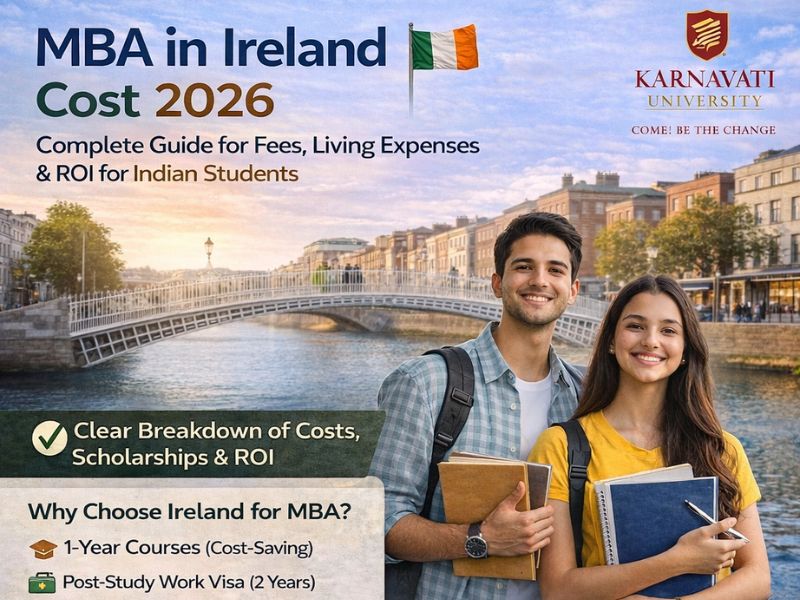
Table of Contents
MBA in Ireland Cost 2026
If you're planning to pursue an MBA abroad, Ireland is quickly becoming one of the smartest choices-especially for Indian students looking for quality education, global exposure, and strong career outcomes.
This guide is designed for students and parents who want clear, real, and actionable insights into the cost of an MBA in Ireland. By the end, you’ll understand the total investment, hidden expenses, and return on investment (ROI) so you can make a confident decision.
The Strategic Edge: Why Choose Ireland for Your MBA?
Ireland currently stands as the "Silicon Valley of Europe," serving as the European headquarters for global giants like Google, Meta, Apple, and Pfizer. This dense concentration of multinational corporations creates a unique business ecosystem where the classroom and the boardroom are deeply interconnected. For an MBA aspirant, this translates to unparalleled networking opportunities and a curriculum that is constantly refreshed by industry leaders.
The Structural Advantages of the Irish MBA
The most significant differentiator for Ireland is the 1-year MBA format. Unlike the traditional two-year models found in the USA, Ireland’s intensive 12-month programs allow you to halve your tuition costs and living expenses while significantly reducing your opportunity cost. Furthermore, as an English-speaking gateway to Europe, it eliminates the language barrier often found in other EU hubs. This is complemented by a generous 2-year Post-Study Work Visa, giving graduates ample time to secure high-stakes leadership roles in the local market.
The ROI Framework: A Real-World Comparison
To truly understand the value, consider the trajectory of two different MBA candidates. A student choosing a traditional 2-year program in the USA faces high tuition fees and two years of lost salary. In contrast, the Irish MBA student completes their degree in just 12 months. By the time the US-based student is entering their second year of study, the Irish MBA graduate is already a full year into the job market, earning a professional salary and recovering their initial investment. This "speed-to-market" is the primary reason Ireland is dominating the ROI charts for international students.
Financial Roadmap : MBA in Ireland Total Cost Breakdown (2026)
Studying in Ireland is widely regarded as a high-ROI (Return on Investment) move because of the intensive 1-year program format. While the sticker price might seem significant, the total cost- typically ranging from ₹25 Lakh to ₹45 Lakh- covers everything from elite tuition to your daily lifestyle in a European tech hub.
The Primary Investment: Tuition Fees
Tuition is the largest variable in your budget and depends heavily on the institution's global ranking. Elite, triple-accredited schools like Trinity Business School or UCD Smurfit generally command fees between ₹30 Lakh and ₹35 Lakh. However, midrange public universities and private colleges offer highly competitive MBAs starting from ₹12 Lakh to ₹20 Lakh. It is important to remember that these fees are for a 12-month intensive period, making them significantly more affordable than 2-year programs in the US or UK.
The Monthly Reality: Accommodation & Food
Ireland’s cost of living is influenced by your choice of city, with Dublin being the most expensive. Accommodation typically costs between ₹10 Lakh and ₹16 Lakh annually, depending on whether you choose on-campus housing or a shared private apartment. Food and Groceries are manageable at roughly ₹2.5 Lakh to ₹3.5 Lakh per year, provided you balance home-cooked meals with occasional dining out. Most students find that living in cities like Cork or Galway can reduce these expenses by nearly 15-20%.
The "Hidden" Essentials: Insurance, Travel & Utilities
These are the operational costs that keep your journey running smoothly. Mandatory Health Insurance and visa-related fees (including the IRP registration) generally total around ₹70,000 to ₹1 Lakh. Travel and Transport within Ireland are simplified by student Leap Cards, which cap your weekly spend, totalling about ₹1 Lakh annually. Finally, Personal Expenses covering everything from mobile plans to textbooks and weekend social networking-should be budgeted at approximately ₹2 Lakh to ₹3 Lakh to ensure a balanced student life.
The Investment Matrix: MBA Tuition Fees in Top Irish Universities
The cost of an MBA in Ireland for the 2026 intake remains highly competitive compared to other global destinations. With a broad spectrum ranging from €12,000 to €36,000, the Irish education market offers options for both budget-conscious professionals and those seeking elite, triple-accredited global branding.
The Elite Tier: Global Rankings & Triple Accreditation
At the top of the pyramid are Ireland’s "Big Two" Trinity College Dublin (TCD) and University College Dublin (UCD Smurfit). These institutions command fees between €30,000 and €36,000. This premium cost is justified by their "Triple Crown" accreditation (AACSB, AMBA, and EQUIS), a distinction held by less than 1% of business schools worldwide. Investing in these schools is a strategic move for those targeting leadership roles in top-tier consulting firms or multinational tech giants like Google and Meta.
The Mid-Range & Professional Tiers
For students seeking high quality at a more accessible price point, public universities like the National University of Ireland (NUI) Galway offer MBA programs in the €15,000 to €20,000 range. These programs are excellent for those looking to leverage Ireland’s regional industrial hubs. Furthermore, private institutions like Dublin Business School (DBS) provide industry-aligned MBAs starting as low as €12,000, making them the ideal choice for professionals who are focused on a quick entry into the Irish job market with a lower debt burden.
The Logic of Higher Fees: What Are You Buying?
It is a common misconception that higher fees only cover "better classrooms." In reality, a higher tuition fee in Ireland typically acts as a gateway to three critical assets. First, it provides access to a more Elite Alumni Network, which is your primary source of referrals. Second, it ensures Higher Industry Exposure, with frequent guest lectures from CEOs of Dublin-based MNCs. Finally, it correlates with Superior Placement Support, as premier firms often conduct exclusive recruitment drives at top-ranked universities.
The Financial Architecture of an MBA in Ireland
Pursuing an MBA in Ireland is widely recognised as a high-ROI (Return on Investment) strategic move. Unlike the traditional two-year programs in other global hubs, the intensive one-year format in Ireland allows you to significantly reduce your total opportunity cost. For the 2026 session, an all-inclusive budget- covering everything from elite tuition to daily European living-typically ranges between €28,000 and €50,000 (approximately ₹25 Lakh to ₹45 Lakh).
The Tuition Fee Matrix: Tier-Based Investment
Tuition fees are the most significant variable in your budget and are directly influenced by an institution's global ranking and accreditations. At the premium end, "Triple Crown" accredited schools such as Trinity College Dublin (TCD) and University College Dublin (UCD) command fees between €30,000 and €36,000. These institutions provide a gateway to elite alumni networks and exclusive corporate placements. Alternatively, mid-range public universities and private colleges, such as NUI Galway or Dublin Business School, offer highly competitive programs ranging from €12,000 to €20,000, making them ideal for professionals focused on a rapid entry into the Irish job market with a lower debt burden.
The Monthly Living Blueprint
Beyond the classroom, your monthly operational costs will generally fall between €1,200 and €1,800. Accommodation remains the primary expenditure, with shared housing options typically costing €600 to €900 per month, while private studios in city centres can exceed €1,200. For groceries and daily essentials, a budget of €250 to €350 is sufficient, provided you utilise local budget supermarkets. Furthermore, the Student Leap Card is a critical asset for cost management, offering a 50% discount on public transport and capping your weekly spend, which keeps monthly commuting costs between €50 and €100.
Geographic Cost Variation: The Dublin Premium
Your choice of city is the most influential factor in your monthly outgoings. Dublin, as the tech and financial heart of Europe, carries a "Dublin Premium," where high demand for housing necessitates a more robust budget. In contrast, Cork serves as a moderate alternative, offering a vibrant professional atmosphere with slightly lower overheads. For those prioritising financial efficiency, regional hubs like Galway and Limerick are considered the most affordable, where a disciplined student can live comfortably for significantly less than their peers in the capital without compromising the quality of their European experience.
Cost Comparison: Ireland vs Other Countries
Ireland vs UK vs USA
| Country | Duration | Cost | ROI |
|---|---|---|---|
| Ireland | 1 Year | ₹25–45L | High |
| UK | 1 Year | ₹35–60L | Medium |
| USA | 2 Years | ₹70L–1Cr | High but costly |
To give this section that signature Backlinko authority, we need to move away from generic advice and provide a "Scholarship Framework." This means using data-driven insights, clear headings, and actionable strategies that make the reader feel they have an unfair advantage.
The Scholarship Framework: How to Fund Your MBA in Ireland
Securing financial aid for an international MBA is often seen as a game of luck. In reality, it is a game of positioning. Ireland is unique because its government and universities are actively looking to attract global talent to support their booming tech and finance sectors. For the 2026 intake, there are three primary "funding buckets" you can tap into to drastically reduce your out-of-pocket expenses.
The "Prestige" Bucket: Government-Funded Awards
The most coveted prize is the Government of Ireland International Education Scholarship (GOI-IES). This isn't just a fee reduction; it’s a full-scale financial endorsement. Winners receive a €10,000 stipend for living expenses plus a 100% tuition waiver for their MBA year. Because this is a national-level award, the selection committee looks for "Brand Ambassadors"—students who demonstrate a clear vision for how they will bridge the gap between their home country and the Irish economy.
The "Merit" Bucket: University-Specific Grants
If you miss the government window, Irish business schools have their own high-value internal funds. Schools like UCD Smurfit and Trinity Business School offer "Excellence ScholarshipsExcellence Scholarships" that typically slash €5,000 to €10,000 off the tuition price. These are often triggered by a high GMAT or GRE score. In 2026, many schools are also offering "Early Bird" discounts—if you accept your offer and pay a deposit by a specific deadline (usually late February), you can secure an automatic reduction of up to €3,000.
The "Zero-Footprint" Strategy: How to Win
To move your application to the top of the pile, you must master the three pillars of scholarship recruitment. First, your Academic Profile acts as the gatekeeper; a high GPA is expected, but a high GMAT/EA score is the "deal-closer." Second, your Statement of Purpose (SOP) must move beyond "I want to learn" and focus on "I will contribute." You need to prove that your presence in the classroom adds diverse value. Finally, Relevant Work Experience—specifically leadership roles or niche technical expertise—proves to the committee that you are a low-risk, high-reward investment for the university’s global ranking.
The Work-Study Engine: Part-Time Income Potential in Ireland
For most international MBA students, the ability to work part-time isn't just a "perk"—it is a core part of their financial engine. Ireland’s immigration laws are specifically designed to support this. By leveraging the Stamp 2 Visa, you can legally offset a significant portion of your living expenses while simultaneously building a local professional network.
The Legal Framework: 20/40 Rule
The Irish government operates on a strict but fair "20/40" work authorisation model. During the standard academic semesters, international students are permitted to work up to 20 hours per week. This is designed to ensure that your primary focus remains on your MBA curriculum. However, during scheduled holiday periods-specifically from June to September and over the Christmas break—this allowance doubles to 40 hours per week. In the context of a 1-year MBA, this extra capacity during the summer can provide a substantial financial cushion.
The Math of Monthly Earnings
In 2026, Ireland’s minimum wage and market rates for student roles have made part-time work highly lucrative. While the national minimum wage is approximately €12.70 per hour, many student-friendly roles in retail, hospitality, or campus administration pay between €13 and €15 per hour.
If we look at a standard 20-hour work week at a median rate of €13.50, your monthly gross income stabilises around €1,080. After minor taxes (PRSI/USC), a disciplined student can reliably expect a net take-home of €950 to €1,000 per month.
Practical Example: The "Self-Sustaining" Student
To put these numbers into perspective, let’s look at how a €1,000 monthly income interacts with the average Irish cost of living. In a city like Cork or Galway, this income is often enough to cover 100% of your food expenses and roughly 60-70% of your shared accommodation rent. While it may not cover your full tuition fees, it effectively removes the "daily survival" burden from your savings, allowing you to focus your primary capital on your education.
The ROI Blueprint: Post-MBA Salaries and Career Trajectories
The primary reason Ireland has become a top-tier MBA destination for 2026 is the speed of recovery. Because the program is only one year long, you enter the job market 12 months sooner than your peers in the US or India. In the current Irish market, MBA graduates are seeing some of the highest starting salaries in the European Union, particularly within the "Silicon Docks" tech hub and the global financial district in Dublin.
The Salary Spectrum: What to Expect in 2026
Post-MBA compensation in Ireland is highly specialised. While the average starting salary for a graduate typically sits between €50,000 and €75,000, your specific industry "niche" will determine your ceiling.
Technology & Data: Driven by the presence of Google, Meta, and Amazon, roles in Product Management or Tech Strategy often start at €60,000 to €95,000.
Finance & Fintech: Ireland’s status as a global financial hub means that roles in Investment Banking or Risk Compliance command premium packages of €65,000 to €100,000.
Strategy Consulting: Big Four firms (Deloitte, PwC, EY, KPMG) and boutique consultancies typically offer starting bases of €60,000 to €90,000, often supplemented by significant performance bonuses.
The "Stay-Back" Asset: 2-Year Post-Study Work Visa
The real "ROI Multiplier" is the Third Level Graduate Scheme (Stamp 1G). As an MBA graduate (Level 9), you are eligible for a 24-month stay-back permit. This two-year window is critical because it allows you to transition from "Graduate" roles to "Critical Skills" roles. Once you secure a job offer with a salary typically above €38,000 in a listed "Critical Skill" area (which includes most MBA-level roles), you can move toward long-term residency.
Calculating Your Payback Period
Based on 2026 market data, a student who secures a mid-range role earning €70,000 can realistically expect to recover their entire tuition investment (approx. €30,000) within 1.5 to 2.5 years of working. This calculation includes living expenses and assumes a disciplined approach to repayment. Compared to a 4-5 year payback period in the US, the Irish MBA is a high-velocity financial move.
An MBA in Ireland is not just an expense—it’s a strategic investment in your global career. With a shorter duration, affordable costs compared to other countries, and strong job opportunities, Ireland offers excellent value for money.