



Germany Study Visa Guide for Indian Students
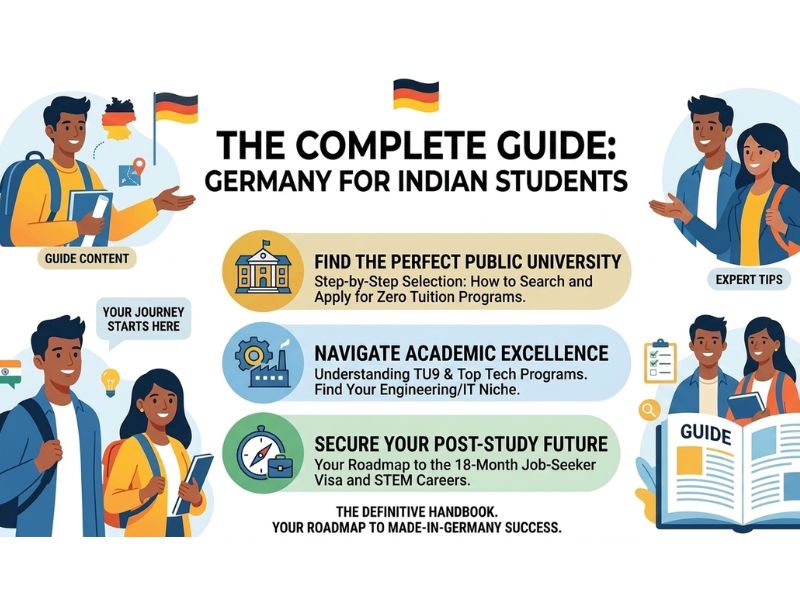
Table of Contents
Germany has become one of the most preferred study destinations for Indian students because of its high-quality education, affordable tuition fees, and strong career opportunities. Every year, thousands of Indian students apply for German universities, but many are unsure about the German study visa process.
This guide is designed for students and parents who want a clear, practical, and expert-level understanding of the German student visa for Indian students. By the end of this article, you will understand the complete visa process, documents required, financial requirements, and expert strategies to increase your visa approval chances.
Germany has transformed into a global education hub, particularly for students pursuing engineering, technology, management, and research programs.
Why Germany Is a Top Study Destination for Indian Students
Types of German Study Visas
Germany Study Visa Application Flow Chart
Eligibility Requirements for Indian Students
Documents Required fora Germany Student Visa
Blocked Account Explained (Financial Proof)
Step-by-Step Germany Study Visa Application Process
Germany Student Visa Fees, Processing Time, and Appointment Tips
Working While Studying in Germany
Post-Study Work Visa and Job Opportunities
Common Visa Rejection Reasons and How to Avoid Them
Expert Tips for a Successful Germany Student Visa Approval
Why Germany Is a Top Study Destination for Indian Students
Germany has emerged as a premier global hub for higher education, specifically attracting a massive surge of Indian students. The primary driver is the Public University System, where most institutions have abolished tuition fees even for international students; to take advantage of this, students only need to cover a nominal semester contribution, making world-class education accessible without the burden of massive student loans.
Academic Excellence and Industry Integration form the second pillar. The country is home to prestigious technical universities, particularly the TU9 group, which are leaders in Engineering and Automotive Technology. German degrees are globally recognised, but their true strength lies in the direct link between the classroom and corporate giants like Siemens and BMW, ensuring graduates are job-ready from day one.
Admission Requirements for Germany Study Visa
The first step in obtaining a German study visa is securing admission to a recognised German university. Students must apply to universities and receive an official admission letter before applying for the visa. Along with admission confirmation, students need to provide academic documents such as mark sheets, degree certificates, and language proficiency test results, like IELTS or TOEFL, L for English-taught programs. Some programs may also require German language certificates.
Types of German Study Visas
Germany offers different types of study visas depending on a student’s purpose of travel and admission status. Choosing the correct visa is very important because it determines how long a student can stay in Germany and what activities they are allowed to do during that time. For Indian students planning to study in Germany, there are three main types of German study visas: the Student Applicant Visa, the Student Visa, and the Language Course Visa.
Student Applicant Visa
The Student Applicant Visa is meant for students who want to travel to Germany to complete the university admission process. This visa is useful for students who have already applied to universities but have not yet received a final admission letter.
With this visa, students can stay in Germany while attending university interviews, entrance exams, or completing other admission requirements. The Student Applicant Visa is usually issued for three months, but it can sometimes be extended for a short period.
Once the student receives a confirmed admission letter from a German university, this visa can be converted into a Student Visa or residence permit. However, students must still provide financial proof and other required documents during the application process.
Student Visa
The Student Visa is the most common visa for international students who have already been accepted into a German university. To apply for this visa, students must submit an official admission letter along with documents such as academic certificates, language proficiency scores, health insurance, and proof of financial support.
Initially, the visa is issued for three months. After arriving in Germany, students must apply for a residence permit to continue their studies for the full duration of their program. This visa also allows students to work part-time for 120 full days or 240 half days per year.
Language Course Visa
The Language Course Visa is designed for students who want to study the German language before starting a degree program. Applicants must show proof of enrollment in an intensive German language course.
This visa is valid for the duration of the course. However, students usually cannot work while holding this visa, and it generally cannot be converted directly into a student visa. Students who wish to pursue higher education later may need to apply for a new student visa.
Germany Study Visa Application Flow Chart
Understanding the German study visa process becomes much easier when you look at it step by step. Many students feel confused because the process involves several stages, such as university admission, financial preparation, and visa documentation. The flow chart below explains the complete Germany student visa process for Indian students, from choosing a university to receiving the visa.
Explanation of Each Step
1. Research Course and Universities
The first step is selecting the right course and university. Students should check eligibility criteria, language requirements, and application deadlines before applying.
2. Apply to Universities
Applications are usually submitted through Uni-Assist or directly through the university’s online portal. Students must submit academic transcripts, language test scores, and other required documents.
3. Receive Admission Letter
Once a university accepts the student, it will issue an official admission letter, which is one of the most important documents required for the visa application.
4. Open a Blocked Account
Students must deposit approximately €11,208 in a blocked account to prove they can support themselves while studying in Germany.
5. Book a Visa Appointment
After preparing financial proof and documents, students must schedule a visa appointment through VFS Global or the German Embassy.
6. Attend Visa Interview
During the appointment, students submit documents and may answer questions related to their study plans and career goals.
7. Receive a visa and Travel to Germany
Once approved, students receive their visa and can travel to Germany. After arrival, they must register their address and apply for a residence permit to stay for the duration of their studies.
Eligibility Requirements for Indian Students
Before applying for a German study visa, Indian students must meet certain eligibility criteria set by German universities and immigration authorities. These requirements ensure that students are academically prepared, financially stable, and capable of completing their studies successfully. Understanding these eligibility requirements helps students prepare their applications properly and avoid visa delays or rejections.
Academic Qualifications
The most important requirement for studying in Germany is meeting the academic eligibility criteria for the chosen program. The requirements depend on whether the student is applying for a bachelor’s degree or a master’s degree.
For bachelor’s programs, students must have completed their 12th-grade education from a recognised board. In some cases, Indian students may need to complete a foundation course called Studienkolleg, especially if their school qualification does not meet the direct university entry requirements.
For master’s programs, students must hold a relevant bachelor’s degree from a recognised university. Most universities also require a good academic record, usually a minimum percentage or GPA, depending on the course.
Language Proficiency
Language proficiency is another key requirement for studying in Germany. Programs are offered in both English and German, so students must prove their language ability through standardised tests.
For English-taught programs, commonly accepted tests include:
IELTS
TOEFL
PTE Academic
Most universities require an IELTS score between 6.0 and 7.0, depending on the program.
For German-taught programs, students must provide certificates such as:
TestDaF
DSH
Goethe Institute German language certificate
These exams prove that the student can understand lectures and communicate effectively during their studies.
University Admission Letter
Students must receive an official admission letter from a recognised German university before applying for the student visa. This letter confirms that the student has been accepted into a full-time academic program.
The admission letter is one of the most important documents required during the visa application process.
Financial Proof
German authorities require international students to demonstrate that they can financially support themselves during their studies. This is usually done through a blocked account (Sperrkonto).
Students must deposit approximately €11,208 per year in the blocked account. This amount is released monthly to cover living expenses such as accommodation, food, and transportation.
concolation
Ultimately, a successful approval comes down to consistency. If your bank statements, academic transcripts, and interview responses all tell the same coherent story, you significantly lower the risk of a "Refusal." Do not leave your future to chance by submitting a generic application. Instead, use these expert insights to build a "bulletproof" case that demonstrates you are a serious, well-prepared candidate ready for the rigours of German higher education. With the right preparation, the visa stamp is not just a possibility—it is a logical outcome of your hard work.