





Digital Master Test (dMAT) 2026: Registration Started, Eligibility, Dates, Test Pattern & Fees
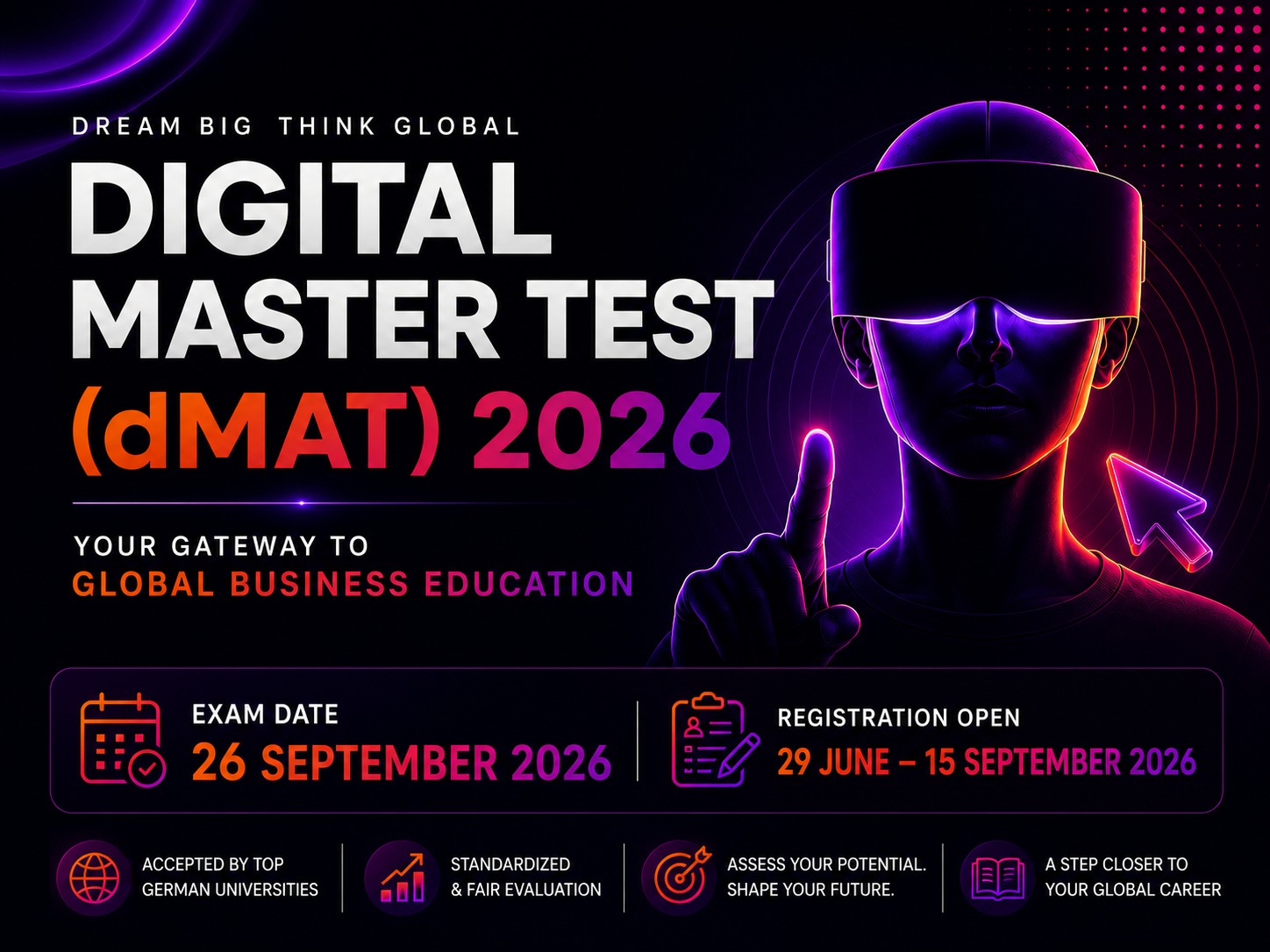
Table of Contents
The Digital Master Test (dMAT) 2026 is one of the emerging entrance examinations for students seeking admission to undergraduate and postgraduate programs in management, technology, commerce, and other professional courses. The test is conducted in an online mode, allowing students from across India to participate conveniently.
The registration process for dMAT 2026 has officially started, and eligible candidates can apply online before the last date. If you are planning to secure admission through the Digital Master Test, this guide covers everything you need to know, including eligibility, registration process, exam dates, test pattern, syllabus, fees, and preparation tips.
What is the Digital Master Test (dMAT)?
The Digital Master Test (dMAT) is a computer-based entrance examination designed to evaluate candidates on aptitude, logical reasoning, quantitative ability, verbal skills, and general awareness. The examination helps institutions identify talented students for admission into various academic programs.
The online format makes the examination accessible, transparent, and easy for students from different regions.
dMAT 2026 Highlights
| Particular | Details |
|---|---|
| Exam Name | Digital Master Test (dMAT) 2026 |
| Exam Mode | Online (Computer-Based Test) |
| Registration Status | Started |
| Exam Level | National |
| Courses Offered | UG & PG Professional Courses |
| Duration | Approximately 90–120 Minutes |
| Question Type | Multiple Choice Questions (MCQs) |
| Official Mode | Online Registration |
dMAT 2026 Important Dates
Although the exact schedule may vary depending on the organising institution, students should keep track of the following events:
- Registration Starts – Open
- Last Date to Apply – To be announced
- Admit Card Release – Before the examination
- dMAT Exam Date – As per official schedule
- Result Declaration – After successful completion of the exam
- Counselling & Admission – Begins after results
Students are advised to complete the registration well before the deadline to avoid last-minute issues.
dMAT 2026 Eligibility Criteria
Before filling out the application form, candidates should ensure they meet the eligibility requirements.
Educational Qualification
- Candidates appearing for undergraduate programs should have passed or be appearing in Class 12 from a recognised board.
- Candidates applying for postgraduate courses should possess a bachelor's degree from a recognised university.
Age Limit
There is generally no strict upper age limit for appearing in the Digital Master Test. However, candidates should verify the admission requirements of the participating institutions.
Nationality
Indian students are eligible to apply. Certain institutions may also accept international applicants as per their admission policy.
dMAT 2026 Registration Process
Students can complete the registration online by following these steps:
Step 1: Visit the Official Registration Portal
Access the official admission portal of the participating institution.
Step 2: Create an Account
Register using your email ID and mobile number.
Step 3: Fill the Application Form
Provide accurate personal, academic, and contact details.
Step 4: Upload Documents
Upload the required documents, including:
- Passport-size photograph
- Signature
- Educational certificates
- Identity proof
Step 5: Pay the Application Fee
Complete the online payment using available payment methods.
Step 6: Submit the Application
Review all details carefully before submitting the form. Download the confirmation page for future reference.
dMAT 2026 Application Fees
The application fee varies depending on the institution conducting admissions through the Digital Master Test.
Generally, the fee can be paid online using:
- Debit Card
- Credit Card
- UPI
- Net Banking
- Digital Wallets
Applicants should check the latest fee details while filling out the application form.
dMAT 2026 Exam Pattern
Understanding the exam pattern helps students prepare more effectively.
| Section | Topics |
| Quantitative Aptitude | Mathematics & Numerical Ability |
| Logical Reasoning | Analytical & Critical Thinking |
| English Language | Grammar, Vocabulary & Reading |
| General Awareness | Current Affairs & General Knowledge |
Exam Features
- Computer-Based Test
- Multiple Choice Questions
- No descriptive writing
- Time-bound examination
- Instant digital evaluation
Candidates should practice online mock tests to become comfortable with the examination interface.
dMAT 2026 Syllabus
Although the syllabus may differ slightly among institutions, the commonly covered topics include:
Quantitative Aptitude
- Percentages
- Profit & Loss
- Time & Work
- Ratio & Proportion
- Average
- Data Interpretation
- Simplification
Logical Reasoning
- Coding-Decoding
- Blood Relations
- Seating Arrangement
- Puzzle Solving
- Series
- Direction Sense
English Language
- Reading Comprehension
- Vocabulary
- Grammar
- Error Detection
- Synonyms & Antonyms
General Awareness
- Current Affairs
- Business News
- Economy
- Science
- Technology
- Indian History
- Geography
Preparation Tips for dMAT 2026
A strategic preparation plan can significantly improve your performance.
- Understand the latest exam pattern.
- Solve previous years' question papers if available.
- Attempt online mock tests regularly.
- Improve speed and accuracy.
- Read newspapers for current affairs.
- Revise important concepts every week.
- Focus on time management during practice.
Consistent practice is the key to achieving a high score.
Documents Required
Keep the following documents ready during registration:
- Class 10 Marksheet
- Class 12 Marksheet
- Graduation Certificate (for PG applicants)
- Passport-size Photograph
- Signature
- Aadhaar Card or Valid ID Proof
- Category Certificate (if applicable)
Why Should You Appear for dMAT 2026?
The Digital Master Test offers several advantages for students.
- Fully online examination process
- Convenient registration
- Transparent evaluation
- Opportunity to apply for multiple professional programs
- Faster admission process
- Reduced paperwork
- Accessible from different locations
For students looking for a modern and efficient admission process, dMAT is a valuable option.
Conclusion
The Digital Master Test (dMAT) 2026 provides an excellent opportunity for students seeking admission to various undergraduate and postgraduate programs through an online entrance examination. With registrations now open, candidates should complete their application process as early as possible and begin preparing according to the latest exam pattern and syllabus.
Regular practice, proper planning, and staying updated with official announcements will help candidates maximise their chances of success in dMAT 2026.
Frequently Asked Questions (FAQs)
1. What is dMAT 2026?
dMAT 2026 is an online entrance examination conducted for admission to various undergraduate and postgraduate professional programs.
2. Has dMAT 2026 registration started?
Yes, the registration process for dMAT 2026 has started.
3. What is the mode of the dMAT examination?
The examination is conducted in online computer-based mode.
4. Who can apply for dMAT 2026?
Students who have completed or are appearing for Class 12 (UG) or hold a bachelor's degree (PG) can apply, depending on the course requirements.
5. What subjects are included in dMAT 2026?
The exam generally covers Quantitative Aptitude, Logical Reasoning, English Language, and General Awareness.
6. Is there any negative marking in dMAT?
Candidates should check the official notification for the latest marking scheme.
7. How can I prepare for dMAT?
Practice mock tests, revise basic concepts, improve speed, and stay updated with current affairs.
8. Why should students choose dMAT?
It offers a convenient online examination process, transparent evaluation, and opportunities for admission to multiple professional courses.