







Cost of MBBS in Australia: Complete Guide for Indian

Table of Contents
If you are planning to pursue a medical degree abroad, Australia is often at the top of the list. Known for its world-class education system, advanced healthcare infrastructure, and globally recognised degrees, Australia attracts thousands of international students every year.
But one of the biggest questions students and parents ask is: “What is the actual cost of MBBS in Australia?”
This guide is for students who want a clear, practical, and honest understanding of the total investment required—from tuition fees to living costs and beyond. By the end of this blog, you will be able to plan your budget confidently and decide whether Australia is the right destination for your medical career.
Why Study MBBS in Australia
Before discussing costs, it’s important to understand what you’re paying for.
Key Advantages
- Globally recognised medical degrees
- High-quality education and clinical exposure
- Advanced hospitals and research facilities
- Strong career opportunities after graduation
👉 Australia doesn’t just offer education—it offers a complete professional ecosystem.
MBBS Course Structure in Australia
In Australia, medical education is designed to provide a strong balance between theoretical knowledge and hands-on clinical experience. Unlike many countries, the MBBS program here is structured to ensure that students are exposed to real-world medical environments from an early stage.
MBBS in Australia is typically offered in two formats:
- Bachelor of Medicine & Bachelor of Surgery (MBBS)
- Doctor of Medicine (MD)
Both programs are globally recognised and focus on developing highly skilled medical professionals.
Duration
The duration of the course depends on the entry pathway:
- Undergraduate Entry: 5–6 years (for students directly after school)
- Graduate Entry (MD): 4 years (for students with a prior degree)
The extended duration ensures in-depth learning and strong clinical exposure.
Course Includes
The curriculum is divided into different phases to build knowledge step by step:
-
Pre-Clinical Studies
Focus on basic medical sciences like anatomy, physiology, and biochemistry, forming the foundation of medical knowledge. -
Clinical Rotations
Students work in hospitals across different departments such as medicine, surgery, paediatrics, and more. -
Hospital Training
Hands-on training under experienced doctors, allowing students to interact with real patients and understand practical medical procedures.
Learning Approach
- Case-based learning
- Practical exposure from early years
- Focus on patient care and communication skills
👉 The program focuses heavily on practical training, real-world experience, and clinical excellence, making graduates industry-ready and globally competitive.
Top Government Universities in Australia
Australia is home to some of the world’s leading government-funded universities, known for their high academic standards, advanced research facilities, and strong clinical training programs. These universities are globally recognised and provide excellent opportunities for students pursuing MBBS or Doctor of Medicine (MD).
Below are some of the top government universities in Australia for medical studies:
🎓 The University of Melbourne
- Location: Melbourne
- Program: Doctor of Medicine (MD)
- Fees: AUD 70,000 – AUD 90,000 per year
- Placement / Career Scope: Strong hospital partnerships and global career opportunities
Description:
The University of Melbourne is one of Australia’s top-ranked institutions, known for its research-driven medical programs and excellent clinical exposure. Students benefit from modern facilities and strong industry connections.
🎓 The University of Sydney
- Location: Sydney
- Program: Doctor of Medicine (MD)
- Fees: AUD 65,000 – AUD 85,000 per year
- Placement / Career Scope: High employability with global recognition
Description:
The University of Sydney offers one of the most prestigious medical programs in Australia, focusing on practical learning, innovation, and patient-centred care.
🎓 Monash University
- Location: Melbourne
- Program: MBBS / MD
- Fees: AUD 60,000 – AUD 80,000 per year
- Placement / Career Scope: Strong clinical training and research opportunities
Description:
Monash University is widely known for its comprehensive medical curriculum and hands-on training approach, making students industry-ready.
🎓 The University of Queensland
- Location: Brisbane
- Program: Doctor of Medicine (MD)
- Fees: AUD 55,000 – AUD 75,000 per year
- Placement / Career Scope: Excellent research and hospital exposure
Description:
The University of Queensland provides a balanced mix of academic learning and practical training, with a strong focus on global healthcare standards.
🎓 The University of New South Wales (UNSW Sydney)
- Location: Sydney
- Program: Medicine Program (MD)
- Fees: AUD 65,000 – AUD 85,000 per year
- Placement / Career Scope: High graduate employability
Description:
UNSW Sydney is known for its innovative teaching methods and strong focus on clinical practice, preparing students for real-world medical challenges.
👉 Government universities in Australia offer high-quality education, global recognition, and strong career outcomes, making them a top choice for international students pursuing MBBS.
Top Private Universities in Australia
While Australia is widely known for its government universities, several private institutions also offer high-quality education in health sciences, pre-medical pathways, and medical-related programs. These universities focus on industry-oriented learning, smaller class sizes, and personalised academic support.
Although full MBBS/MD programs are mostly offered by public universities, private universities provide strong pathways, foundation programs, and health science degrees that can lead to medical careers.
Bond University
- Location: Gold Coast
- Program: Doctor of Medicine (MD)
- Fees: AUD 80,000 – AUD 100,000 per year
- Placement / Career Scope: Strong clinical training with global opportunities
Description:
Bond University is one of the most well-known private universities in Australia, offering a full medical program. It is recognised for its accelerated MD program, small class sizes, and personalised learning environment.
Torrens University Australia
- Location: Sydney / Melbourne / Brisbane
- Program: Health Sciences, Public Health
- Fees: AUD 20,000 – AUD 35,000 per year
- Placement / Career Scope: Industry-focused programs
Torrens University focuses on practical and career-oriented education. While it does not offer MBBS directly, it provides strong health-related programs that can act as pathways into medical and healthcare careers.
University of Notre Dame Australia
- Location: Sydney / Fremantle
- Program: Doctor of Medicine (MD)
- Fees: AUD 70,000 – AUD 85,000 per year
- Placement / Career Scope: High employability with strong ethics-based training
Description:
Notre Dame is a private Catholic university known for its medical programs with a strong focus on ethics, patient care, and clinical exposure. It offers excellent training in real hospital environments.
🎓 Kaplan Business School (Pathway Option)
- Location: Multiple cities
- Program: Foundation & Pathway Courses
- Fees: AUD 15,000 – AUD 25,000 per year
- Placement / Career Scope: Helps transition into top universities
Description:
Kaplan provides pathway programs for students who may not directly qualify for MBBS/MD programs. It helps build academic foundations for further studies in healthcare and medicine.
Final Insight
👉 Private universities in Australia offer flexible learning, smaller class sizes, and strong student support, making them a good option for students seeking personalised education and alternative pathways into medical careers.
Tuition Fees Breakdown
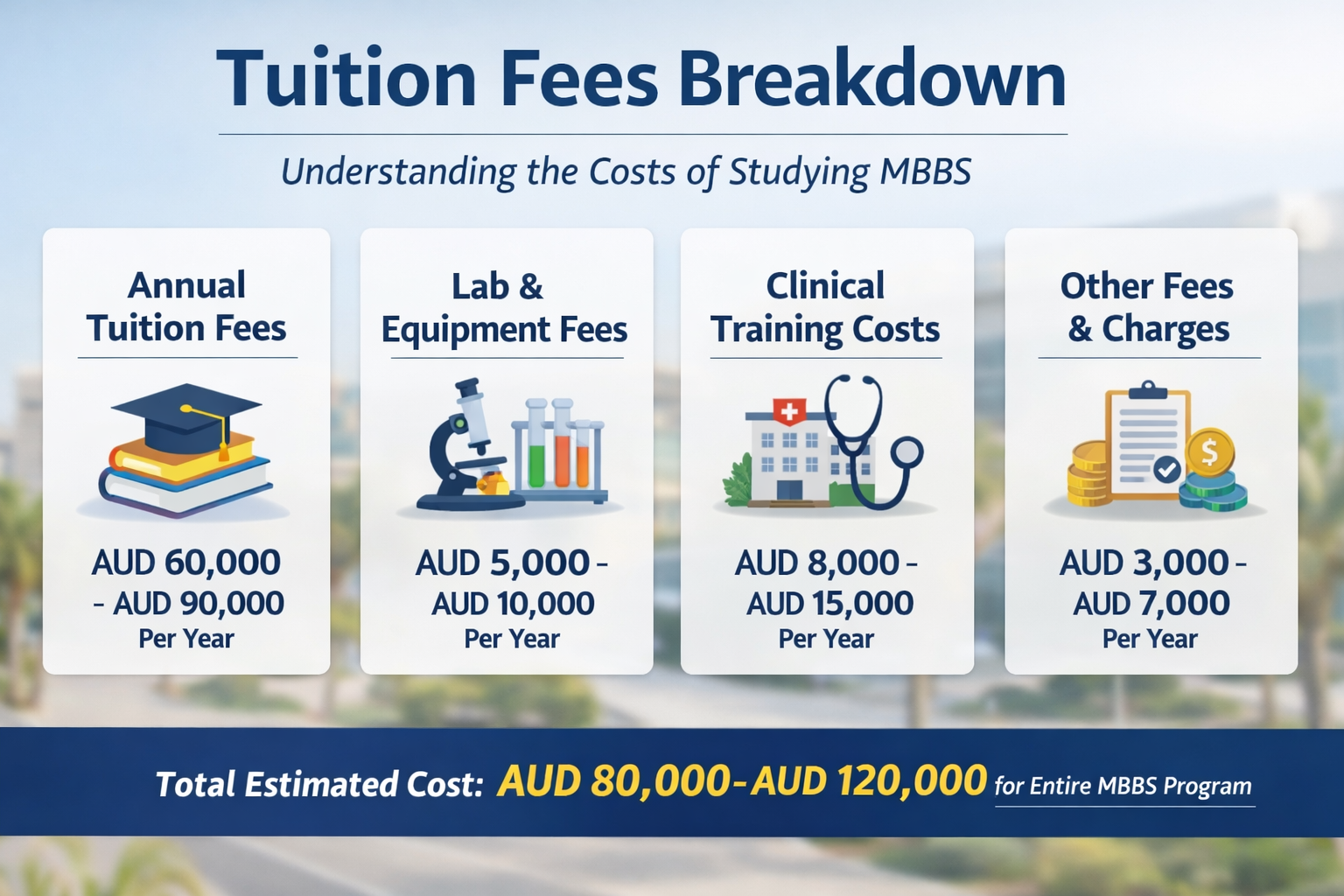
Average Annual Fees
- AUD 50,000 – AUD 80,000 per year
What Affects Fees?
- University ranking
- Course type (MBBS vs MD)
- Location
👉 Top universities usually have higher fees but better ROI.
Living Expenses in Australia
Major cities like Sydney and Melbourne tend to be more expensive, while smaller cities may offer more affordable living options. Planning your monthly budget carefully can help you manage expenses effectively throughout your study period.
Monthly Expenses
Here’s an approximate breakdown of common living costs for international students:
-
Accommodation: AUD 800 – AUD 1,500
Includes shared apartments, student housing, or private rentals. Costs vary based on location and facilities. -
Food & Groceries: AUD 300 – AUD 600
Cooking at home can significantly reduce expenses compared to eating out regularly. -
Transport: AUD 100 – AUD 200
Public transport is widely available, and students often receive discounts on travel passes. -
Miscellaneous Expenses: AUD 200 – AUD 400
Includes mobile bills, entertainment, personal expenses, and other daily needs.
Additional Cost Factors
- Health insurance (OSHC) is mandatory for international students
- Utility bills may or may not be included in rent
- Lifestyle choices (shopping, travel, dining out) can increase costs
Average Yearly Living Cost
👉 On average, students should budget around AUD 20,000 – AUD 30,000 per year to cover all living expenses comfortably.
Hidden Costs You Must Know
Many students underestimate additional expenses.
Extra Costs Include
- Health insurance (OSHC)
- Visa fees
- Books and study materials
- Clinical equipment
These can add AUD 5,000 – AUD 10,000 extra
Scholarships & Financial Aid
Australia offers limited but valuable scholarships.
Available Options
- Merit-based scholarships
- Government funding programs
- University-specific grants
👉 Scholarships may not cover full fees, but can reduce costs significantly.
Is MBBS in Australia Worth the Cost?
This is the most important question.
👍 Why It’s Worth It
- Global recognition
- High salary potential
- Strong career growth
⚠️ Things to Consider
- High initial investment
- Competitive admissions
- Long duration
👉 If budget is not a constraint, Australia is one of the best choices.
💰 Career Opportunities & Salary
After completing MBBS in Australia:
👨⚕️ Career Options
- Doctor (General Practitioner)
- Specialist
- Researcher
💵 Salary
- Entry-level: AUD 60,000 – AUD 80,000
- Experienced: AUD 150,000+
👉 Australia offers one of the highest-paying medical careers globally.
Tips to Reduce MBBS Study Cost in Australia
Studying MBBS in Australia can be expensive, but with the right planning and smart financial decisions, you can significantly reduce your overall cost. Many students manage their expenses effectively by combining scholarships, budgeting strategies, and part-time work opportunities.
Here are some practical tips to help you minimise your financial burden while studying in Australia:
🎓 Apply for Scholarships Early
- Look for merit-based and university-specific scholarships.
- Apply well before deadlines to increase your chances
- Even partial scholarships can reduce tuition costs significantly
👉 Start researching scholarships at least 8–12 months in advance.
🏫 Choose Affordable Universities or Locations
- Universities in smaller cities often have lower fees
- Living costs are also cheaper compared to cities like Sydney or Melbourne
👉 Consider cities like Adelaide, Perth, or Brisbane for better affordability.
🏠 Opt for Shared Accommodation
- Share apartments or student housing with other students
- This can reduce rent by up to 30–50%
👉 Accommodation is the biggest expense—saving here makes a big difference.
🍳 Cook Your Own Meals
- Eating out frequently can be expensive
- Cooking at home helps you save a significant amount of money monthly
👉 Meal planning can cut your food expenses nearly in half.
💼 Work Part-Time
- International students can work up to the allowed hours per week
- Helps cover daily expenses like food, transport, and bills
👉 Part-time work reduces dependency on savings.
🎟️ Use Student Discounts
- Discounts available on transport, food, shopping, and entertainment
- Always carry your student ID
👉 Small savings daily can add up over time.
📚 Buy Used Books & Resources
- Purchase second-hand books or use digital resources
- Many universities provide free access to study materials
👉 Avoid unnecessary academic expenses.
💳 Manage Your Budget Smartly
- Track your monthly expenses
- Avoid unnecessary spending
- Plan your finances in advance
👉 Financial discipline is key to managing long-term costs.
🎯 Final Insight
👉 Reducing the cost of MBBS in Australia is not about cutting corners—it’s about making smart, informed financial decisions that help you study comfortably without stress.
🛂 Student Visa Cost for Australia (Medical Students)
When planning to study MBBS in Australia, understanding the student visa cost is an essential part of your overall budget. The Australian student visa (Subclass 500) allows international students to live, study, and work part-time in Australia during their course.
While the visa fee itself is a one-time payment, there are several additional costs involved that students must consider during the application process.
💰 Visa Application Fee
- Student Visa (Subclass 500): AUD 710 (approx.)
👉 This is the standard fee charged by the Australian Government for processing your visa application.
📋 Additional Costs Involved
Apart from the visa fee, students need to budget for the following:
-
Overseas Student Health Cover (OSHC):
AUD 500 – AUD 700 per year
👉 Mandatory for all international students during their stay in Australia. -
Medical Examination:
AUD 100 – AUD 300
👉 Required to ensure you meet health standards. -
Biometric & Documentation Charges:
AUD 50 – AUD 100 -
Visa Processing & Service Charges (if applicable):
Varies depending on the consultant or agency
💸 Total Estimated Visa Cost
👉 The total cost for an Australian student visa typically ranges between:
AUD 1,200 – AUD 2,000 (including all additional expenses)
⏳ Processing Time
- Usually takes 4 to 8 weeks, depending on application completeness and documentation
👉 Applying early helps avoid delays in your admission timeline.
💼 Work Benefits on Student Visa
- Students can work part-time during their studies
- Helps manage living expenses
👉 This makes the visa not just a requirement, but also an opportunity to support your finances.
🎯 Final Insight
👉 While the visa cost may seem like an extra expense, it is a crucial investment that gives you access to world-class education and international career opportunities in Australia.
💸 Affordable MBBS Options in Australia for Indian Students
Studying MBBS in Australia is often considered expensive, but there are still ways to make it more affordable with the right strategy. While Australia may not be the cheapest destination for medical studies, students can significantly reduce costs by choosing the right universities, locations, and financial planning methods.
For Indian students, affordability is not just about low tuition fees—it’s about finding the best balance between cost, quality, and long-term career opportunities.
🎓 Choose Universities with Lower Tuition Fees
Not all universities in Australia have the same fee structure. Some institutions offer comparatively lower tuition fees while maintaining good academic standards.
👉 Opting for such universities can reduce your total cost by a significant margin.
📍 Study in Affordable Cities
Major cities like Sydney and Melbourne are expensive. Choosing smaller or mid-sized cities can help reduce both tuition and living expenses.
- Adelaide
- Perth
- Brisbane
👉 Lower living costs can save thousands of dollars every year.
🎓 Apply for Scholarships & Financial Aid
Many universities offer partial scholarships for international students based on academic performance.
- Merit-based scholarships
- University-specific grants
- Government-funded programs
👉 Even a 10–20% scholarship can make a big difference in total cost.
🏠 Choose Budget-Friendly Accommodation
Accommodation is one of the biggest expenses. You can save money by:
- Sharing apartments
- Choosing university hostels
- Living slightly away from city centres
👉 Smart housing choices can reduce rent by up to 40%.
💼 Work Part-Time During Studies
International students in Australia are allowed to work part-time.
- Helps cover daily expenses
- Reduces financial burden on the family
👉 This is one of the most effective ways to manage living costs.
📚 Use Cost-Saving Study Resources
- Buy second-hand books
- Use digital learning platforms
- Access university libraries
👉 Avoid unnecessary academic expenses.
💡 Plan Your Budget in Advance
- Track your monthly expenses
- Set spending limits
- Avoid unnecessary lifestyle expenses
👉 Proper financial planning ensures long-term affordability.
🎯 Final Insight
👉 While Australia may not be the cheapest option for MBBS, it offers excellent value for money in terms of education quality, global recognition, and career opportunities. With the right approach, Indian students can make their MBBS journey in Australia both affordable and rewarding
MBBS in Australia: Worth the Cost? (ROI Analysis)
One of the most important questions students and parents ask is whether the high cost of studying MBBS in Australia is truly worth the investment. While the upfront expense is significant, the long-term return on investment (ROI) depends on factors like education quality, career opportunities, global recognition, and earning potential.
Let’s break it down in a practical way.
💰 Investment vs Return
- Total Investment: AUD 350,000 – AUD 500,000
- Starting Salary: AUD 60,000 – AUD 80,000 per year
- Experienced Doctors: AUD 150,000+ per year
👉 Although the initial cost is high, the earning potential in Australia is equally strong, making it a long-term profitable investment.
🎓 Value of Australian Medical Education: Globally recognised
- d degree
- Advanced clinical training
- Exposure to modern healthcare systems
👉 You are not just paying for a degree—you are investing in global career opportunities.
💼 Career Stability & Demand
- High demand for doctors in Australia
- Strong healthcare infrastructure
- Opportunities in both public and private sectors
👉 Medical professionals enjoy job stability and long-term career security.
🌍 Global Opportunities
- Degree recognised in many countries
- Opportunities to work abroad after licensing exams
👉 This increases your career flexibility and earning potential worldwide.
⚖️ Challenges to Consider
- High tuition and living costs
- Competitive admission process
- Licensing requirements for practising in India or other countries
👉 Proper planning is essential before investing.
📊 ROI Verdict
👉 Short-Term: Expensive and financially demanding
👉 Long-Term: High returns, strong career growth, and global opportunities
🎯 Final Insight
👉 MBBS in Australia is worth the cost if you are focused on building a long-term medical career, ready to invest financially, and willing to take advantage of global opportunities.
Take the first step toward your dream of studying MBBS in Australia with clarity and confidence. Get expert guidance on fees, scholarships, and admission pathways tailored for Indian students. Don’t let confusion delay your future—visit Your Global Mentors today and connect with experienced counsellors who can guide you every step of the way. Turn your medical career goals into reality now!
Understanding the cost of MBBS in Australia is essential for making a smart and informed decision. From tuition fees to living expenses, proper planning can make your dream achievable. With the right guidance and financial strategy, Indian students can successfully pursue a globally recognised medical degree. For personalised support and expert advice, visit Your Global Mentors and start your journey with confidence.
1. What is the average cost of an MBBS in Australia for Indian students?
The average cost ranges between AUD 60,000 and AUD 90,000 per year, depending on the university. Additionally, students should budget for living expenses of around AUD 20,000 to AUD 25,000 annually.
2. Are scholarships available for Indian students to study MBBS in Australia?
Yes, many Australian universities offer merit-based and need-based scholarships. However, competition is high, so strong academic performance and early application are important.
3. Is an MBBS from Australia recognised in India?
Yes, MBBS degrees from Australia are recognised, but students must qualify for the FMGE/NExT exam conducted by the National Medical Commission to practice in India.