






Accommodation for International Students Abroad: Options, Cost & Tips (2026 Guide)
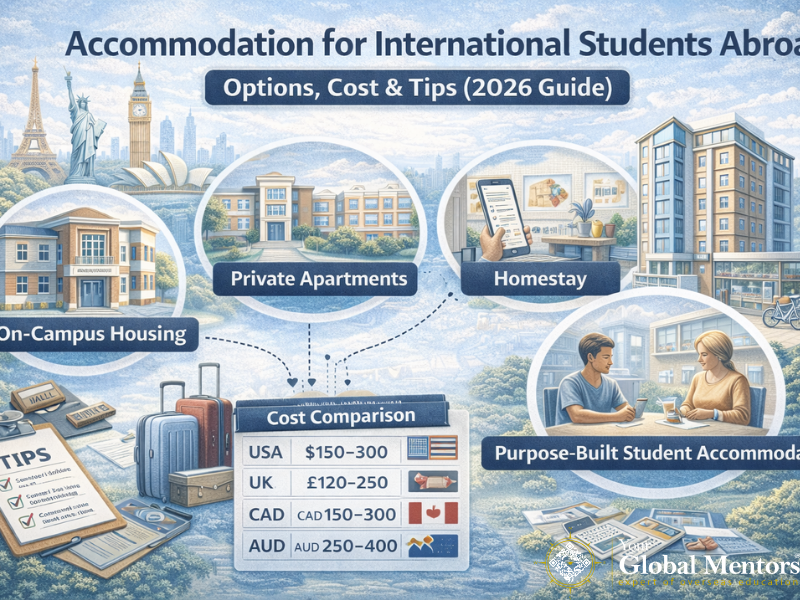
Table of Contents
Accommodation for International Students Abroad – Options, Cost & Tips (2026 Complete Guide)
For Indian students planning to study abroad, accommodation is often treated as a secondary decision, something to be handled “after the visa” or “once we reach the country.” In reality, where and how you live abroad can significantly impact your academics, finances, mental health, and overall study abroad experience.
In 2026, with rising global rents, housing shortages in student cities, and increasing reports of accommodation scams, planning accommodation has become non-negotiable.
Students frequently ask:
Should I choose on-campus or off-campus accommodation?
Is private housing safe for international students?
How much does student accommodation actually cost abroad?
Which countries are most affordable for student housing?
What mistakes should I absolutely avoid?
This comprehensive guide is written to help Indian students and parents understand accommodation options abroad realistically, plan costs correctly, and make safe, informed housing decisions for 2026 and beyond.
Why Accommodation Planning Is Crucial for International Students
Accommodation is not just about having a roof over your head. It directly affects:
Monthly expenses and budgeting
Safety and security
Commute time to university
Academic focus and productivity
Social integration and mental well-being
A poor accommodation choice can turn a good university experience into a stressful one.
Students who plan accommodation properly:
Adjust faster to a new country
Manage expenses better
Avoid last-minute panic decisions
Stay focused on academics
When Should International Students Start Looking for Accommodation?
One of the biggest mistakes students make is starting too late.
Ideal Timeline
After receiving the offer letter, begin research
After visa filing: Shortlist options
2–3 months before departure: Finalise accommodation
In countries like the UK, Canada, Australia, and Germany, student housing fills up months in advance, especially in popular cities.
Types of Accommodation for International Students Abroad
International students generally have four main accommodation options:
On-Campus Housing
Purpose-Built Student Accommodation (PBSA)
Private Apartments / Shared Housing
Homestay
Each option suits different student profiles, budgets, and comfort levels.
1. On-Campus Accommodation
What Is On-Campus Housing?
On-campus accommodation is housing owned or managed by the university, located within or very close to the campus.
Advantages of On-Campus Housing
High safety and security
Walking distance to classes
Fixed rental contracts
Utilities often included
Easy social integration
Disadvantages
Limited availability
Slightly higher cost in some countries
Less privacy
Strict rules in certain universities
Best For
First-year international students
Students moving abroad for the first time
Those unfamiliar with local rental systems
2. Purpose-Built Student Accommodation (PBSA)
What Is PBSA?
PBSA refers to private student residences designed specifically for students, but not owned by universities.
Common in:
UK
Australia
Canada
Parts of Europe
Advantages
Student-only environment
Fully furnished rooms
Included utilities (Wi-Fi, electricity, water)
Security and maintenance support
Disadvantages
Can be expensive
Fixed contracts
Limited flexibility
Best For
Students seeking safety + independence
International students who miss on-campus housing
3. Private Apartments / Shared Housing
What Is Private Housing?
Students rent:
A studio apartment
A shared apartment with roommates
A private room in a shared house
This option is very common after the first year.
Advantages
Greater independence
Lower cost when shared
Flexible location choices
Real-life exposure
Disadvantages
Complex rental contracts
Security deposit requirements
Utility bills are not included
Risk of scams if not careful
Best For
Second-year students
Budget-conscious students
Those comfortable with local systems
4. Homestay
What Is Homestay?
Living with a local host family, usually with meals included.
Advantages
Cultural immersion
Safe environment
Meals often included
Good for language improvement
Disadvantages
Limited privacy
Rules and routines
Less independence
Best For
Younger students
Language-focused programs
Short-term courses
Country-Wise Accommodation Cost for International Students (2026)
Accommodation costs vary significantly based on country, city, and type of housing.
Accommodation Cost in the USA
Type | Monthly Cost |
|---|---|
On-campus | $800 – $1,200 |
Shared apartment | $600 – $1,000 |
Studio apartment | $1,000 – $1,800 |
Cities like New York, Boston, and San Francisco are much more expensive.
Accommodation Cost in the UK
Type | Monthly Cost |
|---|---|
University halls | £500 – £900 |
PBSA | £600 – £1,000 |
Shared housing | £400 – £700 |
London is significantly costlier than other cities.
Accommodation Cost in Canada
Type | Monthly Cost (CAD) |
|---|---|
On-campus | 700 – 1,200 |
Shared apartment | 600 – 1,000 |
Studio | 1,200 – 1,800 |
Accommodation Cost in Australia
Type | Monthly Cost (AUD) |
|---|---|
On-campus | 900 – 1,500 |
PBSA | 1,000 – 1,600 |
Shared housing | 700 – 1,200 |
Accommodation Cost in Germany
Type | Monthly Cost (€) |
|---|---|
Student dorms | 250 – 400 |
Shared apartments | 400 – 700 |
Private apartment | 700 – 1,000 |
Germany remains one of the most affordable options.
Hidden Costs Students Often Forget
Many students budget only for rent but forget:
Security deposit (1–3 months’ rent)
Utilities
Internet
Furniture
Initial setup costs
These hidden costs can add ₹1–3 lakhs extra in the first few months.
Accommodation Scams – A Serious Concern
Accommodation scams targeting international students are increasing every year.
Common Scam Red Flags
Asking for full payment before showing the property
No official rental agreement
Prices too good to be true
No verifiable address or contact details
Never transfer money without verified documentation.
How to Find Safe Student Accommodation Abroad
Trusted Sources
University housing portals
Official student accommodation providers
Verified student housing websites
University student unions
Avoid:
Random social media ads
Unverified WhatsApp groups
Cash-only deals
Documents Required for Renting Abroad
Students are often required to submit:
Passport
Visa
University offer letter
Proof of funds
Local ID (after arrival)
Short-Term vs Long-Term Accommodation
Short-Term (First 1–2 Months)
Hostels
Temporary student housing
Airbnb (limited duration)
Long-Term
University housing
PBSA
Private rental
Smart strategy:
Book short-term housing first, then finalise long-term accommodation after arrival.
Accommodation and Visa Compliance
Many countries require:
Address details at visa or immigration registration
Proof of accommodation
Incorrect or fake accommodation details can cause serious immigration issues.
Balancing Cost vs Comfort
Choosing the cheapest option is not always the best decision.
Factors to consider:
Commute time
Safety of the neighbourhood
Study environment
Mental comfort
Saving money at the cost of health and academics is never worth it.
Common Mistakes International Students Make
Booking accommodation too late
Paying an advance without verification
Ignoring commute costs
Choosing unsafe neighbourhoods
Underestimating initial setup costs
How Your Global Mentors Help with Accommodation Planning
Accommodation planning should be part of a holistic study abroad strategy. At Your Global Mentors, students receive experience-driven guidance on choosing the right accommodation type, budgeting realistically, avoiding scams, and planning short-term and long-term housing, ensuring they settle abroad safely, comfortably, and confidently from day one.
Final Conclusion: How to Choose the Right Accommodation Abroad
There is no one-size-fits-all solution.
First-time students benefit from on-campus or PBSA
Budget-conscious students may prefer shared housing
Younger students may feel safer in homestays
The right accommodation is one that:
Fits your budget
Supports your academics
Keeps you safe
Allows personal growth
When accommodation is planned correctly, it becomes a foundation for a successful international education journey, not a daily stress point.